时空智能

Search documents
AI能看懂图像却算不好距离,上交时间-空间智能基准难倒9大顶尖多模态模型
量子位· 2025-04-15 03:54
Core Insights - The article discusses the increasing application of Multi-Modal Large Language Models (MLLM) in embodied intelligence and autonomous driving, questioning their readiness to understand complex physical environments [1][2] - The introduction of the Spatial-Temporal Intelligence Benchmark (STI-Bench) aims to challenge current MLLMs on their precise spatial-temporal understanding capabilities [1][4] Group 1: MLLM Capabilities - MLLMs have shown significant achievements in visual language understanding but need to surpass traditional semantic understanding to possess accurate spatial-temporal intelligence [2] - The core tasks in AI applications, such as autonomous driving and robotic operations, require quantitative spatial-temporal understanding, which is currently a weak point for existing models [3][19] Group 2: STI-Bench Overview - STI-Bench is designed to evaluate models using real-world video inputs, focusing on precise and quantitative spatial-temporal understanding [4] - The benchmark includes over 300 real-world videos covering three typical scenarios: desktop operations (millimeter-level), indoor environments (centimeter-level), and outdoor scenes (decimeter-level) [6] Group 3: Evaluation Metrics - The evaluation consists of eight tasks divided into two dimensions: static spatial understanding (measuring scale, spatial relationships, and 3D video localization) and dynamic temporal understanding (displacement, speed, acceleration, ego orientation, trajectory description, and pose estimation) [6] - The dataset also includes over 2,000 high-quality question-answer pairs, ensuring accuracy and relevance to the corresponding scenes [8] Group 4: Experimental Results - The evaluation of leading MLLMs, including proprietary models like GPT-4o and Gemini-2.5-Pro, revealed overall poor performance, with the best models achieving less than 42% accuracy, only slightly above random guessing [12][20] - Qwen2.5-VL-72B emerged as a standout, outperforming all proprietary models and providing a boost to the open-source community [13] Group 5: Error Analysis - The research identified three core bottlenecks in MLLMs: inaccuracies in estimating quantitative spatial attributes, deficiencies in understanding temporal dynamics, and weak cross-modal integration capabilities [15][16][17] - These issues highlight the significant gaps in MLLMs' abilities to perform precise spatial-temporal understanding, indicating directions for future research [19][20] Group 6: Conclusion - The results from STI-Bench clearly indicate the serious shortcomings of current MLLMs in precise spatial-temporal understanding, which is essential for their application in embodied intelligence and autonomous driving [20][21] - The release of STI-Bench provides a new benchmark for assessing and improving MLLMs' spatial-temporal understanding capabilities, guiding researchers towards potential solutions [21]


救援互助联盟:以AI推动户外救援向「精准式救援」升级
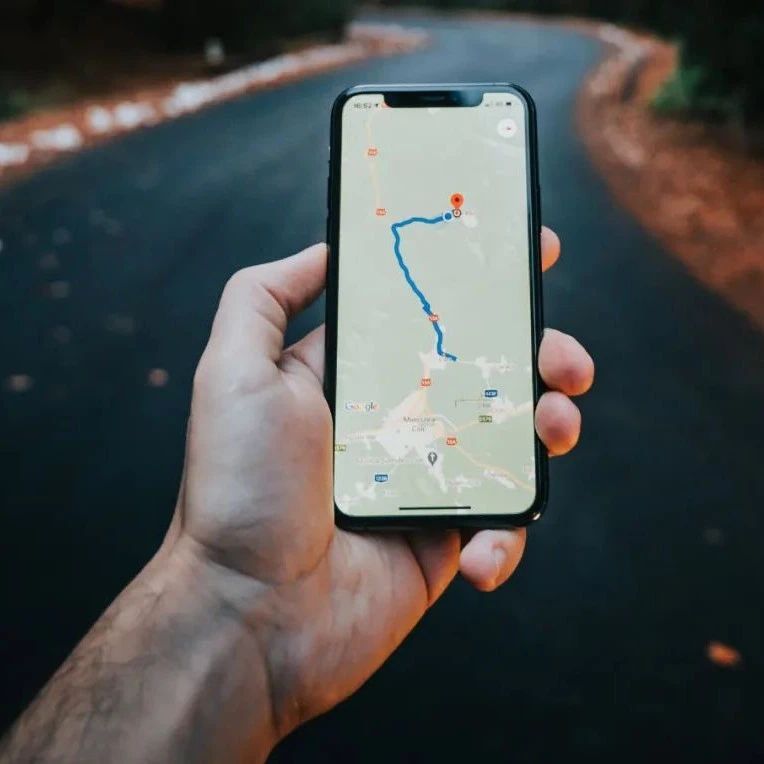
雷峰网· 2025-03-28 08:24
Core Viewpoint - The article emphasizes the establishment of a "Rescue Mutual Aid Alliance" that leverages digital technology and satellite communication to enhance outdoor rescue operations, aiming for "precise rescue" through a unified digital platform [2][6]. Group 1: Formation of the Alliance - The "Rescue Mutual Aid Alliance" was formed under the guidance of the Ministry of Emergency Management and includes members like vivo, OPPO, BYD, and others, focusing on utilizing Beidou satellite communication and AI technology [2]. - The alliance aims to create a "Digital Rescue Map" to improve the efficiency and effectiveness of outdoor rescue efforts [2]. Group 2: Digital Rescue Map Functionality - The "Digital Rescue Map" consolidates various rescue resources and provides features such as safety alerts, communication, and location sharing, breaking down previous information silos [6]. - In a scenario where an adventurer is lost in a remote area, they can use the Gaode Map app to initiate a satellite rescue, which will relay critical information to nearby rescue teams, significantly reducing search time [6][8]. Group 3: Impact and Efficiency - Since its establishment, the alliance has successfully assisted nearly 60 individuals in distress across various regions in China, demonstrating the effectiveness of the digital platform [8]. - For instance, a rescue operation in Tibet that would typically take 5 hours was completed in just 2 hours and 20 minutes due to the use of the Gaode Map's satellite rescue feature [8]. Group 4: Enhanced Communication Features - The upgraded satellite rescue function now includes a message reply feature, allowing rescuers to provide real-time updates to those in distress, alleviating anxiety during the wait for help [11]. - The function supports both Tian Tong and Beidou satellite communication, expanding the range of compatible devices for sending rescue messages [11].