Climate change

Search documents
X @Ivan on Tech 🍳📈💰
Ivan on Tech 🍳📈💰· 2025-09-23 20:32
RT U.S. Department of Energy (@ENERGY).@POTUS: “Climate change is the greatest con job ever perpetrated on the world…If you don’t get away from the green energy scam, your country is going to fail.” 👏 https://t.co/vaPEpscAQz ...
How to respond to societal collapse | Sarah Wilson | TEDxSydney
TEDx Talks· 2025-09-22 17:01
[Music] I've got to say I feel quite self-conscious about standing here today. And that's because what I'm about to share with you is something that none of you want to hear. About three years ago, I was hit with a brutal, brutal truth. that we were no longer going to make it. Those climate deadlines, we were missing them. And those planetary boundaries that we'd been warned about, we were surpassing them over and over again. And then a veritable cluster of other crises arrived. AI. So AI singularity is set ...

The Missing Puzzle in Sustainability | Nina Mbah | TEDxNUTM
TEDx Talks· 2025-09-22 16:19
Sustainability & Behavioral Change - Behavioral change is a strategy, not just a slogan, for shifting behaviors from negative to positive [4][5] - Habit change can be leveraged to drive adoption of sustainable products and services [9] - Making sustainability desirable, interesting, and exciting is crucial for large-scale adoption [12] Waste & Recycling - Globally, 92 million tons of fabric waste are generated annually [9] - 57% of fabric waste ends up in landfills [10] - Fashion for climate runway was introduced to make waste recycling for fashion desirable [10][11] Impact & Solutions - 9 million people die every year as a result of pollution and carbon emissions [14] - Changing habits can lead to significant reductions in carbon emissions and energy consumption [14] - Japan reduced 15 million tons of carbon emissions and saved 210 million kilowatt hours in electricity by promoting casual clothing [14]

Leaving the City Behind: His Mission to Protect the Grasslands | Yuchen Yao | TEDxYuehai St Studio
TEDx Talks· 2025-09-18 16:19
Environmental Significance & Challenges - Sanjiangyuan, the headwaters of major Asian rivers, is critical to humanity's future due to its vast carbon storage equivalent to 16 Amazon rainforests and its role in nourishing nearly 2 billion people in East and Southeast Asia [2][3] - Climate change poses a significant threat to Sanjiangyuan, leading to permafrost thawing, wetland shrinkage, and grassland degradation [3] - The Tibetan Plateau is warming twice as fast as the global average, exacerbating permafrost melt and grassland degradation [8] Traditional Ecological Knowledge - Tibetan herders possess a local knowledge system refined through generations, demonstrating environmental stewardship through seasonal migration, grassland recovery practices, and respect for sacred sites [4][5] - Herders' practices, such as avoiding grazing near sacred lakes, protect fragile water sources, aligning with scientific principles of carrying capacity management [5][6] - Traditional beliefs, taboos, and rituals represent an ancient form of environmental protection embedded in the culture [6] Modernization & Conflicts - Younger generations face conflicts between modern identity and traditional roles, economic pressures from urban opportunities versus grassland limitations, and emotional ties to home versus the allure of leaving [6][7] - Science highlights the conflicts by providing data on the accelerated warming of the Tibetan Plateau and its consequences [8] Solutions & Harmony - Integrating traditional knowledge with scientific approaches is crucial for grassland protection, exemplified by individuals like Taiang who combine herding practices with ecological monitoring and community-based conservation [9][10] - Environmental protection involves not only scientific models and data but also relationships, emotions, and human choices in living with nature [13] - Protecting the grasslands is a shared responsibility, requiring a shift from treating nature as a resource to viewing it as a partner [14][15]

WHO WANTS TO BE THE NEXT GRETA THUNBERG? | Akira Prasad | TEDxDPS Siliguri Youth
TEDx Talks· 2025-09-18 15:59
Climate Change Urgency - The world needs more young voices to speak up with urgency about climate change [1] - Climate change is impacting the world through melting ice caps, rising temperatures, wildfires, and floods [1] - Current efforts like climate conferences and international meetings are insufficient without action [4] - Human civilization is at risk, making climate action a top priority [5] Youth Movement & Greta Thunberg - Greta Thunberg initiated a school strike for climate, protesting inaction on climate change [3] - Her actions inspired a global youth movement [4] - Young people care more about climate change because their future is at stake [10][11] Call to Action - Individuals should start reading and talking about climate change within their families, schools, and communities [8] - Systemic change starts with personal choices, such as reducing carbon emissions [8][9] - Dedicate time to discuss climate action, solutions, and hold leaders accountable [10]

Is science an exclusive club? | Dr. Lucia Perez-Diaz | TEDxUNINA Federico II
TEDx Talks· 2025-09-15 16:25
Main Argument - Science often feels inaccessible due to poor communication from scientists and an overwhelming amount of information [1][2][3][9][10] - The key to understanding science is to find its relevance to everyday life and to ask questions [2][7][14][15][17] - Scientists need to improve their communication by sharing the stories and purposes behind their work, not just the data [3][23][24] - Non-scientists can help by asking questions, engaging with the material, and challenging explanations that don't make sense [24][25] Examples & Illustrations - Cooking is presented as an example of everyday science involving observation, testing, and learning [1][2] - Plate tectonics is used as an example of an abstract scientific concept that is relevant to everyday life, such as the formation of oceans, mountains, earthquakes, and volcanoes [4][5][6][8] - Climate change is used as an example of a complex scientific issue with conflicting information, where the "climate stripes" are presented as an intuitive way to understand the issue [10][11] - Scientists drilling into ancient ice in Antarctica are seeking air bubbles that are "time capsules" of Earth's atmosphere from a million years ago [16][19] Call to Action - Scientists should build "bigger doors" to make science more accessible and inspiring [22] - Non-scientists should embrace curiosity, ask questions, and challenge scientists to improve their communication [21][24][25]

Costly climate change is forcing insurers to get creative | FT Rethink
Financial Times· 2025-09-15 04:02
So Lee, what are we here to talk about today. Extreme weather is forcing insurers to make big changes to their business model and get more creative. So what impact might that have.Insurers have had to pay out more than hundred billion dollar a year in natural catastrophe losses every year this decade. This year has already seen heavy insured losses with January's wildfires in LA costing the industry 30 to40 billion. LA is just one of many destinations where residents are moving into harm's way.In the US, pe ...
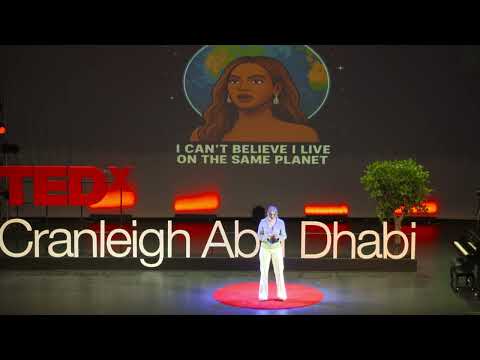
Remember your power | Honor Bevington | TEDxCranleigh Abu Dhabi
TEDx Talks· 2025-09-12 16:35
Climate Change Impact & Responsibility - The richest 10% of the population are responsible for 50% of all carbon emissions [8] - 805 million people go hungry every day, with 90% living in undeveloped countries, the vast majority being children [7] - Greenhouse gas emissions have increased from a negligible level to over 40 billion tons per year since the industrial revolution, raising the average annual temperature by about 1 degree Celsius [14] Disparities & Privilege - Some individuals have the privilege to prioritize choices, while others in places like the Critter Islands or individuals like Azad in Bangladesh are struggling with basic survival due to climate change [2][3] - Developed nations enjoy luxuries and entertainment while overlooking the struggles of those affected by climate change and poverty [6][7] Call to Action & Solutions - Individuals should educate themselves, donate to organizations like Oxfam or the Planet Impact Fund, and reduce their carbon footprint [11][12] - There is a need for a clean and effective energy source to address climate change [13] - Developed nations should provide developing countries with clean energy solutions to support their industrial development without harming the planet [15]
Geothermal energy: Hope for our energy crisis lies inside the earth | Dr. Rebecca Pearce | TEDxRRU
TEDx Talks· 2025-09-11 15:30
[Music] Our evolution is deeply connected to heat. Fire was our first great technology. With the flame, we chased out the cold, cooked food, and sought colder climates.We soon used fire to forge tools and drive industry. Today, we burn fuel to create steam and generate electricity. But burning things for energy is creating a crisis.We must urgently reduce emissions to avert climate change. Yet, our energy demand is rising. I know what you're thinking.We're screwed. But the answer is closer than you think. B ...

Understanding plant resilience in changing climates | Lauren Erland | TEDxAbbotsford
TEDx Talks· 2025-09-05 15:53
[Music] [Music] Uh I know the topic today is gratitude but what I want to talk to you about is actually the opposite of that. What happens when we forget to be grateful. What happens when we forget about gratitude. What happens when we start to take things for granted.um to just forget to kind of take that moment and recognize and acknowledge things. And for me as a a Berry researcher, what that really looks like is climate change. So, you know, most of us, I think, here live in the Fraser Valley.We've been ...