Consumer Spending

Search documents
BofA CEO Warns 10% Credit Card Cap Will Curb Spending
PYMNTS.com· 2026-01-22 20:14
Core Viewpoint - The proposed 10% credit card interest rate cap by President Trump is being questioned by Bank of America's CEO Brian Moynihan, who believes it could negatively impact consumer spending and credit availability [2][3]. Group 1: Impact on Consumer Spending and Credit Availability - Moynihan stated that implementing the cap would slow down consumer spending and limit credit availability, which may not align with the intended goals of the proposal [2][3]. - The banking industry argues that the cap would lead to a reduction in credit access, forcing consumers to seek less reliable and more expensive alternatives, such as payday loans [4]. Group 2: Industry Reactions - JPMorgan Chase CEO Jamie Dimon echoed Moynihan's concerns, suggesting that the cap could remove credit access for 80% of Americans, who rely on it as backup [5]. - Citigroup CEO Jane Fraser expressed skepticism about Congress supporting the 10% cap, indicating a broader industry consensus on the potential negative consequences of the proposal [5][6]. Group 3: Importance of Credit in the Labor Economy - Research indicates that a significant portion of low-wage workers, specifically those earning less than $25 an hour, rely heavily on credit, accounting for about 15% of U.S. consumer spending [6]. - The PYMNTS Intelligence report highlighted that 33.8% of workers in this low-wage cohort typically carry a revolving credit balance, compared to under 25% for the larger population [7].



Fed Data Shows the Consumer Holding up Until the Next $2,000 Emergency
PYMNTS.com· 2026-01-21 00:33
Core Insights - Consumer spending shows resilience despite inflation and economic uncertainty, with a median 4.9% year-over-year increase in nominal monthly spending reported in December, up from 4.1% in August [3] - There is a growing bifurcation in consumer behavior, with spending increasingly focused on necessities rather than discretionary items [4] - Higher-income households maintain spending activity, while lower-income households are more selective and cautious in their spending [8][9] Consumer Spending Trends - Households expect higher spending growth in essential categories: food at 5.4%, medical care at 5.3%, and housing at 4.1%, indicating a focus on essential costs [5] - Expected growth for transportation and recreation has declined, while clothing spending has edged higher but remains subdued, reflecting a shift towards non-discretionary needs [6] - The share of households reporting large purchases has declined, indicating a more targeted approach to spending rather than broad-based confidence [6] Income Disparities - Among households earning less than $50,000, the share reporting large purchases fell from 46% in August to 40% in December, while those earning between $50,000 and $100,000 saw a decline from 66% to 61% [8] - Higher-income households (earning $100,000 or more) reported a stable 77% participation in large purchases, maintaining the highest spending activity across income groups [9] Financial Resilience - Only 48% of consumers feel confident they could cover a $2,000 emergency within 30 days, despite half reporting over $2,500 in liquid savings, highlighting fragile financial cushions for many [11] - There is a disconnect between consumer expectations and reality, with 52% expecting to save more in the coming year, but only 24% having increased their savings in the past six months [12] Economic Outlook - The Fed's survey and additional data suggest that consumer spending will likely remain a stabilizing force for the economy in 2026, but the foundations of this spending are uneven, with higher-income households driving discretionary purchases while lower-income consumers focus on essentials [13]

The First Year of Donald Trump's Economy in 7 Charts
Business Insider· 2026-01-20 09:48
Economic Overview - Donald Trump was re-elected as president in 2025, introducing new economic plans affecting trade, immigration, and the federal workforce [1] - Economic uncertainty has impacted consumers, job seekers, and small to midsize businesses due to potential policy changes [1][2] - The effective tariff rate has reached its highest level in decades, significantly affecting trade dynamics [15] Job Market - The US added only 584,000 jobs in the past year, marking the lowest job growth outside a recession since 2003 [5] - Federal employment decreased by 9% year-over-year, driven by efforts to increase government efficiency [11] - Manufacturing employment declined by 0.5% from the previous year, continuing a trend of job losses in the sector [13] Consumer Spending - Despite economic uncertainty, consumer spending remains strong, characterized by a "K-shape" recovery where wealthier individuals are spending more while lower-income households are cutting back [20] - Spending has been primarily driven by high-income individuals and those with assets, such as homeowners and stock market investors [21] Inflation and Economic Growth - Inflation has decreased from a peak of about 9% in 2022 but remains above the Federal Reserve's target of 2% [18] - Real GDP showed growth in the second and third quarters of 2025 after a decline in the first quarter, indicating resilience in the economy despite job market challenges [9][8] - The jobless expansion is expected to continue due to demographic shifts and reduced net migration affecting the labor supply [9][10]
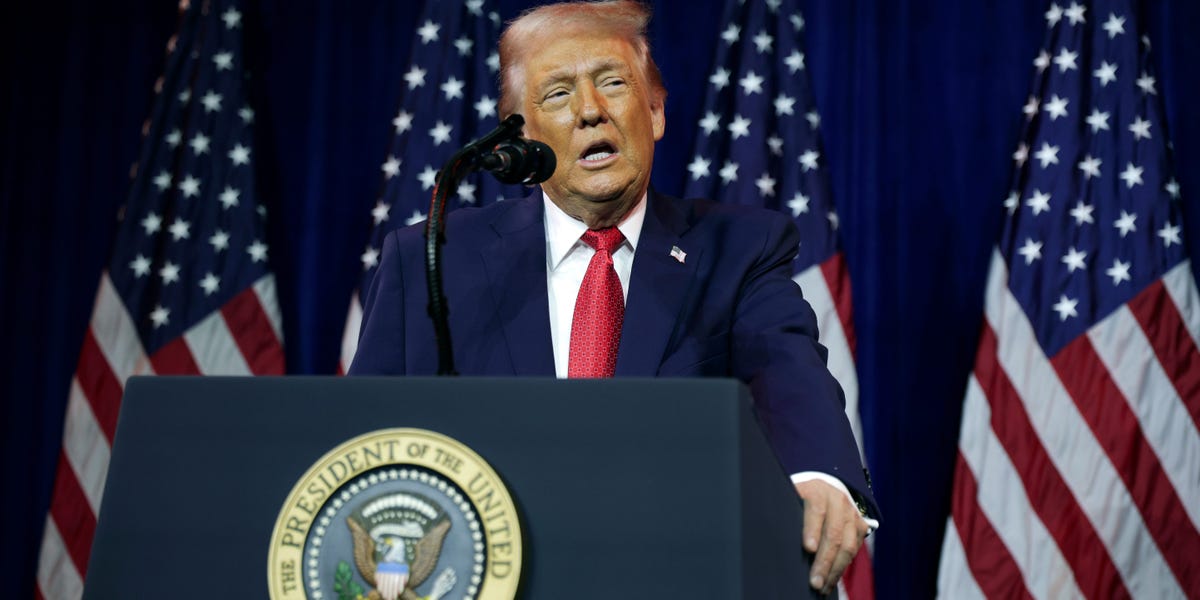
Could Consumer Spending Become a Headwind for Markets?
Yahoo Finance· 2026-01-16 22:59
Core Viewpoint - Consumer spending may face challenges that could negatively impact market performance, as rising inflation and interest rates are affecting disposable income and purchasing power [1] Group 1: Consumer Spending Trends - Recent data indicates that consumer spending has shown signs of slowing down, with a notable decrease in retail sales by 0.3% in September [1] - The personal savings rate has dropped to 3.4%, the lowest level since 2005, suggesting consumers are relying more on credit to maintain spending levels [1] - Inflation remains a significant concern, with the Consumer Price Index (CPI) rising by 3.7% year-over-year, impacting consumer confidence and spending behavior [1] Group 2: Economic Indicators - The Federal Reserve's interest rate hikes have led to increased borrowing costs, which may further constrain consumer spending [1] - Economic growth forecasts have been adjusted, with GDP growth expected to slow to 2.1% in the coming quarters, reflecting potential headwinds for consumer-driven sectors [1] - Job growth remains strong, but wage growth has not kept pace with inflation, leading to decreased real income for consumers [1]
Dollar Rises as Traders Digest U.S. Data
Barrons· 2026-01-15 09:19
Core Insights - The dollar is experiencing a slight increase as traders analyze recent U.S. retail sales and producer prices data while anticipating further economic indicators [1][2] Group 1: Economic Indicators - Retail sales in November rose by 0.6%, surpassing expectations, indicating strong consumer spending as the year-end approaches [2] - Producer prices increased by 0.2% month-on-month in November, raising the annual rate to 3.0% from 2.8% in October, suggesting that inflation has not yet peaked [2] - Analysts from Danske Bank note that the retail sales data reflects robust consumer spending, while the PPI data indicates potential for faster increases in consumer prices [2]
Buoyant Consumer Spending Signals Resilient Year-End GDP Growth
Barrons· 2026-01-14 15:59
Core Insights - Americans maintained strong spending momentum early in the holiday season, indicating potential for a significant boost in fourth-quarter economic growth [1] Retail Sector - Broad retail gains were observed, suggesting robust consumer activity during the holiday shopping period [1] - Strong dining out data further supports the notion of increased consumer spending [1] Economic Growth - The current spending trends could lead to real GDP growth exceeding 3% in the fourth quarter [1]
Is Fidelity’s Sleepy ETF Actually Easy Money In 2026?
Yahoo Finance· 2026-01-10 13:09
Core Insights - The Fidelity MSCI Consumer Discretionary Index ETF (FDIS) has shown a 3% increase at the start of 2026 after a 7% gain in 2025, but it has underperformed the broader market while maintaining a low annual fee of 0.084% [1] Group 1: Fund Performance and Composition - FDIS provides concentrated exposure to consumer discretionary stocks, with 97.7% of its portfolio in this sector, and nearly 40% of its assets are in Amazon (21%) and Tesla (18.28%) [2] - The performance of FDIS is significantly influenced by the contrasting stock movements of Amazon, which is up nearly 6% year-to-date, and Tesla, which has declined by 3.75% [2] Group 2: Economic Indicators and Consumer Spending - Consumer spending growth is projected to slow to 2% in 2026 from a historical average of 2.7%, which is critical for consumer discretionary stocks as they rely heavily on discretionary income [5] - The probability of a recession has decreased from 32% to 23.5% recently, indicating a potential soft landing for the economy, which is a positive sign for FDIS investors [6] Group 3: Company-Specific Challenges - Tesla's earnings have faced a significant decline, with a 63.8% drop in annual earnings per share in 2025, falling from $2.32 to $0.84, and a substantial miss in Q1 2025 earnings estimates [7]


BEA Outlines Plans for More Catch Up on Inflation, GDP Data
WSJ· 2026-01-07 22:00
Group 1 - A report covering personal income, consumer spending, and PCE inflation data for October and November will be published on January 22 [1] - An initial estimate of GDP for the final three months of 2025 will be released on February 20 [1]

3 Reasons the Stock Market Might Crash Under Trump in 2026
Yahoo Finance· 2026-01-07 17:36
分组1 - The S&P 500 index has increased by 16.3% over the last 12 months, outperforming its average annual return of around 10%, while the Nasdaq Composite has gained 19% due to optimism surrounding generative AI technologies [2] - Consumer spending, which constitutes about 70% of U.S. GDP, is primarily driven by the highest-income consumers, with the top 10% responsible for nearly half of U.S. consumer spending, indicating potential economic weakness [5][6] - The Trump administration's tariffs average around 18% on imports, with businesses absorbing much of the costs, leading to a lower-than-expected inflation rate of 2.7% in November [9] 分组2 - There are concerns that consumer spending may stagnate, particularly among middle and lower-income consumers, which could signal an impending recession [6][8] - The market may face challenges in 2026 and beyond, influenced by factors such as consumer spending, tariffs, and AI investments [3][7]
If You Own CWH Stock, You May Want to Sell, and Buy This Credit Card Stock Instead
The Motley Fool· 2026-01-06 06:14
分组1 - Camping World Holdings has seen a decline of over 50% in stock value over the past year due to stalled growth and thin profit margins, primarily relying on used RV sales for revenue [1][2] - American Express is positioned to provide better returns compared to Camping World, benefiting from consumer spending trends and capturing younger generations [3][9] - American Express reported an 11% year-over-year revenue growth in Q3 2025, significantly outpacing Camping World's revenue potential, which is less than a tenth of American Express's [8] 分组2 - American Express operates within a competitive landscape alongside Visa and Mastercard, profiting from a small percentage of each transaction processed through its network [6] - The popularity of American Express among Gen Z consumers is driving financial growth, as this demographic values lifestyle choices and experiences [9][10] - The stock price of American Express has more than tripled over the past five years, indicating strong long-term gains from attracting younger customers [10]