Drug Pricing

Search documents
Lilly CEO: U.K. has gone from biopharma leader to laggard
CNBC Television· 2025-09-16 22:02
we're seeing you and other companies pulling back from the UK. You know, just last week saw that you were pausing um one of your investments there. So, what's happening in the UK and you know, should that send a message to policy makers here in the US.>> Probably it should. I mean, I think uh the UK has been on a a long slow glide path from a leader in biofarmaceuticals to really a lagard and that's happened over the last 20 years through a number of policy mistakes. Um the most important one is that their ...


Mizuho's Jared Holz on the impact of China drug restrictions on the U.S.
CNBC Television· 2025-09-11 18:22
has drafted an executive order that would put severe restrictions on drugs from China in the name of national security. This comes as US pharma companies have been increasingly reliant on China buying rights to experimental drugs created there for everything from cancer to obesity and heart disease. For more on all this, let's bring in Jared Holtz, the healthc care equity strategist at Mizuo.Jared, great to see you. Thanks so much, Melissa. Appreciate it.Um, this has been a major source of deals so far this ...
Regeneron: Drug Pricing Woes Notwithstanding, Due For A Major Comeback
Seeking Alpha· 2025-09-02 22:30
Group 1 - The article discusses the performance of Regeneron Pharmaceuticals, Inc. (NASDAQ: REGN), highlighting an 8% increase in revenues to $14.2 billion and a GAAP net income per diluted share of $38.34 for 2024 [1] - The investing group Haggerston BioHealth provides insights into the biotech, pharma, and healthcare sectors, offering forecasts, financial statements, and market analyses [1] - Edmund Ingham, a biotech consultant with over 5 years of experience, leads the Haggerston BioHealth investing group and has compiled detailed reports on more than 1,000 companies [1]


Eli Lilly: In The Eye Of The Drug Pricing Storm - Expect Volatility, And Buy
Seeking Alpha· 2025-08-28 15:51
Group 1 - The article promotes a weekly newsletter focused on stocks in the biotech, pharma, and healthcare industries, aimed at both novice and experienced investors [1] - The newsletter provides insights on key trends, catalysts driving valuations, product sales forecasts, and integrated financial statements for major pharmaceutical companies [1] - The author, Edmund Ingham, has over five years of experience in covering biotech, healthcare, and pharma, and has prepared detailed reports on more than 1,000 companies [1]

X @Bloomberg
Bloomberg· 2025-08-22 11:20
Lengthy and increasingly fraught negotiations on drug pricing between the UK government and major drugmakers ended without an agreement on Friday https://t.co/czaytpbIui ...
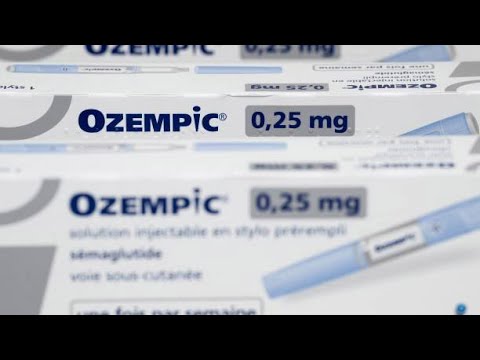
Novo Cuts Price of Ozempic in Half for Cash Buyers
Bloomberg Television· 2025-08-18 14:29
Market Dynamics - Novo Nordisk is aiming to regain market share from Eli Lilly in the GLP-1 market [2][10] - The obesity market is projected to reach $95 billion by 2030 [11] - Novo Nordisk is competing with compounders who offer lower-priced alternatives [4][5] Strategic Moves - Novo Nordisk is launching a cash pay version of Ozempic and expanding partnerships to increase drug accessibility [3][9] - Novo Nordisk is lowering the price of Ozempic for cash-paying patients [3][4] - Novo Nordisk already launched cash pay at cheaper Wegovy back in March for $500 per month [8] Financial Implications - The cost of Ozempic for cash-paying patients is $500 per month at the maximum dose of 2 milligrams per injection, which is $65 per milligram [4] - Compounders are offering alternatives at prices like $119.90 [5]

Eli Lilly raises price of diabetes drug Mounjaro in UK ahead of Trump deadline
CNBC Television· 2025-08-14 22:26
Market Dynamics & Drug Pricing - Lily, a top performer in the S&P, increased the list price of its diabetes drug, Monaro, in the UK, reflecting efforts to rebalance global drug prices [1][2] - The price adjustment aligns with the administration's communication to major manufacturers, including Eli Lily, signaling a broader industry trend [2] - The industry anticipates further price adjustments from other manufacturers, leveraging trade-offs to negotiate Medicare programs in the US, a crucial market [3] Clinical Data & Market Reaction - Positive clinical community reception of orpho news, despite investment community's disappointment with weight loss numbers and discontinuation rates, contributed to market momentum [5][7] - Detailed data on discontinuation rates and side effects from the orpho readout next month will be crucial for clinicians [8] - The clinical community is looking for statistically significant lower side effect profiles, even incrementally, to strengthen the argument for drugs like Mangaro [10] Strategic Considerations - Lily's actions signal ongoing negotiations with Medicare, indicating a strategic move to secure market share [6] - The market's response suggests a potential overreaction, influenced by factors beyond clinical data, such as AI's role in drug discovery [4][6] - The industry expects the cost of oral drugs to be lower than injectables due to supply chain efficiencies, though this remains uncertain [11]