
Liquidity

Search documents
Should You Pay Off Your Mortgage Early Or Invest the Extra Cash Instead? What Homeowners Should Do In 2026 - State Street SPDR S&P 500 ETF Trust (ARCA:SPY)
Benzinga· 2026-01-26 16:00
Core Insights - The financial landscape for homeowners in 2026 has shifted, with higher mortgage rates making paying off debt more attractive compared to investing in the stock market [3][4][9] - The decision to pay off a mortgage or invest depends on various factors including mortgage rates, expected returns on investments, inflation, tax situations, and personal financial discipline [3][5][9] Mortgage Payment Dynamics - In 2026, average mortgage rates are significantly higher than in the 2010s, making early loan repayment yield a higher guaranteed return by avoiding high interest payments [4][10] - Paying down principal reduces total interest paid over the loan's life and shortens the loan term, providing substantial savings [6][7] Guaranteed Returns vs. Investment Risks - Paying down mortgage principal offers a guaranteed return equal to the mortgage interest rate, which is risk-free compared to the uncertain returns from investing [8][19] - The opportunity cost of choosing between paying off debt and investing is crucial, especially when mortgage rates are high [18][19] Tax Considerations - The mortgage interest deduction has diminished in relevance due to the increased standard deduction, affecting the true cost of loans for many homeowners [11][12] Investment Growth Potential - Historically, diversified portfolios like the S&P 500 have outperformed mortgage costs, but current market conditions make the comparison more complex [13][14] - Inflation impacts the decision-making process, as fixed-rate mortgages benefit from debt erosion, but the slower inflation rate in 2026 weakens this argument [15][16] Liquidity and Cash Access - Paying down mortgage principal is less liquid compared to investments, which can be quickly converted to cash for emergencies [20][21] - Maintaining liquidity is essential for financial risk management, especially for those without sufficient emergency savings [21] Behavioral Finance Factors - Personal financial habits significantly influence the decision to invest or pay down debt, with mandatory mortgage payments acting as a form of forced savings [22][23] - Individuals prone to panic selling during market downturns may benefit more from focusing on debt reduction [23] Short-Term Options and Strategy - New low-risk savings options are available, offering higher interest rates than before, which may temporarily compete with mortgage payoff benefits [24][25] - A combined strategy involving emergency savings, retirement contributions, and careful comparison of mortgage rates with expected investment returns is recommended [26][27][29] Conclusion - There is no one-size-fits-all answer for homeowners in 2026 regarding whether to pay down mortgages or invest, as the best choice depends on individual risk tolerance and financial health [31][32]


X @Yuyue
Yuyue· 2026-01-25 23:53
勇敢一次,开始内向。其实 $Penguin 100M 追的逻辑没太大问题,追完之后当晚去了 170M,在 @Solana_zh 上 有一就有二 的情绪追涨还是很管用的但主要问题就是买了就去睡觉了,一觉醒来回成本了。。。总得来说目前这个市场环境追高还是得挺谨慎的,尤其过夜需要反复斟酌一下。当时 $RFC 的高点大概也在 200M,如果 $Penguin 收不回去 100 我也得止损了说实话,这两天跟一些高手也有所线下交流,大家共同的观点就是今年的链上也开始非常难玩了,流动性很差。所以我个人才开始对企鹅这种标才有了更高期待,因为现在非常缺乏一个能打开天花板的标的。SOL 链基本能反应的就是场内的真实流动性,而且也更独立于 CEX这和我上面说的目前 SOL onchain cex / stockmarket 的叙事版本是一样。由于 FTX 早就倒了,现在他们可能想做成的事就是,没有交易所的情况下流动性能不能背负得住代币更长的生命周期,于是上了各种币,甚至其他公链的币在链上进行交易。相对于 cex 版本的 pvp,这种模式会不会成功是有待观察的,但思路是非常先进的 ...
BITCOIN CRASHING - HERE IS WHY
Altcoin Daily· 2026-01-25 22:54
in Bitcoin, Ethereum, everything appears to be selling off. >> A huge week for Bitcoin and crypto is coming. Here are the five biggest events that will affect price and not in the direction you may think.If you hold crypto, you must watch until the end. Number five, the next government shutdown is happening beginning on Friday. 75% chance.Two months after the longest government shutdown in US history, lawmakers have less than two weeks to prevent another one. >> We have a January 30 deadline to fund the rem ...

X @ZKsync
ZKsync (∎, ∆)· 2026-01-25 16:41
🌐Ethereum is approaching its Visa moment enabled by ZKsync@hong_grvt explains at @CCNDotComNews why DeFi doesn’t need more chains but unified liquidity.https://t.co/cH1nmxeaJMChainstory (@chainstoryPR):"Ethereum can be DeFi’s Visa equivalent," says @grvt_io co-founder and CEO @hong_grvt, "with emerging architectures like @zksync Atlas enabling high-speed, near-subsecond execution across appchains without isolating liquidity."Read the op-ed on @CCNDotComNews https://t.co/Tw7thyprVK ...
Dollar Retreats as Easing European Tensions Boost the Euro
Yahoo Finance· 2026-01-22 20:32
Economic Indicators - The dollar index (DXY00) fell by -0.42% due to a stock rally that reduced liquidity demand for the dollar and euro strength following eased European tensions [1] - US weekly initial unemployment claims rose by +1,000 to 200,000, indicating a stronger labor market than the expected 209,000 [2] - Q3 GDP was revised upward by 0.1 to 4.4% (quarter-over-quarter annualized), surpassing expectations of no change at 4.3% [3] - November personal spending increased by +0.5% month-over-month, aligning with expectations, while personal income rose by +0.3% month-over-month, below the expected +0.4% [3] - The November core PCE price index rose by +0.2% month-over-month and +2.8% year-over-year, meeting expectations [3] Market Reactions - The euro (EUR/USD) rose by +0.54% amid dollar weakness, supported by President Trump's decision to refrain from imposing tariffs on European nations opposing his Greenland acquisition efforts [7] - The Eurozone January consumer confidence index rose more than expected to an 11-month high, contributing to the euro's gains [7] Federal Reserve and Interest Rates - The Federal Open Market Committee (FOMC) is expected to cut interest rates by about -50 basis points in 2026, while the Bank of Japan (BOJ) is anticipated to raise rates by +25 basis points in the same year [5] - The dollar is under pressure as the Fed increases liquidity in the financial system, having started purchasing $40 billion a month in T-bills since mid-December [6] - Concerns exist regarding President Trump's potential appointment of a dovish Fed Chair, which could negatively impact the dollar [6]
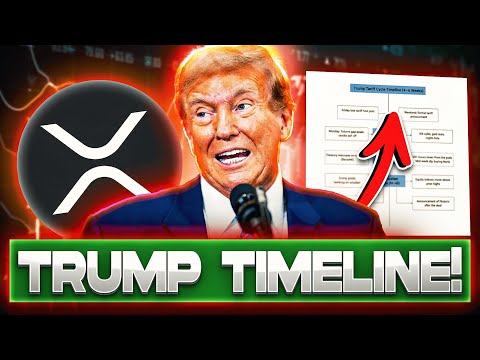
XRP HOLDERS THE TRUMP TIMELINE JUST GOT REVEALED (MARKET REVERSAL)
NCashOfficial - Daily Crypto & Finance News· 2026-01-22 01:01
Crypto was looking so good up until the 20th. This is when we got the big announcements of the EU trade war starting to intensify. If we go back to just the 20th alone, we have stocks plunged 1.3% trillion on Trump's Greenland tariff threats.The Dow dropped 871 points to 48,489. And the S&P 500 fell 2.1% to 6,797. And the Nasdaq sank 2.4% to 22,954 with tech leaders like Nvidia, Apple, Tesla, and Amazon each down over 3%.Trump's uh Truth Social post threatened 10% tariffs starting February 1st on imports fr ...
X @Uniswap Labs 🦄
Uniswap Labs 🦄· 2026-01-21 21:56
Continuous Clearing Auctions have officially been deployed on @base, that means any Based builder can:→ Run fully onchain token auctions→ Discover a credible market price→ Bootstrap liquidity on Uniswap v4 https://t.co/OKkwI26Sm8 ...
X @ZKsync
ZKsync (∎, ∆)· 2026-01-21 19:55
ZKsync's L1 Interop solution enables any ZK Chain to natively tap into Ethereum's DeFi liquidity without giving up its own governance, privacy or execution environment.Private where it matters. Connected where it counts.Grvt (@grvt_io):Visa didn’t win by creating more banks. It won by coordinating settlement.@ethereum is approaching its Visa moment, enabled by @ZKsync, scaling without fragmenting liquidity.DeFi doesn’t need more chains. It needs unified liquidity 👇 ...
Why Bitcoin is the Ultimate Safe Haven Asset!
Bitcoin Bram· 2026-01-21 17:01
In reality, Bitcoin's monetary properties being absolutely scarce and verifiably scarce, uh, also 247 365, not to mention it's a $2.4% trillion asset now. So, it's highly liquid as well. And so it's essentially these monetary properties combined with its 247 u basically instant liquidity uh globally mean that it can be and it's designed to be eventually the apex riskoff asset.Meaning that it's an asset that you want to own all the time, not just in periods where the market environment allows it to be a desi ...

X @Messari
Messari· 2026-01-21 15:13
Wormhole @wormhole has become core multichain infrastructure, powering $70B+ in cross-chain volume while enabling canonical, issuer-controlled assets via Native Token Transfers.Jake (@immutablejacob):.@wormhole NTT (Native Token Transfers) standard replaces fragmented wrapped assets with canonical multichain representations. NTT effectively:1. consolidates liquidity2. preserves issuer control3. simplifies risk management https://t.co/UpiFNTfLgV ...