Pollution

Search documents
How to Cool the Planet by Capturing Contrails | Dr Sarah Qureshi | TEDxFaisalabad Medical University
TEDx Talks· 2025-07-11 16:22
Aviation Industry & Environmental Impact - Aviation industry faces the challenge of reducing pollution, specifically moving from zero carbon (no CO2 emissions) to zero emissions (no CO2 and non-carbon emissions) [5][6] - Burning hydrocarbon fuel produces both carbon dioxide and water vapor, with water vapor behaving as a greenhouse gas in the atmosphere [4] - Contrails, or condensation trails, are artificial clouds formed by the freezing of water vapor released from aircraft engines, contributing to global warming by creating a heat-trapping blanket [6][7][10] - Contrails cover is increasing, with projections showing a significant rise in artificial cloud coverage by 2050 compared to 1992 [13] - Aviation's annual fuel burn is 4 billion tons, releasing 5 billion tons of water vapor, with 50% (2.5 billion tons) forming contrails, disrupting the earth's ecosystem [14] - Global warming heat signature from contrails is equivalent to 1 trillion watts, which is one-third of the world's annual electricity consumption [11] Technological Solutions & Innovation - Various technologies are being explored to reduce aviation pollution, including hybrid-electric, all-electric, liquid hydrogen burning, hydrogen fuel cells, ammonia fuel combustion, and sustainable aviation fuels [15][16][17] - Battery technology limitations hinder the development of large-scale electric aircraft, necessitating a combination of technologies [17][18] - A company has developed an add-on turbo machinery for jet engines to process exhaust emissions, converting water vapor into liquid water for later release as artificial rainfall, aiming to eliminate contrails [19][22] - The company's technology is at Technology Readiness Level (TRL) stages, progressing from basic concept and simulation (TRL 1-3) to lab testing (TRL 4-5) and eventually flight testing (TRL 9) for commercialization [26][27] Business & Market Strategy - The company aims to provide an alternate technology to reduce pollution in the sky, enabling regulations on emissions of smoke [34] - The company targets engine manufacturers, aircraft manufacturers, and airlines as potential adopters of its contrail-free engine technology [29][31] - Airlines can potentially create artificial rainfall, obtain carbon credits, and support environmental agencies' regulations by adopting the technology [34]


The cancer in your backyard | Lauren Minsky | TEDxHaverford College
TEDx Talks· 2025-07-09 16:16
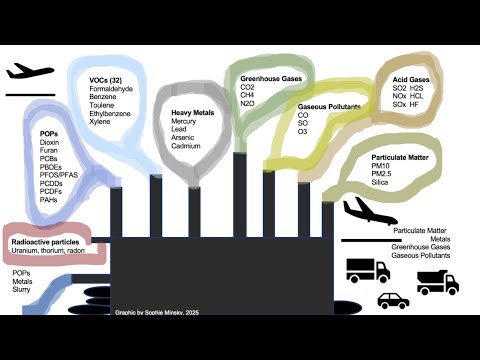
Environmental Pollution and Health Impacts - A Pennsylvania town, Chester, is heavily polluted by a trash incinerator burning 12 million tons of trash annually, an oil refinery with outdated pollution control, and other industrial facilities [3][4][6] - Air pollution in the area contains particulate matter, gaseous pollutants, heavy metals, and at least 32 different volatile organic chemicals [23][24] - Pollution can trigger cancer through oxidative stress, endocrine disruption, DNA damage, and epigenetic changes [28][29][30] Cancer Incidence in Delaware County - The People's Cancer Incident Screening Tool (PCIST) reveals elevated rates of various cancers in southeastern Delaware County compared to the US national average [32][35][36] - Chester City shows 11 different types of cancer with elevated incidence rates, ranging from 16% to 91% higher than the US average, with liver and bile cancer being almost double [34][35] - Marcus Hook, where an LNG refinery is located, exhibits cancer incidence rates ranging from 51% to 299% higher than the US national average [36] Societal and Ethical Considerations - The Pennsylvania Constitution guarantees the right to clean air and pure water, emphasizing the need to reconsider energy and waste management practices [42] - There is a lack of tools to see the connections between pollution and community's lived experiences of cancer [31] - Pollution from facilities like the oil refinery impacts the health of residents, including children playing sports nearby [16][41]
Saving the Planet one Basketball at a Time | Alexander Oliver Lu Scheel | TEDxYouth@YCYWShanghai
TEDx Talks· 2025-07-08 15:26
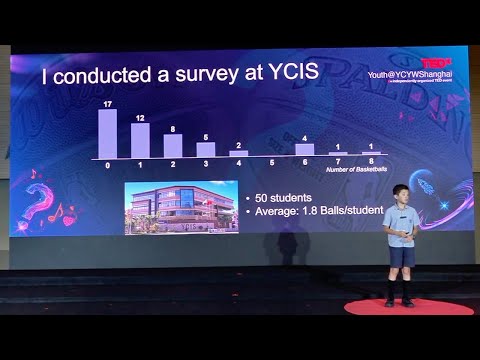
Environmental Impact of Basketball Waste - The industry produces 40 to 50 million basketballs annually, enough to fill an auditorium 10 times over [2] - A staggering 95% of basketballs end up in landfills or are burned [2] - Discarded basketballs decompose into toxic microplastics, polluting soil, water, and air [3] Consumer Behavior and Waste Generation - A survey at YCIS indicates the average student owns almost two basketballs, with some owning six or more [4] - This consumption pattern contributes to a global waste problem [4] Proposed Solutions for Sustainability - Encourage consumers to extend the lifespan of their basketballs [6] - Promote repairing damaged basketballs instead of discarding them [6] - Support recycling or donation programs, such as Wilson's Rebound, to repurpose old basketballs [6] - Advocate for reduced consumption of new basketballs [6]
Sustainable Style: Rethinking Fashion with Paper Mannequins | Meganath M | TEDxBITSathy
TEDx Talks· 2025-06-13 14:55
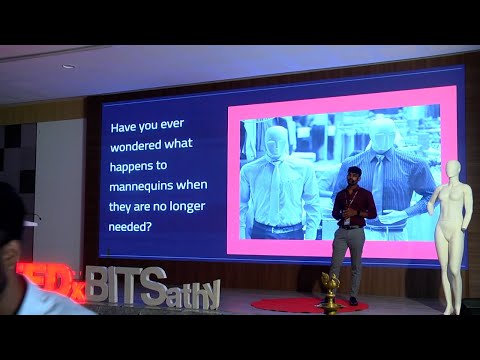
Textile Waste Problem - The fashion industry contributes 10-12% to global pollution, with textile waste accounting for 60% of fast fashion pollution [7][8] - India contributes 10-15% to global textile waste pollution [8] - Textile waste in India is classified into post-consumer, pre-consumer, and imported waste [9][10] - 17% of textile waste ends up in landfills [12][13] - A truckload of waste clothes is dumped into landfills every second in India [13] - Fiberglass mannequins are non-recyclable and contribute to landfill waste or toxic pollution through burning [16][17] Sustainable Solution: Restrict Mannequins - Restrict mannequins are 100% recycled using textile waste, biodegradable, eco-friendly, and sustainable [19] - Each Restrict mannequin uses 30-40 kilograms of waste textiles [22] - Restrict mannequins reduce carbon emissions by 70% and save 80% of usable water compared to normal mannequins [22] Call to Action - Consumers should think before purchasing clothes, support sustainable brands, and engage with recycling initiatives [24][25][26] - Spreading awareness can educate consumers about textile waste and encourage conscious purchasing decisions [26]