Inflation

Search documents
Dollar Tree squanders huge opportunity with customers
Yahoo Finance· 2026-01-25 16:33
Core Insights - Dollar Tree has shifted from its traditional $1 pricing model to a multi-price strategy to attract a broader consumer base, including higher-income shoppers [1][3][4] Group 1: Consumer Demographics - 10.3% of consumers earning $100,000 or more now shop at Dollar Tree, up from 5.6% in 2021, indicating a growing appeal to higher-income shoppers [2] - Persistent inflation has pressured higher-income consumers to seek value, leading them to Dollar Tree [2][3] Group 2: Pricing Strategy - Dollar Tree's CEO highlighted that the company's multi-price assortment is designed to meet consumer needs in a budget-constrained environment [3] - The introduction of higher price points, including $5 and $7 items, marks a significant shift from the company's original pricing strategy [7] - The move to diversify pricing could alienate budget-conscious shoppers who may find the new prices unaffordable [4][8] Group 3: Market Positioning - The company aims to maintain its value proposition while expanding its product range, but this strategy carries risks of losing its core customer base [4][6] - In 2024, Dollar Tree acquired 170 leases from 99 Cents Only Stores, indicating a strategic move to strengthen its market presence [9]

US Government Struggles to Keep a Lid on 10-Year Treasury Yield and Mortgage Rates
Wolfstreet· 2026-01-25 16:07
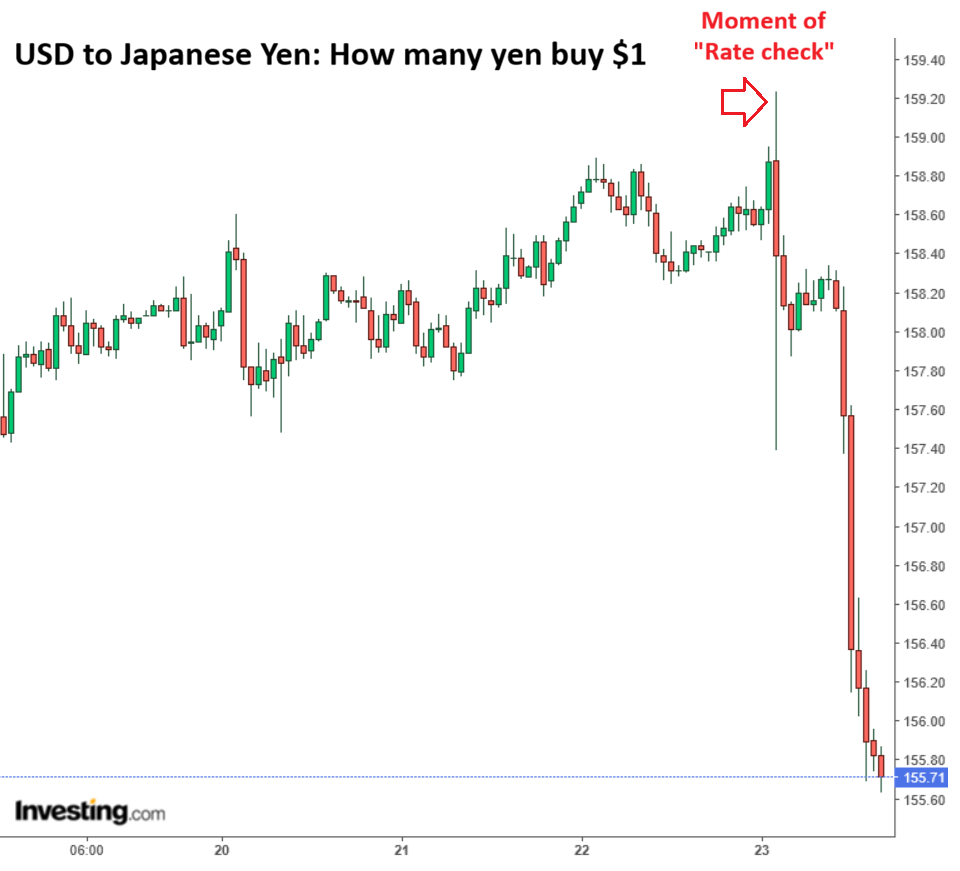
Core Viewpoint - The U.S. government is prepared to intervene in the currency market to support the yen against the dollar, following significant fluctuations in the Japanese bond market and the yen's depreciation [2][5]. Group 1: Currency Market Intervention - A "rate check" was conducted by Treasury Secretary Scott Bessent to stabilize the yen, which had fallen sharply against the dollar [1][2]. - Following the "rate check," the yen appreciated from 159.2 to 155.7 yen per USD within hours [3]. Group 2: Bond Market Dynamics - The Japanese bond market experienced a meltdown, with the 30-year Japanese Government Bond yield rising by 42 basis points to 3.91%, the highest since its introduction in 1999 [5]. - The 10-year U.S. Treasury yield increased to 4.30%, up 17 basis points in a week, impacting mortgage rates which rose to 6.20% from 6.01% [6]. Group 3: Government Actions and Market Reactions - Bessent communicated with Japanese officials to address market concerns, leading to a decrease in the 10-year yield from 4.30% to 4.23% after the "rate check" [7]. - The U.S. government-sponsored enterprises, Fannie Mae and Freddie Mac, initiated buybacks of mortgage-backed securities (MBS) to help lower mortgage rates, with a directive to buy back $200 billion in MBS [9][10].

The Fed Meets This Week—What It Could Mean for Savings and CD Rates
Investopedia· 2026-01-25 13:00
Core Insights - The Federal Reserve is expected to keep interest rates unchanged in its upcoming meeting, marking a pause after three consecutive rate cuts totaling 0.75 percentage points [1][2]. Economic Context - Inflation remains a significant concern, with the latest Consumer Price Index indicating a rate of 2.7%, above the Fed's target of 2%, which contributes to the cautious approach of policymakers [3]. Market Expectations - Markets currently estimate a 60% chance of a quarter-point rate cut by the Fed's June meeting, although these predictions are subject to rapid changes based on economic data [4]. Savings Rates - Savings account rates typically do not fluctuate significantly during Fed pauses, as banks often wait for clearer signals before adjusting rates [6]. - Despite recent rate cuts, competitive pressures have kept the best savings account yields historically high, ranging from 4% to as high as 5% [7][8]. Certificates of Deposit (CDs) - CD rates tend to respond differently than savings account rates, often adjusting in anticipation of Fed moves. Current top CD rates are around 4.50% APY [9][11]. - Timing is crucial for savers considering CDs, as locking in a competitive rate sooner can provide certainty against potential future rate adjustments [12].

Better Buy in 2026: Bitcoin or Gold? The Answer Couldn't Be Clearer.
Yahoo Finance· 2026-01-25 10:50
Core Insights - Gold is a long-established store of value, particularly during times of political and economic uncertainty, leading to increased investor demand [1] - Bitcoin, launched in 2009, is viewed by some as a digital equivalent of gold due to its decentralized nature and fixed supply [2] - The correlation between gold and Bitcoin as safe-haven assets has weakened, with gold significantly outperforming Bitcoin in the face of economic challenges [3] Gold Market Analysis - The U.S. dollar has lost approximately 90% of its purchasing power since the abandonment of the gold standard in 1971, leading to a rise in gold prices in line with increased money supply [6] - In fiscal 2025, the U.S. government reported a budget deficit of $1.8 trillion, raising national debt to a record $38.5 trillion, which historically prompts investors to seek refuge in gold [7] - Gold prices surged by 64% last year, reflecting its status as a preferred asset during times of economic instability [7] Bitcoin Market Analysis - Bitcoin's value declined by 5% last year, raising doubts about its viability as a digital gold alternative, especially given its limited utility beyond speculation [8] - Despite being characterized as a digital version of gold, Bitcoin did not attract investor interest during heightened economic uncertainty, contrasting sharply with gold's performance [9]
‘World War III has already begun,’ Jamie Dimon claims. Fear mongering or legitimate concern? How to keep your money safe
Yahoo Finance· 2026-01-25 10:39
Group 1: Geopolitical Tensions and Economic Impact - The likelihood of war and increasing global political tensions have risen since October 2024, driven in part by U.S. foreign policy [2] - Jamie Dimon, CEO of JPMorgan, expressed concerns that potential conflicts with countries like China, Russia, Iran, or North Korea are more concerning than instability in global financial markets [3][4] - A 2025 S&P Global report indicated that geopolitical risks significantly impact the global economic outlook, influencing economic growth, inflation, financial markets, and supply chains [5][6] Group 2: Investment Strategies in Times of Crisis - Investors are advised against holding cash during times of conflict, as it is vulnerable to inflation and typically loses value during wars [11] - Diversification is essential, especially in anticipation of a potential 10 to 20% drawdown in equity markets within the next 12 to 24 months, as stated by Goldman Sachs CEO David Solomon [20] - Alternative asset classes, such as art, have shown to outperform traditional equities and provide unique portfolio diversification opportunities [21][22]

The Top 10% Are Struggling Financially: 2 Shocking Truths About Americans Earning Over $200K
Yahoo Finance· 2026-01-25 09:55
Twenty years ago, a $200,000 salary meant taking luxurious vacations and buying fancy cars with enough money left over to save for your kids’ college educations and still go Christmas shopping. But, according to the Income Paradox Survey, a new study released by The Harris Poll, the top 10% of earners — those earning $200,000 and over — are struggling. Here are three more surprising truths the survey revealed. Did You Know? Sixty percent of Americans earning $200,000 or more report a six-figure income ...
Duolingo Speaks The Language Of Long-Term Compounding (NASDAQ:DUOL)
Seeking Alpha· 2026-01-25 07:50
Core Insights - Duolingo (DUOL) is recognized as a leader in language education and has established itself as a well-known consumer tech application with significant profitability and rapid growth [1] Company Overview - Duolingo has historically enjoyed a large premium due to its strong market position and financial performance [1] Investment Perspective - The article reflects a positive sentiment towards Duolingo's stock, indicating a beneficial long position in its shares [2]


Limbo for Longer: Don’t Expect More Fed Rate Cuts Before Mid-2026
Yahoo Finance· 2026-01-25 05:01
Core Viewpoint - The Federal Reserve is unlikely to cut interest rates in the near term, with a consensus among experts that rates will remain steady in upcoming meetings due to mixed economic signals and ongoing inflation concerns [1][2][5]. Economic Indicators - The US economy grew at an annualized rate of 4.4% in Q3 2025, the fastest pace in two years, driven by strong consumer spending, although the labor market showed weakness with fewer jobs added in December than expected [4]. - Inflation decreased to 2.7% in December from 2.9% a year ago, but remains above the Fed's target of 2% [4]. Federal Reserve's Position - Most Fed members prefer to wait for more economic data before making decisions on interest rates, particularly regarding inflation and labor markets [2]. - The Fed is balancing the need to cool inflation without increasing unemployment, complicating the decision-making process [3]. Future Rate Predictions - Bank of America predicts potential rate cuts in June and July 2026, while Goldman Sachs also anticipates two cuts of 25 basis points during the same period [6]. - J.P. Morgan Global expects the Fed to maintain current rates for the rest of the year, with a possible hike in Q3 2027 if the labor market strengthens [6]. Housing Market Insights - The average rate on a 30-year fixed mortgage fell to 6.06%, the lowest since September 2022, which could improve housing affordability if the Fed cuts rates later [7]. - However, mortgage rates are influenced by the 10-year Treasury yield, which is expected to remain stable despite potential Fed cuts [8]. Market Reactions - Historically, the second year of a rate-cut cycle has been positive for stocks, with the S&P 500 averaging a 6.2% increase during such periods [10]. - Existing bonds become more attractive when rates are cut, as lower borrowing costs can stimulate economic activity [11]. Bond Market Dynamics - The US Treasury market faced a selloff due to geopolitical tensions but stabilized after threats of a trade war diminished [12].
Tense Fed is set to lead global peers with interest-rate hold
Yahoo Finance· 2026-01-24 21:00
Core Viewpoint - Policymakers are balancing the potential growth risks from tariffs with inflation pressures in the current economic environment [1] Central Banks and Interest Rates - The Federal Reserve and several other central banks are expected to maintain current interest rates amid global economic tensions, with a focus on the implications of previous rate cuts [5][7] - The Federal Reserve is likely to hold rates steady after three consecutive cuts, allowing time to assess the impact of these reductions [7] - Central banks in Brazil, Canada, and Sweden are also anticipated to retain their current settings, reflecting a cautious approach to monetary policy [5] Global Economic Context - Kristalina Georgieva, head of the IMF, highlighted the increased vulnerability of the global economy, indicating a shift from previous stability [2] - Central banks worldwide are responding to a tense global backdrop, including market volatility in Japan and ongoing trade tensions [2][4] Inflation and Economic Data - Recent data indicates a decline in the US unemployment rate while inflation remains above the Fed's target, potentially supporting a pause in the easing cycle [8] - Upcoming economic reports, including the producer price index and consumer confidence, are expected to provide insights into inflation trends and economic momentum [9] Regional Focus - In Canada, the Bank of Canada is expected to maintain its policy rate at 2.25%, emphasizing slower growth and uncertainty related to trade agreements [10] - Australia is set to release inflation data that may influence the Reserve Bank's upcoming rate decision, with expectations of a year-over-year increase of 3.6% [12] - Japan's inflation data is also anticipated, with forecasts suggesting a slowdown to 2.2%, indicating persistent underlying price pressures [13][14] Latin America and Trade Policy - Brazil's central bank is expected to begin a multi-year easing cycle, although immediate changes are not anticipated [23] - Colombia's central bank is likely to respond to a significant minimum wage hike with a rate increase, reflecting rising inflation expectations [27] - External factors, particularly US trade policy and the review of trade agreements, are influencing the economic outlook for Latin America [26]
Domino's Pizza Is Now A Fresh Buy After The Recent Dip (Rating Upgrade) (NASDAQ:DPZ)
Seeking Alpha· 2026-01-24 08:22
Group 1 - The restaurant industry, including Domino's Pizza, Inc. (DPZ), is facing intense inflationary headwinds, leading to uncertainty [1] - The analyst has been involved in stock investing and macroeconomic analysis for nearly a decade, focusing on various sectors including banks, telecommunications, logistics, and hotels [1] - The analyst has diversified their portfolio by investing in different industries and market cap sizes, including both long-term holdings and trading positions [1] Group 2 - The analyst has entered the US market in 2020, gaining experience through a trading account initially managed by a relative [1] - The analyst has been utilizing analyses from Seeking Alpha to compare with their own research in the Philippine market [1]