
Energy Transition

Search documents
X @Bloomberg
Bloomberg· 2026-02-11 15:06
The deep divide in how major economies are approaching the energy transition risks forcing banks to choose between growth and climate finance, according to Barclays. https://t.co/ocEbkig8L6 ...
TotalEnergies(TTE) - 2025 Q4 - Earnings Call Transcript
2026-02-11 15:02
Financial Data and Key Metrics Changes - In 2025, the company generated $28 billion in cash flow from operations, exceeding the anticipated $25 billion [21][24] - The net adjusted income reached $15.6 billion, with a return on equity of 13.6% and a return on average capital employed (ROACE) of 12.6% [24][36] - The company maintained a strong balance sheet with a gearing ratio of 14.7% [25] Business Line Data and Key Metrics Changes - The upstream segment achieved a 4% growth in production, significantly above the guidance of 3% [15][18] - Integrated power production grew by over 20%, contributing to a total electricity net production of approximately 50 terawatt-hours in 2025 [19][20] - LNG sales increased by 10% compared to the previous year, aligning with production growth [19] Market Data and Key Metrics Changes - The company reported a 10% growth in integrated LNG production and sales, despite a low price environment [30][31] - The refining utilization rates were in line with targets after addressing technical incidents earlier in the year [19] Company Strategy and Development Direction - The company is focused on a balanced strategy with two pillars: oil and gas, and integrated power, aiming for sustainable growth and emission reductions [12][38] - Significant investments were made in energy efficiency programs, totaling $1 billion from 2023 to 2025, resulting in a reduction of 2 million tons of CO2 equivalent emissions [10][11] - The company aims to achieve near-zero methane emissions by 2030, having already reduced methane emissions by 65% compared to 2020 [9] Management's Comments on Operating Environment and Future Outlook - Management anticipates a challenging environment in 2026, prompting the launch of a cash-saving program to enhance resilience [69] - The company expects continued demand for oil and gas, with no peak demand anticipated in the near future [70] - The fundamentals of supply and demand remain stable, with a projected oil price planning at $60 per barrel [72] Other Important Information - The company has entered into a significant agreement in Namibia, establishing a new hub for future developments with substantial discovered resources [42][44] - The listing of ordinary shares on the NYSE aims to attract new investors and enhance liquidity [34] Q&A Session Summary Question: What are the key achievements in Namibia? - The company confirmed substantial discovered resources in Namibia, with projects like Venus and Mopane forming the basis of a new deepwater hub [42][43] Question: How is the company addressing emissions? - The company has exceeded its emission reduction targets, achieving a 65% reduction in methane emissions and a 38% reduction in Scope 1 and 2 greenhouse gas emissions [9][10] Question: What is the outlook for integrated power? - The integrated power segment is expected to generate $3 billion in cash flow, reinforcing the company's resilience against oil and gas market cycles [69]

TotalEnergies(TTE) - 2025 Q4 - Earnings Call Transcript
2026-02-11 15:02
Financial Data and Key Metrics Changes - In 2025, the company generated $28 billion in cash flow from operations, exceeding initial expectations of $25 billion [21][24] - The net adjusted income reached $15.6 billion, with a return on equity of 13.6% and a return on average capital employed (ROACE) of 12.6% [24][36] - The company maintained a low gearing ratio of 14.7% at the end of the year, indicating a strong balance sheet [25] Business Line Data and Key Metrics Changes - Upstream production grew by 4%, surpassing the guidance of above 3%, with a proved reserve replacement rate of 120% [15][16] - Integrated power production saw over 20% growth, contributing significantly to the overall energy production increase of 5% [17][20] - LNG sales increased by 10% compared to the previous year, aligning with production growth [19] Market Data and Key Metrics Changes - The company reported a cumulative reduction of 38% in Scope 1 and 2 greenhouse gas emissions, with a 65% reduction in methane emissions compared to 2020 [10][9] - The refining utilization rates were in line with targets after addressing technical incidents in the first half of the year [19] Company Strategy and Development Direction - The company is focused on a balanced strategy anchored on oil and gas, as well as gas and LNG, with significant achievements in new oil fields in the U.S. and Brazil [12][13] - The acquisition of interests in Malaysia and the development of a hub for gas supply in Asia are part of the strategic growth plan [14] - The company aims to achieve near-zero methane emissions by 2030 and has invested $1 billion in energy efficiency improvements [10][11] Management's Comments on Operating Environment and Future Outlook - Management anticipates continued growth in both oil and gas and integrated power, with a cash-saving program launched to strengthen resilience in a potentially challenging environment in 2026 [69] - The company plans to operate under a price assumption of $60 per barrel for oil, while recognizing stable demand and supply fundamentals [70][72] Other Important Information - The company has successfully listed its ordinary shares on the NYSE, aiming to attract new investors and enhance liquidity [34][35] - A significant focus on AI and data centers is being integrated into operations, with plans to enhance data capabilities and operational efficiency [63][65] Q&A Session Summary Question: What are the key developments in Namibia? - The company confirmed substantial discoveries in Namibia, establishing a new deepwater hub with projects like Venus and Mopane, which are expected to significantly contribute to production by 2030 [42][50] Question: How is the company addressing emissions? - The company has exceeded its emission reduction targets, achieving a 65% reduction in methane emissions and a 38% reduction in overall greenhouse gas emissions [9][10] Question: What is the outlook for 2026? - The company expects continued growth in cash flow from operations and integrated power, while implementing a cash-saving program to enhance resilience [69][70]
ICF Appoints New Energy & Infrastructure Leader
Prnewswire· 2026-02-10 21:05
Core Viewpoint - ICF has appointed Kyle Wiggins as the new leader of its Energy, Environment, and Infrastructure (EEI) client market to support rapid business growth amid increasing energy demand [1] Group 1: Leadership Transition - Kyle Wiggins succeeds Anne Choate, who became president of ICF earlier this year [1] - Wiggins previously led ICF's utility program and services division within EEI for six years, during which the division achieved record growth [1] Group 2: Business Growth and Market Position - ICF's EEI division is recognized as a leading provider of demand management, electrification, and energy efficiency programs for utilities across North America [1] - The demand for ICF's energy and infrastructure expertise is at an all-time high, indicating a strong market environment [1] Group 3: Executive Insights - John Wasson, ICF's chair and CEO, emphasized Wiggins' 20 years of experience in the energy sector and his operational expertise as vital for continued growth [1] - Wiggins expressed confidence in ICF's unique position to assist clients in navigating the rapid transition in the energy sector [1]



BP Q4 Earnings Beat Estimates on Higher Oil Production, Revenues Miss
ZACKS· 2026-02-10 19:31
Core Insights - BP plc reported fourth-quarter 2025 adjusted earnings of 60 cents per American Depositary Share, exceeding the Zacks Consensus Estimate of 57 cents and improving from 44 cents a year ago [1][10] - Total quarterly revenues were $47.7 billion, falling short of the Zacks Consensus Estimate of $59.9 billion and declining from $48.1 billion reported in the previous year [1][10] Operational Performance - BP's total production for the fourth quarter was 1,555 thousand barrels of oil equivalent per day (Mboe/d), an increase from 1,449 Mboe/d in the year-ago quarter [3] - The company sold liquids at an average price of $56.09 per barrel, down from $65.56 a year ago, and natural gas at $3.19 per thousand cubic feet (mcf), down from $3.29 [4] - Overall hydrocarbon price realization decreased to $44.98 per Boe from $52.28 year over year [4] Segment Performance - Underlying replacement cost earnings before interest and tax for the oil segment were $1.96 billion, down from $2.92 billion in the year-ago quarter, impacted by lower liquid price realizations and increased depreciation [5] - Gas & Low Carbon Energy segment profits totaled $1.39 billion, lower than $1.99 billion in the previous year, with total production declining to 788 Mboe/d from 850 Mboe/d [6] - The customers & products segment reported underlying replacement cost earnings before interest and tax of $1,346 million, significantly higher than a loss of $302 million in the year-ago quarter, driven by stronger performance and cost reductions [7] Refining and Capital Expenditure - BP's refining availability was 96% in the fourth quarter, up from 94.8% a year ago, with total refinery throughputs increasing to 1,460 thousand barrels per day (MBbl/D) from 1,390 MBbl/D [8] - Organic capital expenditure for the quarter was $3.5 billion, with total capital spending at $4.2 billion [11] Financials and Outlook - BP's net debt stood at $22.2 billion at the end of the fourth quarter, with a gearing of 23.1% [12] - For the first quarter of 2026, BP expects upstream production to remain flat and anticipates a seasonal decline in volumes in its customers' business [13] - For 2026, BP forecasts flat underlying upstream production compared to 2025, with anticipated divestment proceeds of $9-$10 billion and capital expenditures between $13 billion and $13.5 billion [14]

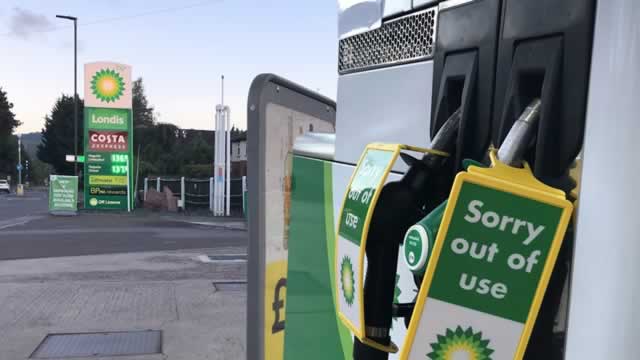
Greenbacker completes $440 million tax equity financing for the 674 MW Cider solar project — the largest in New York State
Globenewswire· 2026-02-10 17:25
Core Insights - Greenbacker Renewable Energy Company has successfully closed a $440 million Tax Equity Commitment for the Cider solar project, which is a significant milestone in financing the 674 MWdc / 500 MWac solar farm in New York [1][2][3] Financing Details - The $440 million tax equity financing from U.S. Bank and M&T Bank is crucial for optimizing the financial structure of the Cider project, which is expected to commence commercial operations in late 2026 [2][4] - This financing completes the capital stack for the project, following nearly $1 billion in previous financing from global project finance banks [4] Project Impact - Once operational, the Cider solar project is anticipated to power approximately 120,000 homes annually and generate around $100 million in revenue for the local community through various financial contributions [2][5] - The project is expected to create hundreds of construction jobs and significantly contribute to New York's clean energy transition [5] Leadership Commentary - Greenbacker's CEO highlighted the importance of this financing in delivering a major clean energy project and emphasized the strength of partnerships involved [3] - The CFO noted that the tax equity commitment optimizes the capital structure and is essential for advancing the project [3] Company Background - Greenbacker Renewable Energy Company focuses on acquiring and managing income-producing renewable energy projects, including solar and wind farms, and aims to facilitate the transition to a clean energy future [8]


ClearBridge Global Infrastructure Value Strategy Q4 2025 Commentary
Seeking Alpha· 2026-02-10 07:40
Core Viewpoint - Listed infrastructure underperformed global equities in Q4, impacted by higher long-term bond yields despite two cuts in short-term rates in the U.S. [2] - European utilities outperformed U.S. utilities, aided by improving regulations, while renewables benefited from their growing relevance in AI and policy derisking [2] Sector Performance - Underperforming sectors included natural gas utilities, energy infrastructure pipelines, communication towers, and North American rails, primarily due to higher production levels and unfavorable weather forecasts [3] - Electric utilities and toll roads were the top contributors to portfolio performance, while renewables and energy infrastructure were the main detractors [12] Regional Highlights - Western Europe was the top portfolio contributor, with U.K. electric utility SSE and Spanish toll road operator Ferrovial leading the performance [4] Company Insights - SSE, the U.K.'s largest renewable energy generator, saw its share price rise as funding risks diminished and macroeconomic concerns eased [5] - Ferrovial's U.S. listing qualified for Nasdaq 100 inclusion, and its core toll road asset in Ontario announced higher-than-expected toll increases for 2026, indicating strong pricing power [6] - WEC Energy and Brookfield Renewable were the largest detractors, with WEC's shares declining after a disappointing annual update and Brookfield's share price falling as the renewables trade cooled [7][8] Outlook - The inflection in electricity demand and solid earnings growth are expected to continue benefiting listed infrastructure performance into 2026, supported by lower nominal bond yields [9] - Electric utilities are positioned to benefit from the energy transition, climate change adaptation, and growing electricity demand, particularly from AI data centers [10] Portfolio Highlights - The strategy outperformed relative to the FTSE Global Core Infrastructure 50/50 Index in Q4, driven by strong stock selection in electric, water, and gas utility sectors [13] - Top contributors included SSE, Ferrovial, U.K. water utility Severn Trent, and U.S. electric utility NextEra Energy, while main detractors were WEC Energy and Brookfield Renewable [14] Investment Actions - Positions were initiated in Brookfield Renewable, Brazilian electric utility Equatorial, and U.S. electric utility Portland General Electric, while positions in Emera and Cheniere were exited [15]



AI Data Centers Fuel Clean Energy ETF Rally
Etftrends· 2026-02-09 18:57
AI Data Centers Fuel Clean Energy ETF Rally | ETF TrendsETF Trends is now VettaFi. Read More --The [ALPS Clean Energy ETF (ACES)] jumped 9.26% in January as investors turned their attention to the massive power requirements of AI data centers and the infrastructure needed to support them, according to recent ALPS Advisors [insights].The fund, which tracks seven clean energy segments including solar, wind, and energy storage, has attracted $115.8 million in assets since launching in June 2018, according to E ...

Should You Buy, Sell or Hold SCCO Stock Post Q4 Earnings?
ZACKS· 2026-02-09 15:11
Core Insights - Southern Copper Corporation (SCCO) reported higher year-over-year sales and earnings in Q4 2025, exceeding Zacks Consensus Estimates due to increased sales volumes and metal prices [2][9] - For 2025, SCCO achieved record sales of $13.4 billion, a 17.4% increase year-over-year, driven by higher sales volumes for molybdenum, zinc, and silver, despite a slight dip in copper sales volume [10][11] - The company anticipates a 4.7% decline in copper output for 2026, projecting production of 911,400 tons [12][6] Financial Performance - Q4 2025 earnings per share reached $1.56, a 59% increase year-over-year, with net sales rising 39% to $3.87 billion [9][11] - Adjusted EBITDA for 2025 hit a record $7.8 billion, up 22% year-over-year, while net income reached $4.3 billion, a 28.4% increase [11] - The Zacks Consensus Estimate for 2026 earnings is $6.37 per share, indicating a 21.6% year-over-year growth, although a decline of 12.6% is expected for 2027 [19] Production and Growth Outlook - Copper production for 2025 decreased by 1.8% to 956,270 tons, slightly below the expected 965,000 tons [12] - The company plans to invest over $20.5 billion over the next decade to ramp up copper production to approximately 1.6 million tons by 2033, indicating a 6.6% CAGR [13] - Major projects like Tia Maria and El Pilar are expected to contribute significantly to future production, with Tia Maria starting in 2027 and El Pilar in 2029 [14][15] Market Position and Competitive Advantage - SCCO holds the largest copper reserves among listed peers, totaling 51.1 million metric tons, enhancing its competitive positioning [16] - The company benefits from a supportive commodity price environment, with copper futures up 26% year-over-year and silver prices surging 170% in 2025 [17][18] - SCCO's current dividend yield of 2.00% is higher than the industry average of 1.26% and the S&P 500's 1.07% [22] Valuation and Investment Considerations - Southern Copper is trading at a forward price-to-sales multiple of 11.29X, significantly higher than the industry average of 5.13X [23] - The stock's premium valuation, combined with near-term production declines and expectations of softer earnings beyond 2026, suggests limited upside at current levels [27] - The unmatched reserve base and ambitious growth plans make SCCO a compelling long-term investment in rising copper demand [26]


Stellantis plans €22.2bn charges amid EV strategy reset
Yahoo Finance· 2026-02-09 11:50
Core Viewpoint - Stellantis will incur approximately €22.2 billion ($26.32 billion) in charges in the second half of 2025 due to restructuring operations and adjustments in its electric vehicle (EV) strategy [1] Financial Impact - The charges include around €6.5 billion in cash outflows over the next four years, stemming from revised product roadmaps and a scaled-down EV supply chain [1] - Most charges, totaling €14.7 billion, are related to changes in product plans and compliance with US emissions regulations, including €2.9 billion in write-offs for scrapped projects and €6 billion from platform impairments [2] - Preliminary results indicate estimated net revenues of €78 billion to €80 billion, a net loss of €19 billion to €21 billion, and adjusted operating income of minus €1.2 billion to €1.5 billion [6] Strategic Adjustments - The company is shifting towards offering hybrids and internal combustion vehicles alongside battery-electric models, with a $13 billion US investment program over four years and the rollout of 10 new vehicles [3][4] - Stellantis has terminated projects deemed unlikely to reach profitable scale, including the planned Ram 1500 BEV [3] Operational Improvements - The company reported early operating improvements, with second-half 2025 shipments expected to reach 2.8 million vehicles, an 11% increase year-on-year, and a sequential rise in US market share to 7.9% [5] - There have been significant reductions in first-month vehicle faults, with over 50% drops in North America and more than 30% in Enlarged Europe since early 2025 [5] Future Outlook - Looking ahead to 2026, Stellantis anticipates a mid-single-digit percentage increase in net revenues, a low-single-digit adjusted operating margin, and year-on-year progress in Industrial Free Cash Flows [7]
