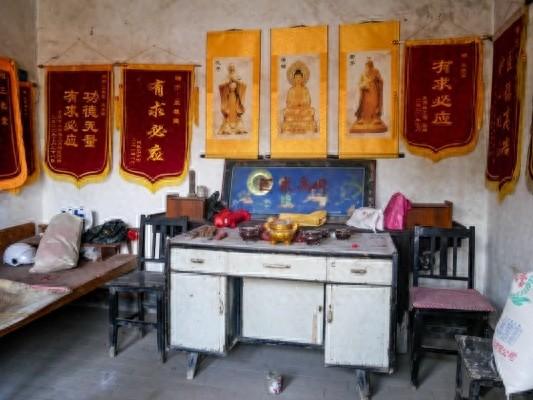
三教合一

Search documents
倚神而居:一座山西古村落的生活日常|土地与神祇
Xin Lang Cai Jing· 2026-02-18 08:03
Core Insights - The article discusses the cultural and historical significance of Dazhou Village in Shanxi, highlighting its traditional architecture and religious practices that reflect the region's unique geographical and cultural identity [1][2][3] Group 1: Cultural Heritage - Dazhou Village was included in China's first batch of traditional village listings in 2012, with key historical buildings recognized as national protected cultural heritage in 2013 [1] - The village is home to various religious structures, including the Ziseng Temple and Tang Wang Temple, which represent a blend of Buddhism, Taoism, and Confucianism, showcasing the region's historical religious diversity [2][3] Group 2: Religious Practices - The village historically featured 72 temples, symbolizing a rich tapestry of local religious beliefs, with deities from Buddhism, Taoism, Confucianism, and folk religions coexisting [2] - Tang Wang Temple, a central religious site, is dedicated to the rain deity, reflecting the agricultural community's reliance on rain for farming, particularly in a region prone to drought [8][10] Group 3: Community Dynamics - The article notes a shift in community engagement with religious practices, as younger generations migrate for work, leading to a decline in participation in traditional rituals [11][13] - The temples, while historically significant, are increasingly viewed as architectural landmarks rather than active centers of community life, raising concerns about their future relevance [11][13] Group 4: Architectural Significance - Tang Wang Temple features architectural elements from the Yuan and Ming dynasties, with unique construction techniques that attract visitors [10] - The temple's historical use as a community space for various activities, including education and entertainment, illustrates its evolving role in village life [14] Group 5: Modern Context - The article contrasts the traditional religious practices with modern technological advancements, such as the use of risk maps for agricultural planning, indicating a shift from spiritual to scientific approaches in addressing community challenges [10] - The lack of commercial development in Dazhou Village, despite its protected status, highlights the challenges of maintaining cultural heritage in a changing economic landscape [13][14]