东亚古人类演化

Search documents
“华龙洞人”头骨化石发现10周年 东亚古人类研究再获重要发现
Zhong Guo Xin Wen Wang· 2025-11-27 03:45
Core Insights - The discovery of human tooth and femur fossils in the Huolongdong site provides valuable evidence for the study of human evolution in East Asia [1] - The Huolongdong site has yielded over 20 ancient human fossils, including a notable 13-year-old female skull named "Dongzhi Girl," alongside over 400 stone tools and numerous animal fossils, illustrating the lifestyle of ancient humans in the region [1] - The Huolongdong site fills a gap in the evolutionary sequence of late Middle Pleistocene humans in East Asia, linking various archaeological sites along the Yangtze River to form a complete evidence chain of human origins and evolution [1] Archaeological Findings - In addition to human fossils, over 100 species of fossils have been discovered at the site, including 93 species of mammals, and evidence of ancient human fire use has been found through carbonized plant remains [2] - The presence of bone accumulations with cutting and chopping marks, alongside stone tools, vividly reconstructs the social scenes of the "Huolongdong people" engaging in communal living and cooperative hunting approximately 300,000 years ago [2] - Systematic research over the past decade confirms that the "Huolongdong people" are a significant group in the evolution towards modern humans in East Asia, with continuous evidence of human activity from 300,000 to 10,000 years ago [2] Technological Advancements - The archaeological team plans to establish an AI database and develop automatic fossil identification tools to advance archaeological research into a more intelligent domain [3]
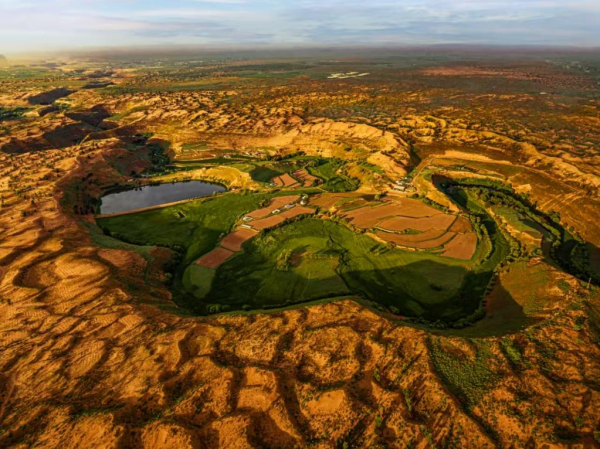
【新华社】萨拉乌苏遗址:“河套人”故里揭秘东亚古人类演化线索
Xin Hua She· 2025-09-30 01:20
Core Viewpoint - The Salawusu archaeological site, dating back to the Middle Paleolithic era, has been recognized as a national archaeological site park, revealing significant insights into East Asian human evolution and culture [2][3]. Group 1: Archaeological Discoveries - The Salawusu site, located in the Yellow River basin, has yielded approximately 200 Paleolithic artifacts since its discovery in the early 20th century, with recent excavations confirming the distribution of cultural relics [3]. - Advanced technologies such as 3D laser scanning and high-precision total stations have been employed to map the site, leading to the identification of key areas for further research [3]. - The site has revealed one human fossil location, three Paleolithic cultural sites, and 22 animal fossil locations, contributing to the understanding of ancient human activities [3]. Group 2: Cultural Significance - The discovery of the "Hertao Man" fossil, a child's tooth dating back approximately 50,000 years, marks a significant milestone in the study of human evolution in East Asia [6]. - The artifacts from Salawusu, including finely crafted stone tools, reflect a continuous evolution of technology and culture among early humans in northern China [7]. Group 3: Educational and Research Initiatives - The Salawusu National Archaeological Site Park has become a hub for educational visits, with local authorities emphasizing the importance of research and preservation [8]. - The Salawusu Archaeological Museum, opened in August 2023, spans over 6,500 square meters, showcasing the findings from a century of archaeological work and serving as a vital resource for understanding the "Hertao Man" and the site's significance [8]. - The site is currently in the process of applying for dual World Heritage status, aiming to enhance its protection and promote public engagement with ancient civilizations [9].