河套文化

Search documents
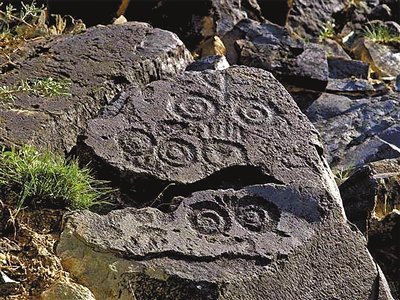
千里阴山 千古岩画
Xin Lang Cai Jing· 2026-02-24 20:22
Core Viewpoint - The "Thousand Miles Yinshan · Ancient Rock Paintings" art exhibition showcases over a hundred contemporary artworks inspired by the ancient rock paintings of the Yinshan Mountains, aiming to create a dialogue between ancient and modern art while promoting cultural identity and heritage [4][9][13]. Group 1: Exhibition Overview - The exhibition is hosted by the Bayannur Municipal Government and features various art forms including Chinese painting, oil painting, printmaking, and watercolor, all rooted in the Yinshan rock paintings [4]. - It aims to enhance cultural recognition and continuity of Chinese civilization through artistic expression, showcasing the historical significance and cultural value of the Yinshan rock paintings [4][6]. Group 2: Historical and Cultural Significance - The Yinshan Mountains are recognized as a significant geographical feature in northern China, with the rock paintings being one of the most concentrated and diverse collections globally, dating back thousands of years [6][7]. - These rock paintings serve as a cultural memory of early human societies, reflecting their spiritual world and societal practices, and are considered a vital part of Chinese cultural heritage [6][8]. Group 3: Artistic Dialogue and Innovation - The exhibition creates a dynamic dialogue between ancient cultural heritage and contemporary art, allowing for reinterpretation and recontextualization of the rock paintings [9][10]. - Artists utilize various techniques to explore and express the essence of the rock paintings, moving beyond mere replication to engage in a deeper spiritual and aesthetic conversation [10][11][12]. Group 4: Cultural Continuity and Future Implications - The exhibition emphasizes that cultural heritage is not merely a relic of the past but a source of contemporary creativity and vitality, encouraging artists to draw inspiration from ancient art to express modern narratives [13]. - It highlights the importance of actively continuing cultural threads, showcasing the enduring impact of human creativity and the rich tapestry of Chinese civilization [13].

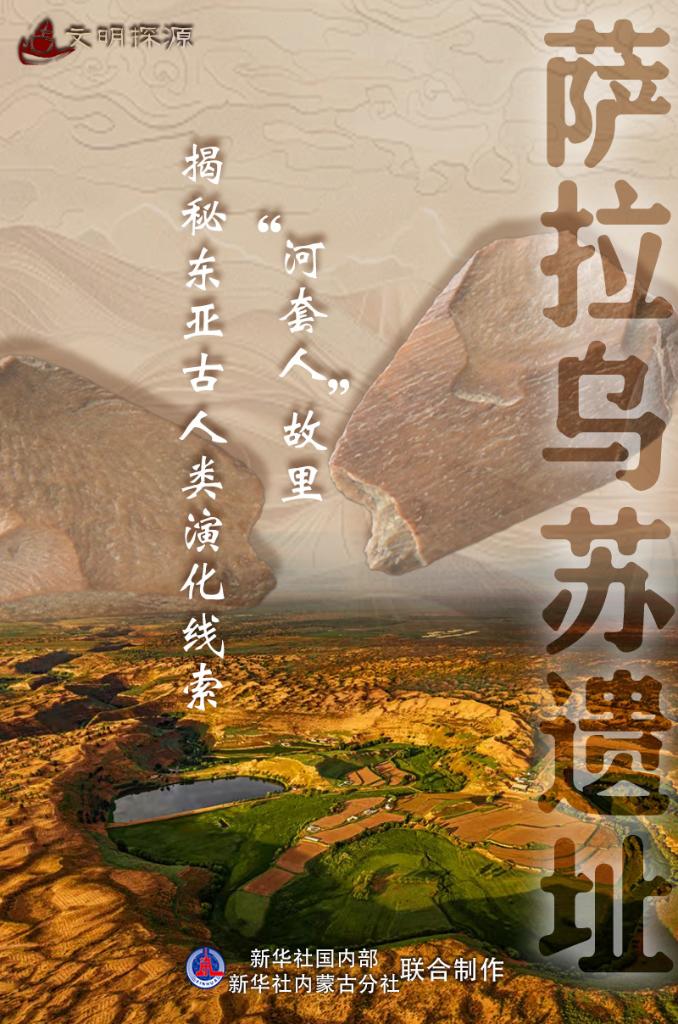
【新华社】萨拉乌苏遗址:“河套人”故里揭秘东亚古人类演化线索
Xin Hua She· 2025-09-30 01:20
Core Viewpoint - The Salawusu archaeological site, dating back to the Middle Paleolithic era, has been recognized as a national archaeological site park, revealing significant insights into East Asian human evolution and culture [2][3]. Group 1: Archaeological Discoveries - The Salawusu site, located in the Yellow River basin, has yielded approximately 200 Paleolithic artifacts since its discovery in the early 20th century, with recent excavations confirming the distribution of cultural relics [3]. - Advanced technologies such as 3D laser scanning and high-precision total stations have been employed to map the site, leading to the identification of key areas for further research [3]. - The site has revealed one human fossil location, three Paleolithic cultural sites, and 22 animal fossil locations, contributing to the understanding of ancient human activities [3]. Group 2: Cultural Significance - The discovery of the "Hertao Man" fossil, a child's tooth dating back approximately 50,000 years, marks a significant milestone in the study of human evolution in East Asia [6]. - The artifacts from Salawusu, including finely crafted stone tools, reflect a continuous evolution of technology and culture among early humans in northern China [7]. Group 3: Educational and Research Initiatives - The Salawusu National Archaeological Site Park has become a hub for educational visits, with local authorities emphasizing the importance of research and preservation [8]. - The Salawusu Archaeological Museum, opened in August 2023, spans over 6,500 square meters, showcasing the findings from a century of archaeological work and serving as a vital resource for understanding the "Hertao Man" and the site's significance [8]. - The site is currently in the process of applying for dual World Heritage status, aiming to enhance its protection and promote public engagement with ancient civilizations [9].
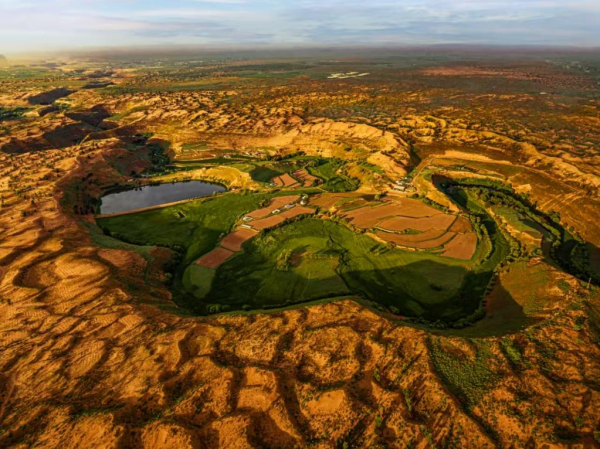
萨拉乌苏遗址:“河套人”故里揭秘东亚古人类演化线索
Xin Hua She· 2025-09-29 06:10
Core Viewpoint - The Salawusu archaeological site in North China's Yellow River basin, dating back 100,000 to 50,000 years, has been revitalized as a national archaeological park, revealing significant insights into East Asian human evolution [2][3]. Group 1: Archaeological Discoveries - The Salawusu site has been the focus of renewed archaeological efforts since 2021, utilizing advanced technology to map and analyze the site, confirming key areas of cultural significance [3]. - A total of 1 human fossil site, 3 Paleolithic cultural sites, and 22 animal fossil sites have been identified within the Salawusu archaeological area [4]. Group 2: Historical Significance - The discovery of a child's tooth fossil, known as the "Hertao Man," marks the first identification of a Paleolithic human fossil in East Asia, providing crucial evidence for the understanding of human history in China [5]. - The artifacts and fossils found at the site contribute to the narrative of human evolution, linking the "Hertao Man" to earlier hominins like "Peking Man" and "Upper Cave Man" [5]. Group 3: Cultural Heritage and Education - The Salawusu National Archaeological Park has become a center for educational visits, with local authorities emphasizing the importance of research and preservation of the site [8]. - The newly opened Salawusu Museum, covering over 6,500 square meters, showcases the archaeological findings and serves as a vital platform for public engagement with the region's ancient history [8]. Group 4: Future Prospects - The Salawusu site is in the process of applying for dual World Heritage status, aiming to enhance its protection and promote further archaeological research [10].