两高一低

Search documents
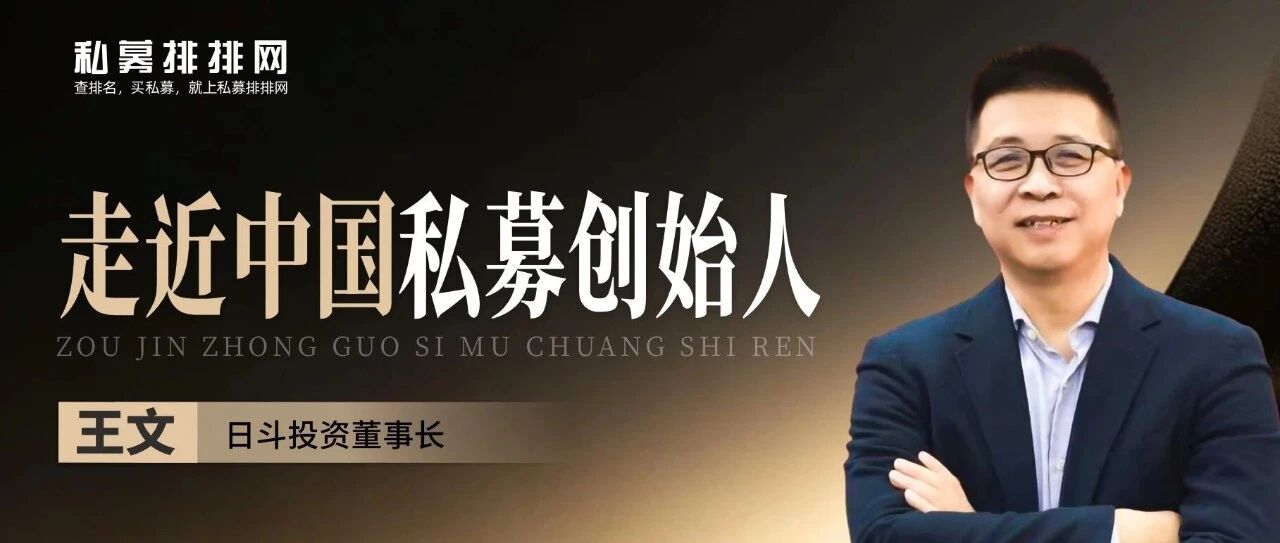
从农大走出的百亿私募掌门人,“万倍叔”王文的“价值狩猎”之路 | 走近中国私募创始人
私募排排网· 2026-03-27 03:32
Core Viewpoint - The article highlights the journey and investment philosophy of Wang Wen, the founder of Dayou Investment, who transformed an initial capital of 40,000 yuan into over 10 billion yuan in returns over 30 years, showcasing the evolution of China's private equity industry and the significance of deep value investing [2][26]. Group 1: Background and Early Career - Wang Wen graduated from China Agricultural University in 1990, which laid a solid foundation for his economic theories [4]. - After graduation, he worked at the Ministry of Agriculture, participating in drafting the first Agricultural Law and conducting extensive field research, enhancing his understanding of macro policies [4][5]. Group 2: Investment Milestones - Wang's investment career began in 1993 when he borrowed funds to enter the A-share market, marking the start of his journey in finance [5][10]. - Significant milestones include: - 1995: Transitioned from the Ministry of Agriculture to the financial sector, working for various investment firms [11]. - 1995-1997: Invested in Sichuan Changhong, turning 40,000 yuan into 400,000 yuan, marking his first major success [12]. - 1999-2004: Focused on B-shares, particularly Guangdong Electric B, achieving a fivefold return [19]. - 2004-2012: Invested in Yitai B, resulting in a total return of 100 times [22]. - 2013-2014: Invested in Guotou Electric, realizing a profit of 1 time as the company transitioned to profitability [24]. - 2013-2021: Long-term investment in Kweichow Moutai, achieving a cumulative return of 360.10% [25]. Group 3: Investment Philosophy - Wang's investment philosophy is encapsulated in the principle of "two highs and one low," focusing on companies with high cash flow, high dividends, and low valuations [31]. - He emphasizes the importance of thorough research before making investment decisions, advocating for a hands-on approach to understanding companies [32]. - Industry cycles play a crucial role in identifying investment opportunities, with a focus on sectors in an upward trend [34]. Group 4: Latest Insights and Market Outlook - In a recent investment strategy meeting, Wang expressed optimism for the 2026 market, predicting a continuation of the bull market and a potential for valuation recovery [36]. - He highlighted financial sectors, particularly insurance, banks, and brokerages, as key areas for investment [37][38][40]. - Wang's investment themes include "wealth, health, and enjoyment," focusing on internet companies, pharmaceuticals, and new consumer sectors [41][42]. Group 5: Investment Mindset - Wang advises investors to maintain a long-term perspective and not be swayed by market fluctuations or trends, emphasizing the importance of sticking to fundamental values [45][46]. - He warns against the distractions of market hype and encourages a focus on sustainable investment practices [47].

深度价值风格并未错过市场机会
Sou Hu Cai Jing· 2025-10-09 01:28
Core Viewpoint - The article emphasizes the resilience and effectiveness of the "deep value" investment style, particularly through the strategies employed by Cai Zhiwen of Huatai-PineBridge, who has successfully navigated market fluctuations and achieved strong performance in both downturns and recovery phases [2][11]. Performance Overview - Cai Zhiwen's managed products have shown significant performance, with returns of 89.03% for Huatai-PineBridge External Growth Theme Stock A since December 2019, 47.81% for Huatai-PineBridge Brand Power One-Year Holding Mixed A since March 2022, and 59.74% for Huatai-PineBridge Strategic Selected Small and Medium Cap Value Three-Year Holding A since March 2023 [3][4]. Investment Framework - The investment framework includes two main criteria: "PEG-ROIC" for growth stocks, where PEG should be less than 0.75 for A-shares and 0.5 for Hong Kong stocks, and ROIC should exceed 15% [3][4]. - The second criterion is "Two Highs and One Low," focusing on high ROIC, high dividends, and low valuations to identify stable value stocks [4]. Research Methodology - Cai Zhiwen invests nearly 200 days annually in industry research, engaging with experts and employing methods like "cross-industry verification" and "long-term tracking" to build a unique understanding of value [5][12]. - In the home appliance sector, he identified leading companies with stable market shares that have achieved consistent performance through product upgrades and overseas market expansion [5][6]. Sector Insights - In the oil industry, Cai Zhiwen identified a leading oil company with low valuation and high dividend yield, benefiting from a lack of new production capacity globally [6]. - In the renewable energy sector, he noted a shift in the battery industry characterized by halted overseas expansions and emerging demand, leading to increased pricing power for leading companies [7]. Cross-Market Strategy - Cai Zhiwen's strategy extends beyond traditional sectors, leveraging the unique attributes of the Hong Kong market, where quality stocks often experience significant price corrections due to short-term market sentiment [9][10]. - His rigorous selection criteria for Hong Kong stocks include additional requirements such as a dividend yield greater than 5% and a cash flow coverage ratio above 1.2 [10]. Product Design and Investor Solutions - The product offerings are categorized into equity products, such as Huatai-PineBridge External Growth and Huatai-PineBridge Brand Power, and fixed income plus products, catering to different investor needs [13][14]. - The design of holding periods ranges from open-ended to one-year and three-year holding periods, allowing investors to match their risk preferences and liquidity requirements [15]. Conclusion - Cai Zhiwen's deep value investment approach is characterized by a systematic and adaptable framework that transcends market cycles, focusing on fundamental understanding and strategic positioning to uncover value opportunities [17][18].