
中俄战略伙伴关系

Search documents
大外交丨王毅访俄、中俄对表,对日本发出“共同反对信号”
Xin Lang Cai Jing· 2025-12-04 11:16
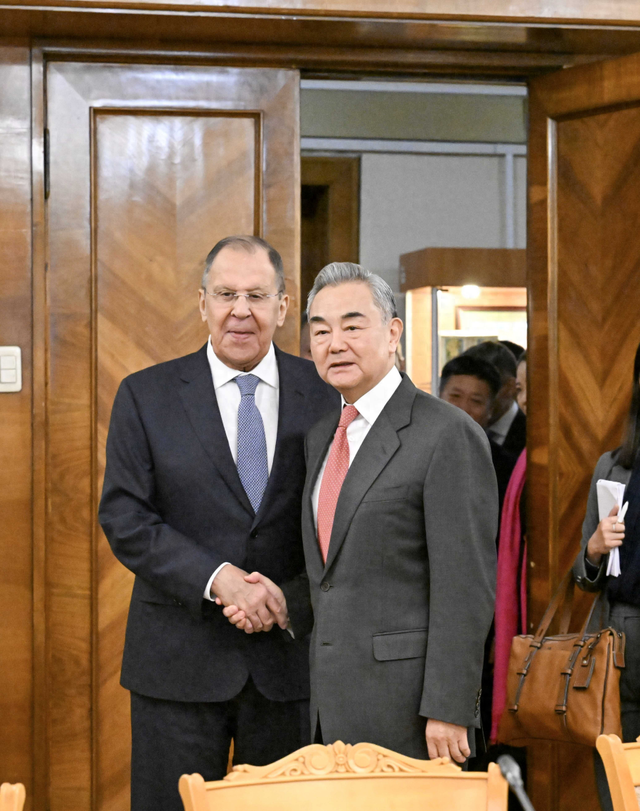
Core Viewpoint - The meeting between Chinese Foreign Minister Wang Yi and Russian Foreign Minister Sergey Lavrov highlights the strengthening of Sino-Russian relations amidst a turbulent international environment, emphasizing high-level cooperation and strategic trust between the two nations [2][3]. Group 1: Strategic Cooperation - Wang Yi and Lavrov discussed significant issues related to strategic security interests, achieving new consensus and enhancing strategic mutual trust [3]. - The two countries have established a comprehensive cooperation mechanism covering various fields, including energy, investment, and strategic security, which has deepened political mutual trust [4]. Group 2: Economic Relations - The bilateral trade volume between China and Russia is projected to reach $244.82 billion in 2024, reflecting a year-on-year increase of 1.9% [4]. - Both countries are actively working on aligning the Belt and Road Initiative with the Eurasian Economic Union, expanding their economic cooperation [4]. Group 3: Regional Security Concerns - The discussions included a strong consensus on issues related to Japan, with both nations committed to resisting any attempts to revise the historical outcomes of World War II and countering militaristic tendencies [5][7]. - Wang Yi emphasized the need for continued coordination to deter Japan's right-wing provocations that threaten regional peace and stability [5][7]. Group 4: Ukraine Crisis - The meeting also addressed the ongoing Ukraine crisis, with both sides exchanging views on the situation and expressing support for peaceful resolutions [8][10]. - China aims to play a constructive role in political solutions to the crisis, leveraging its relationships with both Russia and the West to facilitate dialogue [10].

中俄战略伙伴关系论坛北京举行 深化多领域协同合作
Zhong Guo Jing Ji Wang· 2025-06-17 07:13
Group 1 - The forum "Future Cities - The Synergistic Role of Moscow and Beijing's Strategic Partnership" was held, with 400 experts and representatives discussing cooperation in various fields [1] - Seven cooperation agreements were signed during the forum, focusing on trade, tourism, and education, indicating strong interest from Chinese partners in deepening collaboration [2] - Moscow's non-resource non-energy exports to China are significant, with a nearly 30% year-on-year increase expected in Q1 2025, particularly in consumer goods and high-tech exports [3] Group 2 - The tourism sector is emerging as a new growth point, with Chinese tourists expected to account for one-third of non-CIS visitors to Moscow in 2024, contributing over 42% of total spending [4] - In technology and cultural creativity, Moscow and Beijing are enhancing partnerships, with agreements focusing on AI applications and cultural events planned for 2024 and 2025 [5]