中华文明溯源

Search documents
大力弘扬长江沿江城市文明价值
Xin Lang Cai Jing· 2025-12-23 20:11
Core Viewpoint - Promoting urban civilization along the Yangtze River is an urgent need for advancing new urbanization and exploring a unique path for modern urbanization in China [1] Group 1: Value of Yangtze River Urban Civilization - The Yangtze River urban civilization holds significant importance in the development of Chinese civilization, being a major birthplace of urban civilization and a key area for early modernization in China [2] - Archaeological findings indicate that 14 out of 16 rice cultivation sites in China, dating back over 8000 years, are located in the Yangtze River basin, highlighting its role as a crucial origin of Chinese urban civilization [2] - The ancient city site of Chengtou Mountain, with walls dating back approximately 6000 years, confirms the Yangtze River urban civilization's importance in tracing the origins of Chinese civilization [2] Group 2: Displaying Urban Civilization Forms - The Yangtze River urban civilization has contributed to the emergence of new forms of urban civilization in China, characterized by unique urban spatial forms and functions [3] - Notably, many commercial towns along the Yangtze River lack city walls, contrasting with county cities that typically had them, reflecting a distinctive urban feature [3] - The economic development of these towns has led to the emergence of specialized towns, such as Jingdezhen for ceramics and Shimen for oil, showcasing the unique urban landscape and economic functions [3] Group 3: Early Modernization Carrier - The Yangtze River urban areas were pivotal in China's early industrialization and urbanization, serving as the starting and leading regions for modernization [4] - Key enterprises established during the Self-Strengthening Movement were located in these cities, such as the Jiangnan Machine Manufacturing Bureau in Shanghai and the Hanyang Iron Works in Wuhan [4] - By 1931, 10 out of 17 cities in China with over 10,000 industrial workers were located in the Yangtze River basin, accounting for 66.1% of the total industrial workforce in the country [4] Group 4: Pathways to Promote Urban Civilization - To enhance the value of Yangtze River urban civilization, it is essential to focus on new transformations and innovative developments, emphasizing its unique status [5] - Strengthening research on the origins of Yangtze civilization is crucial, aiming to establish it as a significant showcase of modern Chinese civilization [5] - There is a need to explore cultural resources and protect the unique urban landscapes of small cities in the Yangtze River basin, promoting cultural tourism and technological innovation [6] - Planning industrial heritage cultural routes can highlight the industrial civilization value of Yangtze River cities, integrating resources for systematic development [6]
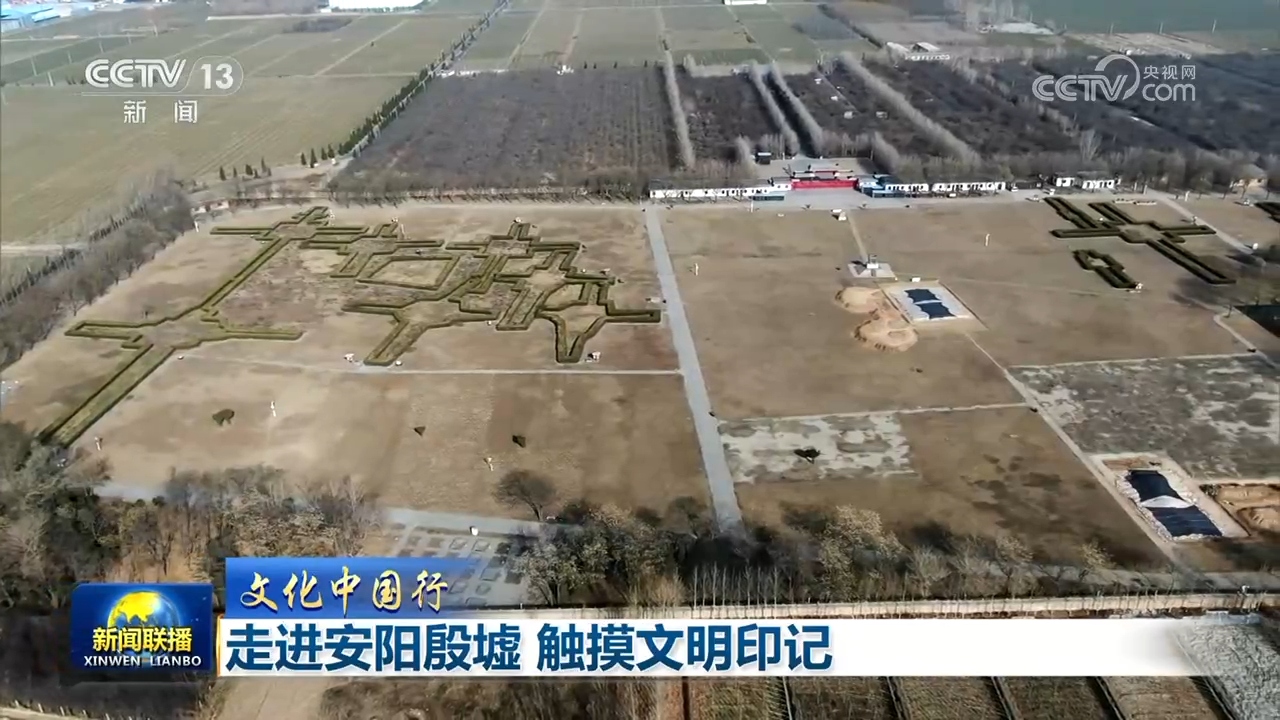
【文化中国行】走进安阳殷墟 触摸文明印记
Yang Shi Wang· 2025-12-18 12:45
Group 1 - The Yinxu site in Anyang, Henan, is recognized as the first historically documented capital of the Shang Dynasty, with archaeological evidence confirming its significance [1][3] - The site has yielded numerous artifacts, including large palaces, royal tombs, and over 150,000 oracle bones, showcasing the advanced technology and social organization of the Shang society [3][5] - The discovery of a vast industrial workshop area indicates a high level of craftsmanship in bronze casting, jade making, bone working, and pottery, reflecting the intricate division of labor during that period [5] Group 2 - Significant archaeological breakthroughs during the 14th Five-Year Plan period include the discovery of a large pool garden and a comprehensive road network, providing critical evidence for understanding the layout of the Shang capital [3][6] - The site was inscribed on the World Heritage List in 2006, and modern technology is now enhancing the preservation and transmission of this cultural heritage through satellite monitoring and 3D scanning [8] - The heavy bronze ritual vessel, the He Mu Wu Ding, weighing 832.84 kilograms, symbolizes the power and ceremonial culture of ancient China, further emphasizing the site's historical importance [6]