中国减贫

Search documents
印媒:不应掩盖中国减贫成功经验
Xin Lang Cai Jing· 2026-02-01 23:26
Core Viewpoint - The article emphasizes the importance of learning from China's successful poverty alleviation strategies, highlighting the consequences of ignoring these lessons for global society [1][4]. Group 1: China's Poverty Alleviation Success - China has lifted 800 million people out of poverty, a feat recognized as one of the greatest in human history by international organizations [2]. - The definition of "extreme poverty" in China is based on living standards and dignity, not just income, ensuring comprehensive support in areas like education, healthcare, and housing [2]. - The verification process for poverty alleviation in China involves multiple levels of public scrutiny, enhancing transparency and accountability [2]. Group 2: Comparison with the United States - The U.S. poverty definition relies heavily on income thresholds that do not reflect actual living conditions, leading to millions being classified as above the poverty line while still struggling to meet basic needs [3]. - Unlike China's approach, which views poverty as a structural issue, the U.S. often attributes poverty to individual failure, neglecting systemic factors [3]. - The U.S. invests significantly in military expansion and foreign interventions, benefiting political and corporate elites, while China focuses on improving living standards through investments in healthcare, housing, and education [3]. Group 3: Call for Global Cooperation - The article argues for global collaboration to address rising inequality, urging a shift in focus from military spending to meeting people's needs [4]. - It stresses the necessity for the U.S., China, and other nations to work together to eliminate global inequality and ensure a fair and sustainable future for all [4].
外国画家在中国——用画笔记录中国高质量发展新风貌
Ren Min Ri Bao· 2025-12-23 05:14
Core Viewpoint - The article highlights the artistic contributions of foreign artists in depicting China's development, particularly in areas such as poverty alleviation, cultural heritage, and ecological protection, showcasing the country's high-quality growth and modernization efforts [10]. Group 1: Artistic Contributions - Russian artist Nikita Mendeleev-Tsifrov created an oil painting titled "Clouds Around Songhua," capturing the beauty of Songhua Lake, which reflects China's natural landscapes and development [10][12]. - Mexican artist José Luis expressed astonishment at the advanced state of Chinese agriculture, illustrating scenes of wheat harvesting in Henan, and emphasizing the role of technology in modern farming practices [13][14]. - French professor and artist Wei Mingde documented the transformation of Liangshan Yi Autonomous Prefecture, showcasing the improvements in local living conditions and healthcare through his ink paintings [16][17]. Group 2: Cultural Exchange and Innovation - Afghan student Hina, studying in China, emphasized the vibrant cultural exchange and innovation in traditional crafts, noting how Chinese culture integrates heritage into daily life, which could inspire similar practices in her home country [19][21]. - The article discusses the establishment of over 12,900 intangible cultural heritage workshops in China, which not only preserve traditional crafts but also contribute to rural revitalization and employment [21].


“搬得出、稳得住、能致富”
Ren Min Ri Bao· 2025-10-30 22:37
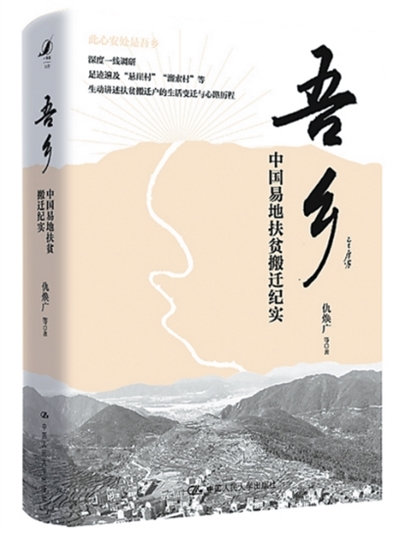
Core Insights - The core argument of the article emphasizes that relocation policies are fundamental in addressing poverty and enabling significant development for impoverished communities in China [2] Group 1: Policy Impact - The relocation policy has effectively addressed long-standing issues such as harsh natural conditions and resource scarcity, allowing tens of millions to escape poverty and laying a solid foundation for achieving a moderately prosperous society [2] - Research conducted since 2015 involved extensive field studies in eight provinces with over 500,000 relocated individuals, analyzing the multifaceted impacts of the relocation policy [2][3] Group 2: Personal Stories - The book includes compelling narratives of families before and after relocation, illustrating the transformative effects on their lives, such as the case of Yang Hongliang, who found stability and family reunion after relocation [3][4] - Another story highlights how a family, burdened by illness and poverty, found new hope and stability through the relocation policy, with family members securing stable jobs in the new community [4] Group 3: Future Outlook - The article suggests that the success of the relocation policy is a collective achievement of millions, indicating a promising future for rural China as a more prosperous and beautiful homeland [4]