中国古代物质文化交流史

Search documents
四项“考古北京”(2025)最新考古成果发布
Zhong Guo Jing Ji Wang· 2025-12-01 09:50
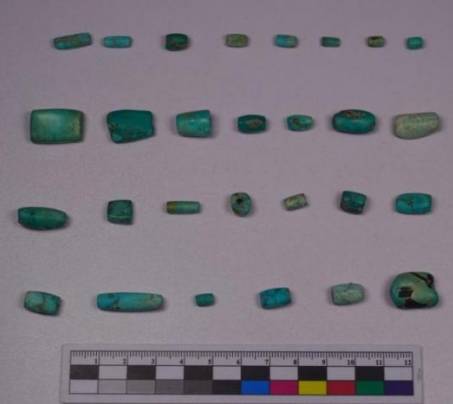
Core Insights - The recent archaeological findings in Beijing highlight significant historical and cultural developments, showcasing the integration of diverse civilizations and trade interactions in ancient China [1][3][5]. Group 1: Archaeological Discoveries - The Xinguang site is the only known dual-ring moat settlement from the Xia and Shang dynasties found in Beijing, filling a historical gap and exemplifying the fusion of diverse cultural elements [1]. - The discovery of 28 turquoise artifacts from the Dakuotou culture indicates that the turquoise originated from the southern regions of Hubei and Shaanxi, providing crucial evidence for early material culture exchange in China [1]. - The Liulihe site, associated with the Western Zhou state of Yan, has yielded over 3,000 animal bone remains, revealing insights into the dietary practices and animal utilization of the ancient inhabitants [3]. Group 2: Cultural Significance - The findings at the Forbidden City, particularly from the workshop site, span multiple dynasties and illustrate the historical development of Beijing as a capital of a multi-ethnic state [5]. - The exhibition "Under Nine Heavens: Archaeological Achievements of the Forbidden City Workshop" showcases artifacts that reflect the daily lives of craftsmen, enhancing the understanding of cultural practices during the Qing dynasty [5]. - The Arrow Pass Great Wall project has uncovered over 300 artifacts, including a cannon from the Chongzhen era, which contributes to the study of military technology exchanges between China and the West [9]. Group 3: Future Research and Preservation - The ongoing archaeological work at the Arrow Pass Great Wall aims to integrate archaeological research with preservation efforts, ensuring a seamless connection between excavation and conservation [9]. - The "Archaeological Beijing" initiative, launched during the 14th Five-Year Plan, aims to highlight the contributions of archaeology to the protection of historical sites and cultural heritage in the city [9].