中国早期冶金文明多元起源

Search documents
淅川发现长江流域最早青铜器 距今约4500年
He Nan Ri Bao· 2025-11-25 23:30
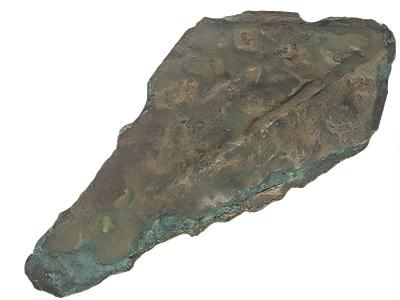
Core Insights - The recent discovery of bronze artifacts in the Yangtze River basin, specifically the bronze arrowhead and bronze rod-shaped object, dates back approximately 4,500 years, marking the earliest known bronze items in this region [1][4] - This finding pushes back the timeline of metallurgy in the central Yangtze region to the late Qijialing culture, indicating that bronze casting technology was present earlier than previously thought [4] Group 1: Artifacts and Their Characteristics - The bronze arrowhead measures 3.66 cm in length and has a flat cross-section with visible casting marks, while the bronze rod-shaped object is 6.45 cm long and shows significant casting voids [4] - Both artifacts were confirmed to be made from a copper-tin-lead alloy, reflecting the primitive characteristics of early metallurgy, with impurities indicating the use of polymetallic ores [4] Group 2: Historical and Cultural Significance - The discovery provides new materials for studying the origins, dissemination, and development of metallurgy, suggesting that the central Yangtze region may have developed metallurgical techniques in parallel with northern regions [4] - This finding contributes to the understanding of the diverse origins of early Chinese metallurgy, highlighting the cultural interactions between the central plains and the Yangtze River basin [4][6]