
中间派政治

Search documents
释新闻|“荷兰特朗普”输掉选举,欧洲民粹主义右翼的“分水岭”?
Xin Lang Cai Jing· 2025-11-01 05:04
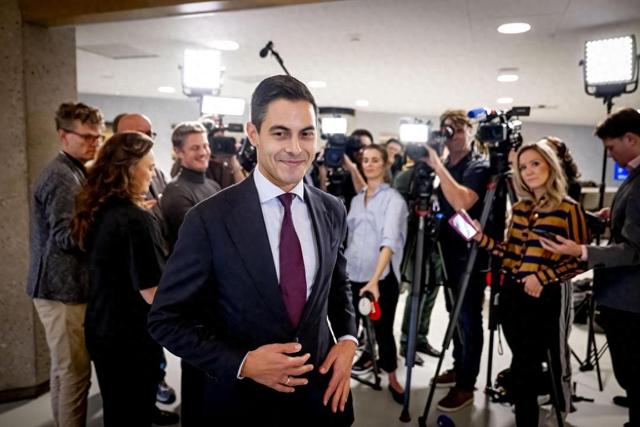
Core Points - The D66 party has confirmed its victory in the Dutch parliamentary elections, with the Freedom Party unable to surpass it in the vote count [1][3] - The election is viewed as a referendum against the far-right, with the D66 party's success indicating a desire for centrist politics among voters after a period of political instability [3][4] Election Results - The D66 party, led by Rob Jetten, is expected to form the new government, with Jetten likely to become the new Prime Minister [4] - The Freedom Party, previously the largest party, has seen a significant drop in support, going from 37 seats to an expected 25 seats in the new parliament [6][9] Political Context - The Freedom Party's extreme positions and failure to deliver on campaign promises, such as immigration reforms, contributed to its decline in voter support [6][9] - The political landscape in the Netherlands remains fragmented, with no party achieving an absolute majority, leading to potentially lengthy coalition negotiations [4][10] Voter Sentiment - Voters expressed a strong desire for a shift away from negative and hateful politics, favoring a more positive and progressive agenda [4][9] - Issues such as immigration and housing shortages remain unresolved, which may impact future electoral outcomes [9] Future Implications - Analysts suggest that the far-right may continue to pose challenges in the political arena, despite the recent electoral setback for the Freedom Party [7][10] - The potential for future elections within a year is indicated, reflecting ongoing political fragmentation in the Netherlands [10]

【环时深度】两年换5任总理,法国中间派为何力量消减
Huan Qiu Shi Bao· 2025-10-21 23:10
Core Points - The French political landscape is currently unstable, with Prime Minister Le Cornu narrowly surviving a vote of no confidence and facing challenges in the upcoming budget discussions [1][2] - The middle-ground political party led by President Macron has lost its dominant position, leading to a fragmented political environment with left, center, and right factions competing for power [1][2][3] - Economic pressures, including high public spending and a persistent budget deficit, complicate the government's ability to implement reforms and maintain public support [4][5] Group 1: Political Dynamics - Le Cornu's government has faced multiple challenges, including a recent vote of no confidence and the need to navigate the budget discussions starting October 24, 2023 [2][3] - The middle party's loss of majority has resulted in a "three-legged" political structure, with left, center, and far-right parties vying for influence [1][3][6] - The historical context of French politics shows a shift from a two-party system to a more fragmented political landscape, with the rise of Macron's centrist approach disrupting traditional dynamics [6][7] Group 2: Economic Challenges - France's public spending accounts for nearly 60% of GDP, with a budget deficit exceeding the EU's 3% limit, creating significant fiscal pressure [4][5] - The suspension of pension reforms, initially a key strategy for fiscal consolidation, complicates the government's ability to meet budgetary goals [2][4] - The government faces potential public backlash if budget proposals include tax increases or cuts to local funding, highlighting the tension between fiscal responsibility and public sentiment [4][5] Group 3: Future Outlook - The political culture in France is characterized by a lack of consensus-building, making it difficult for the middle party to maintain unity and effectiveness [3][9] - The upcoming 2024 elections will be crucial for the future of the middle party, as internal divisions and external pressures from left and right factions intensify [8][10] - Analysts suggest that the current political structure may provide an opportunity for a more cooperative governance model, but this will depend on a significant cultural shift in political engagement [10]