人性光芒

Search documents
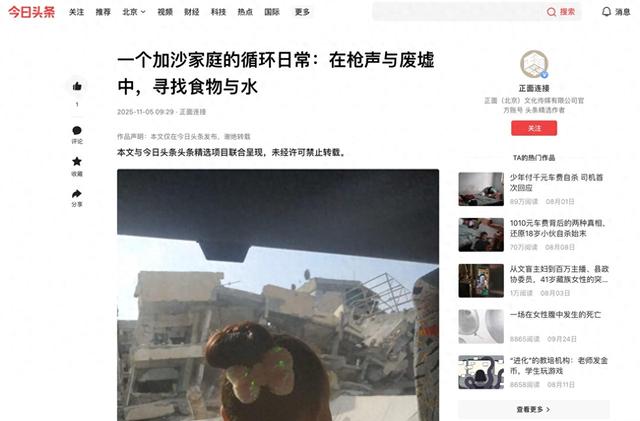
1公斤鸡肉324元!加沙护士全家每人一天就一块饼,中国网友成了照亮加沙人的一道光
Guan Cha Zhe Wang· 2025-11-06 09:23
Core Viewpoint - The article highlights the ongoing suffering of Ashraf, a 37-year-old nurse in Gaza, amidst the continuing violence and humanitarian crisis, emphasizing the impact of the conflict on daily life and the support he receives from Chinese netizens [1][3][9]. Group 1: Humanitarian Crisis - Ashraf has relocated six times due to the destruction of his home in Rafah and currently lives in a tent, with life in Gaza remaining far from normal despite a ceasefire [1][3]. - The Israeli military continues to target civilians, with Ashraf's brother killed in an airstrike and his hospital bombed, resulting in numerous casualties [3][9]. - The establishment of new distribution points for humanitarian aid, supported by Israel and the U.S., has led to distrust among locals, as many view them as traps rather than genuine assistance [3][9]. Group 2: Daily Struggles - Ashraf's family faces extreme food scarcity, with instances where they could only afford one piece of bread per person in a day, and the cost of basic living expenses has skyrocketed during wartime [3][5]. - Water has become a luxury, with Ashraf spending approximately 130 RMB for 1500 liters, contrasting sharply with the much lower cost in Beijing [5]. Group 3: Social Media and Support - Ashraf has turned to social media to share his experiences, receiving around $200 in donations monthly from Chinese netizens, which highlights the power of digital connections in providing support [7][10]. - The interactions with Chinese netizens have created a sense of warmth and solidarity, transcending geographical and cultural barriers, and showcasing a collective human empathy [7][10]. Group 4: Reflection on the Conflict - Ashraf expresses sorrow over the lack of substantial change in the situation post-ceasefire, criticizing the ongoing high prices of basic goods and questioning the international community's ability to influence Israel's actions [9][10]. - The article emphasizes the importance of human connection and kindness in times of crisis, illustrating how small acts of support can provide hope and resilience [10][12].