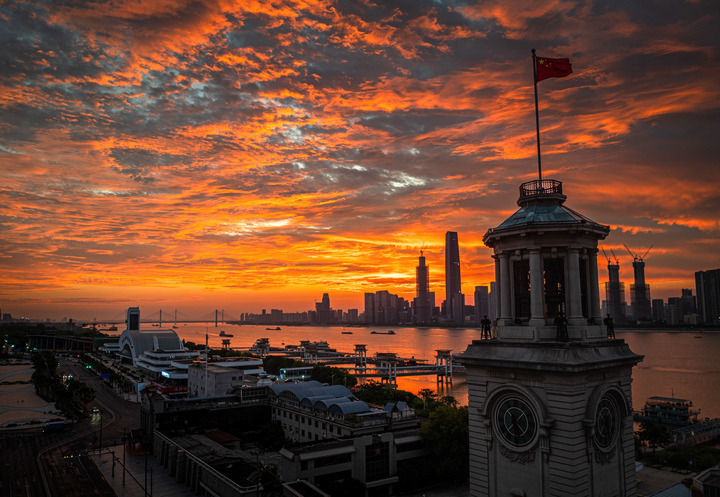
人水共荣

Search documents
新华社:江城千年向水歌 潮声悠悠共和鸣
Xin Hua She· 2025-09-25 03:10
Core Viewpoint - The article highlights the significance of water in shaping Wuhan's culture, history, and ecological development, emphasizing the harmonious relationship between the city and its waterways, particularly the Yangtze River and Han River. Group 1: Ecological and Cultural Significance - Wuhan's water area accounts for approximately one-fourth of the city's total area, featuring 166 lakes and 165 rivers, which contribute to a wetland area of 162,400 hectares [3] - The city has a rich history intertwined with water, dating back to 3,500 years ago, when it was established near the water, leading to a unique cultural and urban development [4] - The Yangtze River and Han River have fostered a diverse cultural exchange, blending northern and southern cultures, as well as agricultural and industrial practices [4][7] Group 2: Environmental Protection and Urban Development - Wuhan has implemented significant ecological protection measures, including the completion of 1,842 inspections and rectifications of pollution outlets, and the establishment of 11,940 hectares of new afforestation [10] - The water quality in the Yangtze River section in Wuhan has maintained a stable Class II standard for five consecutive years, with a 100% compliance rate for water source quality [10] - The city has developed over 80 kilometers of waterfront ecological areas, attracting more than 50 million visitors annually [10] Group 3: Community Engagement and Events - The Wuhan Crossing Festival, held for 50 years, symbolizes the city's connection with water and community spirit, drawing participants of all ages [12][13] - The festival has evolved beyond a sporting event to embody the cultural resilience and openness of the city, showcasing its commitment to environmental stewardship [13][14] - The "Great River Dialogue" forum in 2025 aims to address global water security and sustainable development, highlighting Wuhan's role as a key player in river governance [13]