
伊朗核计划谈判

Search documents
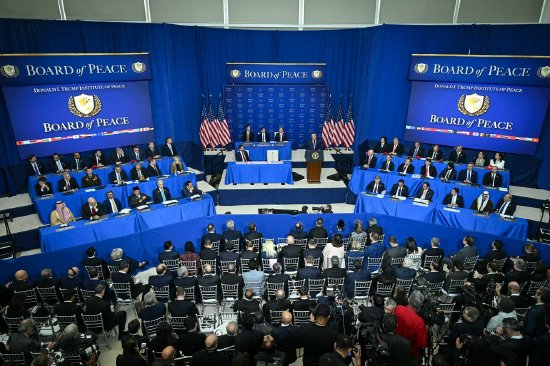
特朗普称“和平委员会”获170亿美元加沙援助承诺 多国拟派员参与稳定部队
Xin Lang Cai Jing· 2026-02-19 18:08
Core Points - The "Peace Committee" led by President Trump has received approximately $17 billion in pledged funds for humanitarian and reconstruction efforts in Gaza, with the U.S. contributing $10 billion and other member countries committing $7 billion [1][6][12] - The committee aims to provide a model for responsible sovereign nations to cooperate in addressing regional issues, demonstrating that it can formulate and implement measures for real solutions [1][7] - Concerns have been raised by allies regarding the committee's structure and mission, fearing it may extend beyond Gaza and potentially compete with the United Nations in handling global crises [5][11] Funding and Commitments - The total funding pledged for Gaza includes $10 billion from the U.S. and $7 billion from other countries, totaling $17 billion [1][6] - Norway is set to host a future event for the "Peace Committee," while Japan plans to hold a fundraising event for Gaza aid [9][11] Strategic Goals and Challenges - Key issues remain unresolved, such as how the committee will execute decisions, coordinate with the UN and regional organizations, and ensure sufficient participation from U.S. democratic allies for legitimacy [12] - Trump has indicated that the committee will act almost as a supervisory body over the UN to ensure its proper functioning [12] Global Context - The committee's formation comes amid ongoing U.S. military preparations in the Persian Gulf and recent military actions in Venezuela, highlighting a complex geopolitical landscape [7][11] - Trump's remarks suggest a belief that Hamas, designated as a terrorist organization by the U.S. and EU, will surrender its weapons, with threats of severe consequences for non-compliance [9][11]

参考消息:伊朗外长通报中俄
Xin Lang Cai Jing· 2026-02-09 10:02
Core Viewpoint - Iran's Foreign Minister Abbas Araghchi has communicated details of negotiations with the United States regarding Iran's nuclear program to Russia and China, highlighting the strategic partnership with these nations [1] Group 1: Diplomatic Engagement - Iran's Deputy Foreign Minister Kazem Gharib Abadi met with ambassadors from Russia and China in Tehran to discuss the ongoing negotiations with the U.S. on the nuclear program [1] - The meetings are part of a broader diplomatic effort, with Iran emphasizing the importance of consultations with its strategic partners, Russia and China [1] Group 2: Context of Negotiations - The recent talks in Oman between U.S. and Iranian delegations were the first since the public escalation of conflict between Iran and Israel in June 2025, which had previously stalled negotiations for several months [1] - The discussions are facilitated by Oman, indicating the country's role as a mediator in the regional diplomatic landscape [1]
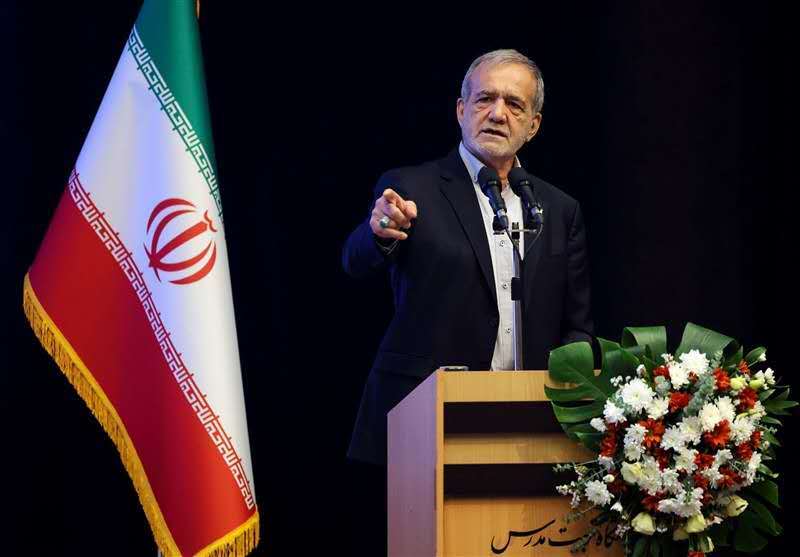
伊朗总统:伊朗将重建核设施,但不寻求制造核武器
Yang Shi Xin Wen· 2025-11-02 10:32
Core Viewpoint - Iran's nuclear activities are claimed to be for peaceful purposes, with a strong emphasis on the prohibition of nuclear weapons as per the Supreme Leader's directives [2] Group 1: Iran's Nuclear Position - President Pezeshkian stated that Iran's nuclear activities aim to address civilian needs and are not intended for weaponization [2] - The Iranian Foreign Minister, Zarif, asserted that Iran will not cease uranium enrichment despite external pressures from the US and its allies [2] - Zarif highlighted that previous airstrikes by the US and Israel in June did not succeed in dismantling Iran's uranium enrichment program, indicating that Iran still possesses the necessary technology [2] Group 2: Negotiation Dynamics - There have been five rounds of indirect negotiations mediated by Oman since April, but significant disagreements remain on core issues such as uranium enrichment [2] - Zarif expressed that Iran is not interested in direct negotiations with the US but is open to reaching an agreement through indirect talks [2]
俄美总统通话讨论以伊局势和乌克兰问题
Zhong Guo Xin Wen Wang· 2025-06-15 02:40
Group 1 - The core discussion between President Putin and President Trump focused on military actions by Israel against Iran and the situation in Ukraine, with both leaders expressing a desire for the conflict to end [1][2] - Putin condemned Israel's military actions against Iran and expressed serious concerns about the potential escalation of conflict, which could have unpredictable consequences for the entire Middle East [1] - Trump acknowledged the effectiveness of Israel's strikes on Iranian targets but also expressed concern over the complex situation in the Middle East, indicating a willingness to resume negotiations regarding Iran's nuclear program [1] Group 2 - Putin reported on the execution of agreements reached during the June 2 meeting of Russian and Ukrainian delegations in Istanbul, highlighting ongoing prisoner exchanges and a willingness to continue negotiations after June 22 [2] - Both leaders expressed satisfaction with their personal relationship and referenced the wartime friendship between their countries during the discussions [3]
普京分别与伊朗总统和以色列总理通电话 强调重启谈判重要性
news flash· 2025-06-13 17:31
Core Viewpoint - Russian President Putin emphasized the importance of resuming negotiations on Iran's nuclear program during his phone call with Israeli Prime Minister Netanyahu [1] Group 1 - Putin held phone conversations with Iranian President Raisi and Israeli Prime Minister Netanyahu on the 13th [1] - The Kremlin highlighted the significance of restarting the negotiations regarding Iran's nuclear program [1]
联合国秘书长古特雷斯谴责以色列“军事升级”
news flash· 2025-06-13 03:52
Core Viewpoint - The UN Secretary-General Antonio Guterres condemns Israel's "military escalation" in the Middle East, expressing concern over the situation and urging restraint from both Israel and Iran during ongoing nuclear negotiations with the US [1] Group 1 - Guterres expresses worry about Israel's actions in the region [1] - The UN calls for maximum restraint from both parties to avoid deeper conflict [1] - The statement highlights the precarious situation in the region that cannot bear further escalation [1]