低门槛裂变

Search documents
链动“2+1”→“3+1”模式:引领行业新潮流!
Sou Hu Cai Jing· 2025-09-25 08:24
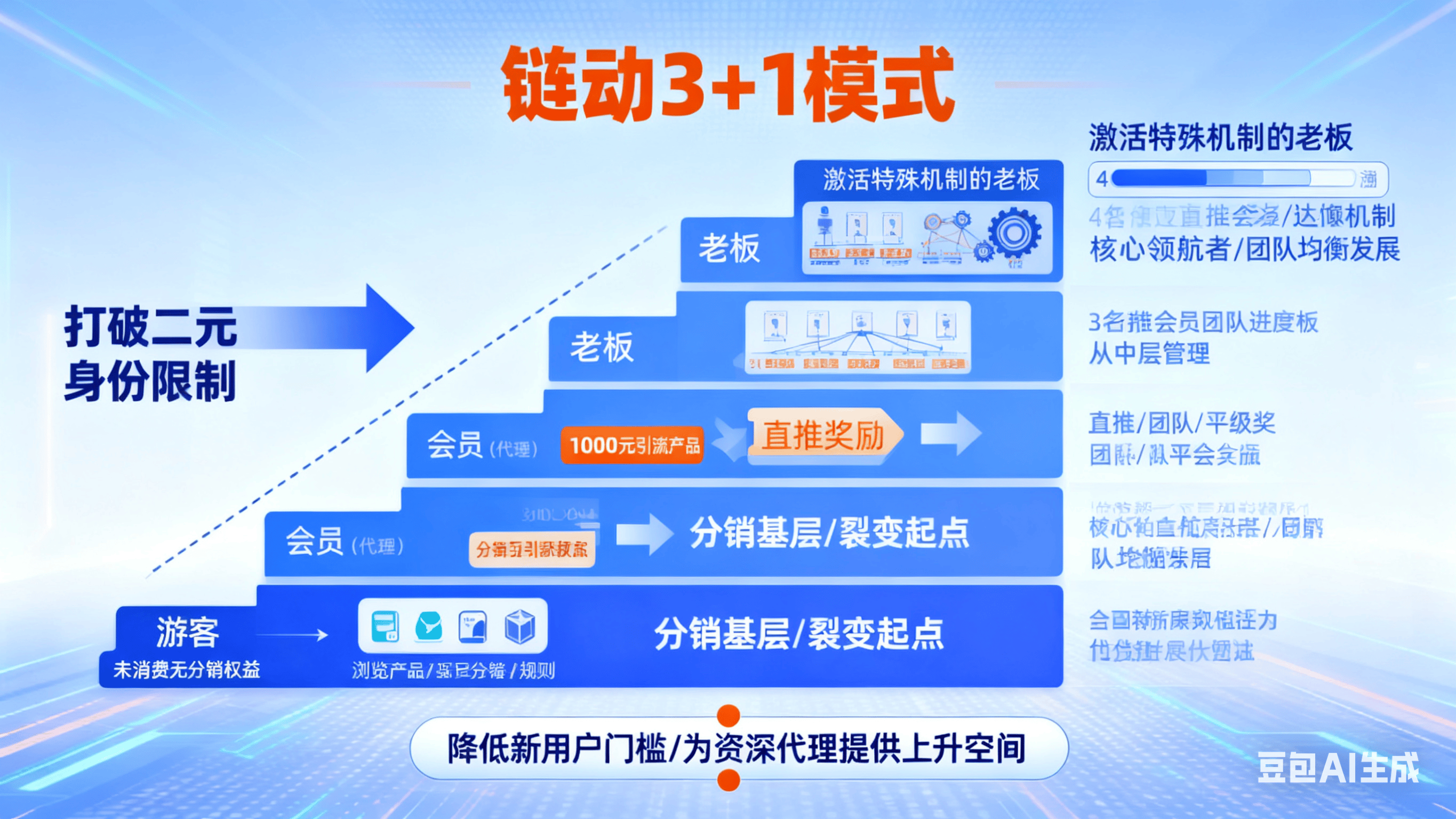
Core Insights - The article discusses the rapid development of social e-commerce and private domain distribution, highlighting the emergence of the "Chain Movement 3 + 1" model as a key strategy for market expansion and user activation [1][13] - The new model addresses the limitations of the previous "Chain Movement 2 + 1" model, which faced issues such as single identity levels, inflexible reward mechanisms, and insufficient team collaboration [1][12] Summary by Sections Chain Movement 3 + 1 Model Core Elements - The Chain Movement 3 + 1 model shifts from a "single burst drive" to a "systematic incentive support," featuring clear identity levels, defined promotion paths, unique collaboration mechanisms, and a diverse reward system [2][12] - The identity system includes four levels: Visitor, Member, Boss, and Special Mechanism Boss, each with matched rights and responsibilities, lowering entry barriers for new users while providing advancement opportunities for experienced agents [2][4] Identity Promotion Conditions - The model allows for low-threshold initiation and a stepwise progression, where consumers can become members by purchasing designated products, thus reducing pressure on agents to advance [4][7] Reward System Design - The model incorporates a multi-tiered reward system that ensures immediate earnings for grassroots agents and long-term benefits for senior agents, addressing the challenges of team imbalance and resource monopolization [6][9] - Key rewards include Direct Push Rewards, Team Rewards, Peer-Level Rewards, Slide Rewards, and Contribution Rewards, each designed to promote collaboration and equitable earnings across different levels [10][12] Core Advantages - The Chain Movement 3 + 1 model effectively resolves three major pain points of traditional models, transitioning from a "short-term tool" to a "long-term system" [12][13] - It offers a more reasonable earnings mechanism, ensuring that all levels of agents receive matching rewards, thus enhancing user retention [12] - The model is adaptable across various industries and scales, allowing for adjustments in promotion conditions and reward amounts to fit different market needs [12][13] - Enhanced team cohesion is achieved through collaborative mechanisms that transform competition into cooperation, fostering a supportive environment for agents [12][13]