便携式发电机市场

Search documents
行业聚焦:全球便携式发电机市场规模及主要企业排名情况
QYResearch· 2026-03-05 02:16
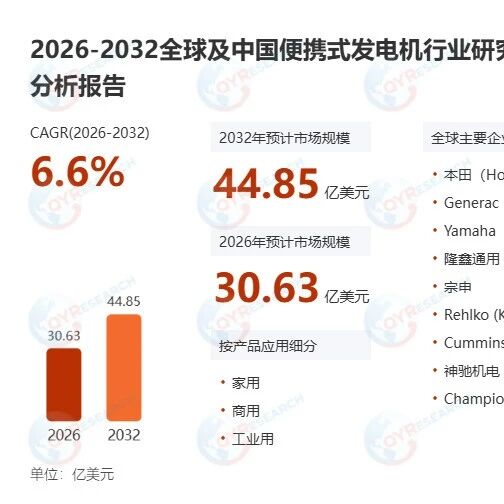
Core Viewpoint - The portable generator market is expanding due to increasing demand for backup power solutions driven by natural disasters, unstable power supply, and outdoor activities. Modern portable generators are characterized by low noise, ease of operation, and high fuel efficiency, with some models offering multi-fuel compatibility and smart monitoring features [2][6]. Market Definition and Scope - Portable generators are small power generation devices typically powered by gasoline, diesel, or natural gas, used for temporary power support during outages or in areas without a primary power source. They are widely used in homes, outdoor camping, construction sites, emergency rescue, and small commercial venues [2]. Market Size and Structure - The global portable generator market is projected to reach $4.49 billion by 2032, with a compound annual growth rate (CAGR) of 6.6% from 2026 to 2032 [6][18]. - In 2025, the global production of compressors is expected to reach 6.825 million units, with an average price of 423 yuan per unit [3]. - The market is dominated by gasoline generators, which account for approximately 76% of the market share [10]. - The household segment is the largest demand source, representing about 52% of the market [12]. Market Drivers - Extreme weather and aging power grids have created a "necessity" for backup power, particularly in regions affected by hurricanes, wildfires, and prolonged outages, leading to increased demand for home and small commercial backup power solutions [13][14]. - The expansion of application scenarios, including camping, RV use, food trucks, and emergency rescue, is driving growth in both small and large generator segments [13]. - The industry is transitioning from merely selling equipment to providing "equipment + services," enhancing user experience through smart features like remote monitoring and fault prediction [13]. Market Challenges - The industry faces intense competition and pressure from alternative products such as solar panels and home energy storage systems, which can substitute traditional fuel generators in certain scenarios [15]. - High prices for quality portable generators may deter some consumers, and trade tariffs in certain regions can increase export costs and supply chain challenges [15]. - Fluctuations in raw material prices and supply chain disruptions, including increased shipping costs and geopolitical risks, can squeeze profit margins and create uncertainty in delivery times [15].