
保险中介行业转型

Search documents
仅剩8家!华凯保险官宣摘牌 保险中介“出走”新三板背后:有人转行,有人退出
Mei Ri Jing Ji Xin Wen· 2025-11-26 15:58
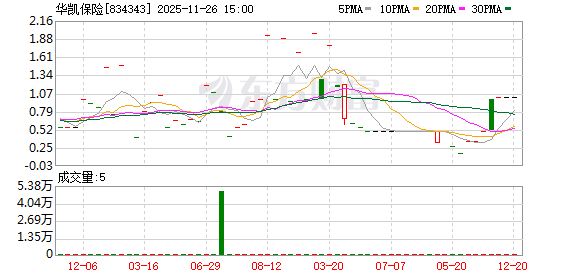
Core Viewpoint - Huakai Insurance has announced the termination of its stock listing on the National Equities Exchange and Quotations (NEEQ), marking the end of its ten-year journey on the New Third Board, which reflects broader challenges faced by insurance intermediaries in the market [2][3][4]. Company Overview - Huakai Insurance was listed on the New Third Board on November 19, 2015, and experienced rapid growth in its early years, achieving a revenue of 94.27 million yuan in 2015, a year-on-year increase of 87.71% [3]. - The company continued to grow, with revenues reaching 148 million yuan in 2016 (up 57.36%) and 362 million yuan in 2017 (up 143.99%) [3]. - However, the company faced significant challenges starting in 2017, including major shareholder reductions and internal governance issues, leading to a decline in operational performance [4]. Industry Trends - The number of insurance intermediaries listed on the New Third Board has drastically decreased from over 30 at its peak to only 8 currently, indicating a trend of withdrawal from the market [5]. - The primary motivations for insurance intermediaries to list included financing needs, brand enhancement, and governance improvement, but many have found the reality of low liquidity and high compliance costs to be burdensome [6]. Challenges Faced - The imbalance between actual benefits from listing and the high costs of compliance has led many intermediaries to choose delisting as a strategy to refocus on core business operations [6]. - The industry is under pressure due to the implementation of policies like "reporting and operation integration," which has intensified competition and operational challenges for smaller intermediaries [8]. Strategic Recommendations - To navigate current challenges, insurance intermediaries are encouraged to adopt differentiated positioning, leverage technology for operational efficiency, and ensure compliance in their operations [7][8]. - Emphasizing a customer-centric approach and exploring the "insurance + service" model can create additional value and enhance competitiveness in the market [8].

竞相上市与黯然退场并现保险中介行业含金量几许
Zhong Guo Zheng Quan Bao· 2025-06-16 20:58
Group 1: Market Overview - The insurance intermediary market is experiencing a "listing boom" with several companies, including Shouhui Group, seeking to go public, while the number of institutions is decreasing, indicating a significant industry divide [1][4] - As of the end of 2024, there were 2,539 insurance intermediary institutions in China, a decrease of 27 from the end of 2023, with over 20 institutions having deregistered in 2025 [4][5] - The market for insurance intermediary equity transactions is sluggish, with many institutions facing lower transfer prices and instances of unsold shares [4][5] Group 2: Shouhui Group's Performance - Shouhui Group, a life insurance intermediary service provider, went public on May 30, 2024, but its stock price fell over 34% from its initial offering price by June 16, 2024 [1][2] - The company reported revenues of 806 million yuan in 2022, 1.634 billion yuan in 2023, and projected 1.387 billion yuan in 2024, with net profits of 131 million yuan in 2022, a loss of 356 million yuan in 2023, and a projected loss of 136 million yuan in 2024 [2] Group 3: Industry Challenges and Trends - The insurance intermediary industry is undergoing transformation due to increased regulatory scrutiny and competitive pressures, leading to a "Matthew effect" where larger firms gain market share at the expense of smaller ones [4][5][6] - The implementation of the "reporting and operation integration" policy has compressed commission margins, putting additional pressure on intermediaries that rely heavily on commission income [6][8] - Experts suggest that insurance intermediaries need to enhance their service capabilities, leverage technology, and focus on differentiated services to remain competitive in a challenging market [6][7][8] Group 4: Future Directions - Industry insiders recommend that insurance intermediaries should not solely pursue scale but instead focus on precise operations and specialized services to achieve differentiation [7][8] - The need for digital transformation is emphasized, with many listed or prospective companies highlighting their technological attributes to attract users [7][8] - Continuous improvement in long-term service capabilities, team quality, and technological investment is essential for building a competitive edge in the market [8]