
信息网络传播权

Search documents
“法定许可”条款如何助力邓紫棋翻盘版权官司
Di Yi Cai Jing· 2025-07-14 12:05
Core Viewpoint - The case of singer G.E.M. Tang and her former agency Hummingbird Music highlights the significance of the statutory licensing system in China's copyright law, which has provided a legal avenue for artists to navigate contractual disputes and reclaim their rights [1][4]. Group 1: Statutory Licensing System - The statutory licensing system under China's copyright law is seen as a crucial tool for artists, allowing them to reproduce and distribute music without needing prior permission from the original copyright holders, provided they pay the required fees [1][5]. - This system aims to facilitate the dissemination of music works, promoting broader access while balancing the rights of copyright owners [3][5]. Group 2: Legal Precedents and Implications - A notable precedent involved singer Dao Lang and his contract with a cultural company, which ultimately led to a Supreme Court ruling affirming that once a music work is publicly available, others can use it under statutory licensing without needing additional permissions [3][5]. - The ongoing legal battle between G.E.M. Tang and Hummingbird Music raises questions about the applicability of statutory licensing in Hong Kong, where different legal standards may apply compared to mainland China [7][9]. Group 3: Contractual and Copyright Issues - The complexity of copyright law is underscored by the potential for disputes over contracts signed at a young age, as G.E.M. Tang claims her original contract was signed under duress, complicating the legal landscape [7][8]. - The involvement of collective management organizations, such as the Hong Kong Composers and Authors Society (CASH), adds another layer of complexity regarding the transfer and management of copyright rights [8][9]. Group 4: Market Impact and Future Considerations - The uncertainty surrounding the legal status of G.E.M. Tang's music may lead to market hesitance among consumers and stakeholders, emphasizing the need for clear legal resolutions [9]. - The case serves as a potential precedent for other artists facing similar contractual challenges, highlighting the importance of understanding copyright laws and their implications for artistic freedom and financial security [9].
影视剧“切条”搬运侵权! 个人和平台该承担什么责任?
Yang Shi Xin Wen· 2025-06-27 18:10
Core Viewpoint - The unauthorized use of copyrighted materials, such as film and television clips in short videos, constitutes copyright infringement, as demonstrated by a recent court case in Shanghai where an individual was ordered to pay damages for uploading clips without permission [1][2]. Legal Implications - The Shanghai court ruled that the defendant's actions violated the information network dissemination rights of the copyright holders, leading to a compensation order of 20,000 yuan [1]. - Courts consider factors like the influence of the original work, the number of infringing videos, and the duration of infringement when determining compensation, which can range from tens of thousands to millions of yuan [2]. Industry Impact - The rise of short video formats has led to a significant number of copyright infringement cases, affecting the revenue and viewership of original content [2][8]. - The unauthorized distribution of short clips can divert audience attention from full-length series, potentially harming the original creators' commercial opportunities and diminishing the incentive to produce new content [10][12]. Responsibilities of Platforms - Online platforms may bear joint liability for copyright infringement if they are aware of the infringing content and fail to act, especially if they have received prior notifications from rights holders [6][7]. - Platforms that edit or promote infringing content may also be held accountable, as their actions could indicate knowledge of the infringement [7]. Cultural Consequences - The prevalence of unauthorized short videos can undermine the creative industry by reducing the motivation for creators to produce high-quality content, leading to a potential decline in cultural output [12].

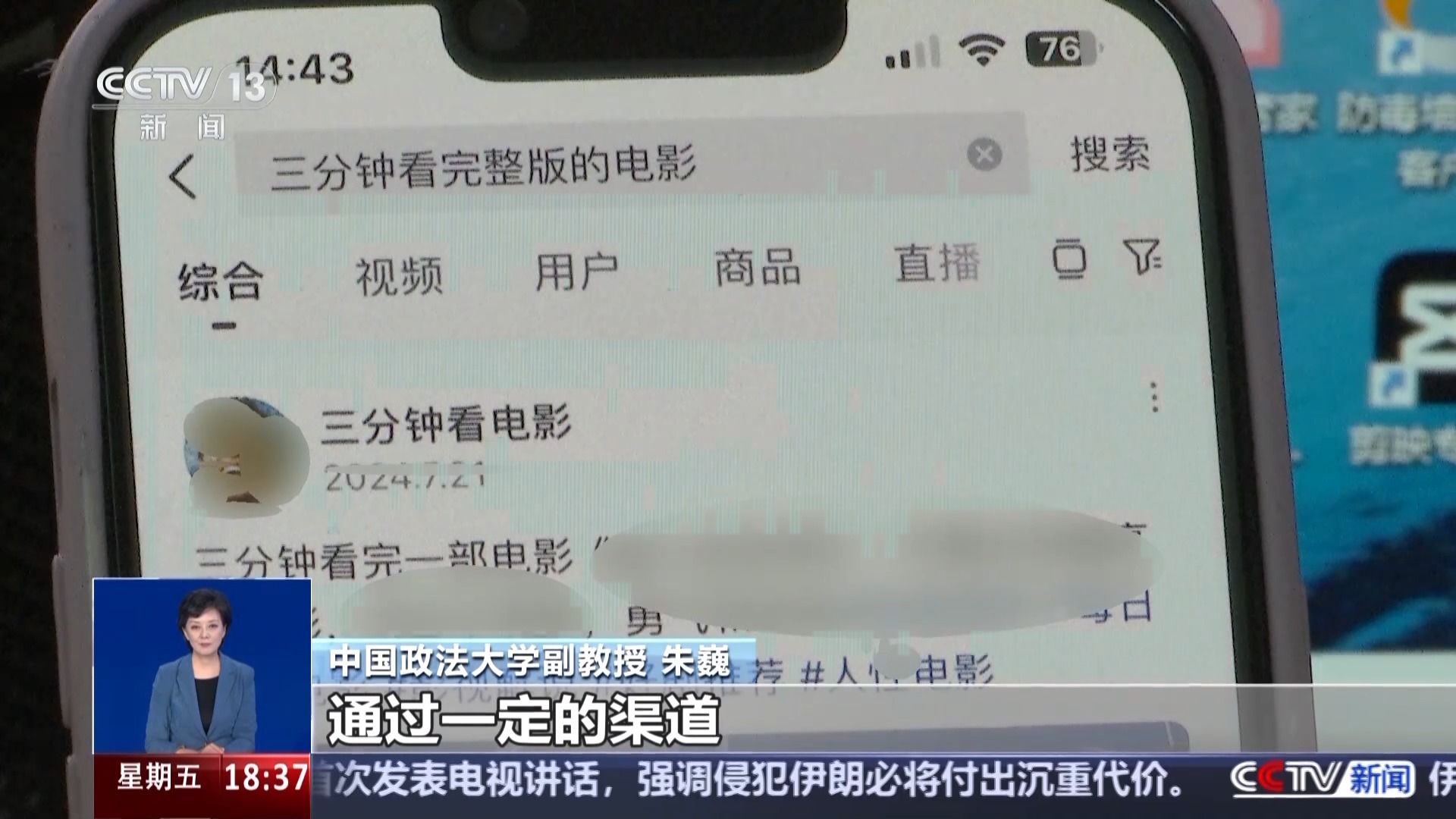
热播剧被切条传播 是否构成侵权?(新闻看法)
Ren Min Ri Bao· 2025-06-15 21:51
Core Viewpoint - The rapid rise of short video content on social media and video platforms has led to legal risks associated with unauthorized use of copyrighted materials, as demonstrated by a recent court case involving the unauthorized sharing of the TV series "Qing Ping Le" [1][2]. Group 1: Legal Case Summary - A recent case in Shanghai's Yangpu District Court involved a dispute over the infringement of information network dissemination rights related to the TV series "Qing Ping Le" [1]. - The plaintiff companies, which had obtained the authorized rights to disseminate the series, sued an individual named Xiao Li for uploading 150 clips of the series on a video platform, impacting the viewership of the original content [1][2]. - The court ruled that Xiao Li's actions constituted an infringement of the copyright holder's rights, leading to a compensation order of 20,000 yuan for economic losses and reasonable expenses [2]. Group 2: Implications for the Industry - The case highlights the legal challenges faced by content creators and distributors in the age of short video sharing, emphasizing that even non-commercial motivations do not exempt individuals from copyright infringement [2]. - The ruling reinforces the importance of obtaining proper authorization for the use of copyrighted materials in digital content, which is crucial for protecting the rights of original creators [2].