偏微分方程

Search documents
学者破解“热点猜想”关键难题
Xin Lang Cai Jing· 2026-01-14 04:07
Core Viewpoint - The research team led by Associate Professor Yao Ruofei from South China University of Technology, in collaboration with professors from Xi'an Jiaotong University and the University of Macau, has successfully solved the "hotspot conjecture," a significant mathematical problem that has persisted for over 50 years [1][2]. Group 1: Research Background - The "hotspot conjecture" was proposed by American mathematician Rauch in 1974, suggesting that in an insulated room, the hottest and coldest points are more likely to be found at the boundaries rather than inside the room during the transient state before thermal equilibrium is reached [2][3]. - The conjecture is mathematically equivalent to stating that for convex regions in a plane, the maximum and minimum values of the second Neumann eigenfunction of the Laplace operator can only occur at the boundary of the region [2][3]. Group 2: Research Achievements - The research focused on the case of triangles, which, despite their simple structure, present significant challenges in analyzing the behavior of eigenfunctions. This work not only addressed a public problem posed by Fields Medalist Terence Tao but also advanced critical conclusions related to the critical points discussed in the Annals of Mathematics [3][4]. - The team provided systematic and rigorous conclusions regarding several key structural issues of the second Neumann eigenfunction, which can serve as important references for subsequent research in spectral geometry and partial differential equations [4]. Group 3: Research Process - The research journey spanned approximately 13 years, with 5 years of concentrated effort leading to the submission of the paper. The team faced challenges and periods of stagnation but made significant progress through continuous refinement and collaboration [5][6]. - A pivotal breakthrough occurred when the team shifted their approach to "directly proving symmetry," inspired by previous work published in 2018. This change in strategy led to a clearer path for the proof [5][6]. Group 4: Publication Challenges - The publication process involved three rounds of revisions, with rigorous peer review standards that demanded near-perfect arguments. This process significantly enhanced the rigor and completeness of the work [6]. - The support for young faculty members at South China University of Technology played a crucial role in the success of this research, highlighting the institution's commitment to fostering academic growth and collaboration [6].
数十场特邀报告汇聚智慧!业界专家共探偏微分方程与AI发展
Nan Fang Du Shi Bao· 2025-12-09 08:00
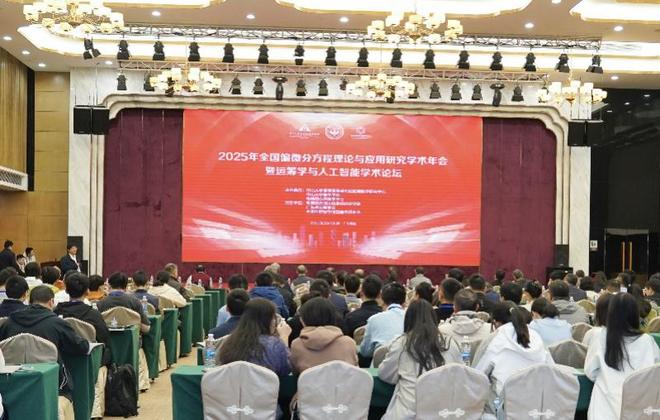
Core Insights - The "2025 National Academic Annual Conference on Partial Differential Equations Theory and Application and Operations Research and Artificial Intelligence Academic Forum" was held in Qingyuan, Guangdong, featuring 24 invited reports from experts across numerous universities and research institutions [1][2][3] - The conference focused on the intersection of partial differential equations, operations research, and artificial intelligence, covering topics such as fluid mechanics, plasma physics, biomathematics, geometric analysis, and nonlinear analysis [1][2] Group 1: Key Presentations - Professor Li Fucai from Nanjing University presented on the latest advancements in the dynamical-MHD model, emphasizing its applications in plasma physics [1] - Professor Zhang Ting from Zhejiang University demonstrated the overall existence of strong solutions for the anisotropic Navier-Stokes equations under certain conditions [2] - Researcher Ren Xiao from Fudan University expanded on the geometric characterization of potential singularities in the Navier-Stokes equations [2] Group 2: Advances in Operations Research and AI - Professor Lv Zhaosong from the University of Minnesota introduced first-order methods for bilevel optimization, providing efficient solutions for complex decision-making problems in economics, logistics, and machine learning [2] - Professor Han Derun from Beihang University discussed improved error bounds for linear and tensor complementarity problems, surpassing classical results [2] - Professor Chen Xiaojun from the Hong Kong Polytechnic University showcased optimization methods in proving the existence of spherical t-designs, highlighting the role of optimization theory in driving advancements in artificial intelligence and data science [2] Group 3: Event Organization - The event was organized by the Applied Mathematics Research Center of the Hong Kong Institute for Advanced Study at Sun Yat-sen University, the Mathematics School of Sun Yat-sen University, and the Guangdong-Hong Kong-Macao Applied Mathematics Center, with support from various academic and research associations [3]
偏微分方程驱动AI创新!多个高校与科研院所专家共话新成果
Nan Fang Du Shi Bao· 2025-12-06 09:04
Core Insights - The conference aims to enhance academic exchange and collaboration in the field of partial differential equations (PDEs) and related areas, highlighting the importance of PDEs in the context of artificial intelligence [1][4][21] Group 1: Conference Overview - The "2025 National Academic Annual Conference on the Theory and Application of Partial Differential Equations and the Operations Research and Artificial Intelligence Academic Forum" was held in Qingyuan, Guangdong, from December 6 to 7 [1] - The event was organized by several institutions, including the Center for Applied Mathematics at Sun Yat-sen University and the Guangdong-Hong Kong-Macao Greater Bay Area Interdisciplinary Science Society [1][4] Group 2: Keynote Addresses - Professor Yao Zheng'an emphasized that PDEs are entering a new era of opportunities, particularly in validating AI solutions through rigorous theoretical frameworks [4] - Professor Xin Zhouping highlighted the dual nature of good mathematics, which should be profound and easily communicable, and noted the bridging role of PDEs between various fields [6] - Professor Zhu Xiping supported the idea of PDEs as a bridge to both pure and applied mathematics, stressing their significance in practical applications [8] Group 3: Research Presentations - Various scholars presented their latest research findings, including: - Professor Wang Weike from Shanghai Jiao Tong University discussed the existence of solutions for the Keller-Segel equation with Couette flow [13] - Professor Yin Jingxue from South China Normal University reported on recent advancements in semi-linear parabolic equations with nonlinear source terms [15] - Professor Chen Hua from Wuhan University presented on fine embeddings and geometric inequalities related to generalized Sobolev spaces defined by Hermite vector fields [17] - Professor Jin Shi from Shanghai Jiao Tong University introduced the quantum computing platform "UnitaryLab" aimed at solving ordinary and partial differential equations using quantum algorithms [19] Group 4: Institutional Background - The Center for Applied Mathematics at Sun Yat-sen University in Hong Kong aims to gather top global talents and promote deep integration between mathematical theory innovation and engineering technology applications [21] - The center has established close collaborations with several prestigious universities and research institutions in Hong Kong, focusing on key areas such as new information technology, intelligent manufacturing, and healthcare [21]

高中没毕业直接读博,17岁少女推翻40年数学猜想后的下一步
猿大侠· 2025-08-09 04:33
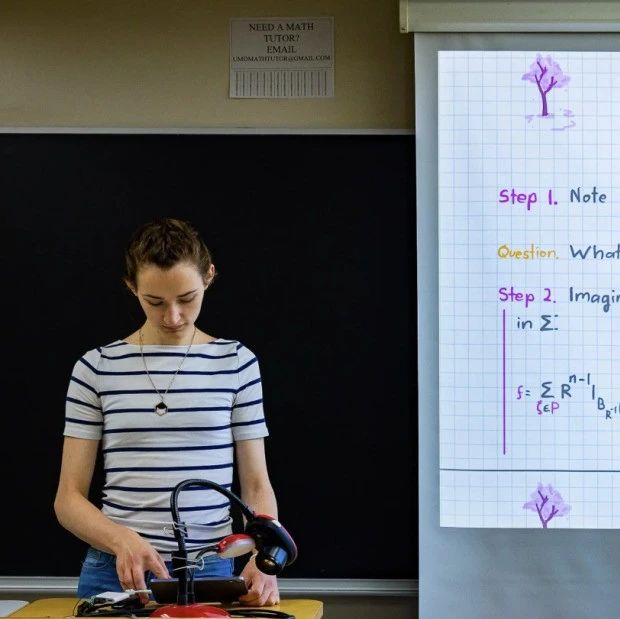
Core Viewpoint - The article highlights the extraordinary achievements of Hannah Cairo, a 17-year-old prodigy who solved the Mizohata-Takeuchi conjecture, a significant mathematical problem that had remained unsolved for 40 years, showcasing her exceptional talent and dedication to mathematics [4][6][69]. Group 1: Background and Early Life - Hannah Cairo learned calculus at the age of 11 and had university-level math skills by 14 [1][2]. - She grew up in Nassau, Bahamas, and was homeschooled alongside her siblings [9]. - Initially, she engaged with math through online courses from Khan Academy, completing all available courses quickly [11][12]. Group 2: Academic Journey - Due to her advanced skills, her parents arranged for remote tutoring with two math professors [13][14]. - Hannah felt constrained by homeschooling and sought broader academic experiences [16][17]. - The COVID-19 pandemic allowed her to connect with the Chicago Math Circle, which further fueled her passion for mathematics [23][25]. Group 3: Breakthrough in Mathematics - In 2023, after spending a summer at the Berkeley Math Circle, she began contemplating her next steps and applied to several universities [33][34]. - Despite being rejected by most due to her incomplete high school education, she was accepted by the University of California, Davis [34][72]. - Hannah's engagement with advanced coursework led her to a pivotal moment when she tackled the Mizohata-Takeuchi conjecture as part of her assignments [48][49]. Group 4: Solving the Conjecture - The Mizohata-Takeuchi conjecture connects harmonic analysis, partial differential equations, and geometric analysis, and its resolution required innovative thinking [6][52]. - Hannah constructed a complex function that defied the conjecture's restrictions, leading to her breakthrough [65][68]. - After confirming her findings with her professor, she decided to apply directly for a PhD program, bypassing undergraduate studies [69][72]. Group 5: Future Prospects - Hannah has been accepted into PhD programs at the University of Maryland and Johns Hopkins University, marking the beginning of her formal academic journey [72][73]. - Upon graduation, she will earn her first official degree, a PhD, at a remarkably young age [74].
高中没毕业直接读博,17岁少女推翻40年数学猜想后的下一步
量子位· 2025-08-08 07:23
Core Viewpoint - The article highlights the extraordinary achievements of Hannah Cairo, a 17-year-old who solved the Mizohata-Takeuchi conjecture, a significant mathematical problem that had remained unsolved for 40 years, showcasing her exceptional talent and potential in mathematics [4][6][69]. Group 1: Background and Early Life - Hannah Cairo learned calculus at the age of 11 and had university-level math skills by 14 [1][2]. - She grew up in Nassau, Bahamas, and was homeschooled alongside her siblings [9]. - Initially, she engaged with math through Khan Academy's online courses, completing all available content quickly [11][12]. Group 2: Academic Journey - Due to her advanced learning needs, her parents arranged for remote tutoring with two math professors [13][14]. - Despite having guidance, most of her learning was self-directed, leading her to read graduate-level textbooks [14][15]. - The COVID-19 pandemic allowed her to connect with the Chicago math community, further igniting her passion for mathematics [23][25]. Group 3: Breakthrough in Mathematics - In 2023, after spending a summer at the Berkeley Math Circle, she began contemplating her next steps and applied to several universities [33][34]. - She was encouraged to participate in a concurrent enrollment program at Berkeley, allowing her to take graduate-level courses [35][37]. - During her studies, she encountered the simplified version of the Mizohata-Takeuchi conjecture as part of her homework, which led her to explore the problem deeply [48][49]. Group 4: Solving the Conjecture - The Mizohata-Takeuchi conjecture connects harmonic analysis, partial differential equations, and geometric analysis, and its resolution required innovative thinking [6][52]. - Hannah constructed a complex function that demonstrated the conjecture's conditions, ultimately leading to her proof [63][65]. - After confirming her findings with her professor, she decided to apply directly for a PhD program, bypassing undergraduate studies [69][72]. Group 5: Future Prospects - Hannah was accepted into the PhD programs at the University of Maryland and Johns Hopkins University, marking a significant milestone in her academic career [72][73]. - She is set to begin her doctoral studies this fall, which will be her first formal degree [74].
经典教材《泛函分析》作者逝世,享年99岁:首位获阿贝尔奖的应用数学家
量子位· 2025-05-18 05:20
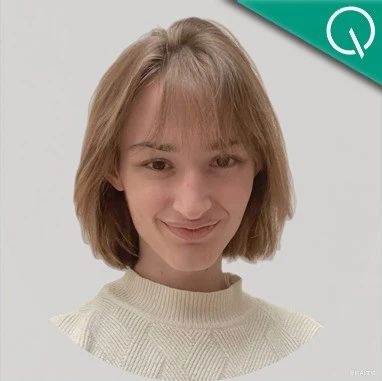
Core Viewpoint - Peter Lax, the first applied mathematician to receive the Abel Prize, passed away at the age of 99, marking the end of an era in mathematics and science [1][49]. Group 1: Contributions to Mathematics - Lax was a pioneer in applying computer technology to mathematical analysis and made significant contributions that are still widely used in scientific research and engineering practices [4][5]. - His notable works include the classic textbook "Functional Analysis" and other widely appreciated texts such as "Calculus and Its Applications" and "Linear Algebra and Its Applications" [2][6][7]. - Lax's research spanned various fields, including partial differential equations, fluid mechanics, numerical computation, scattering theory, and integrable systems, leading to profound theoretical results and practical algorithms [33]. Group 2: Awards and Recognition - Lax received numerous prestigious awards, including the National Medal of Science in 1986 and the Wolf Prize in 1987, culminating in being the first applied mathematician to win the Abel Prize in 2005 for his foundational work in partial differential equations [35][36]. - The Abel Prize committee described him as "the most versatile mathematician of his generation," highlighting his broad impact on the field [37]. Group 3: Personal Background and Legacy - Born on May 1, 1926, in Budapest, Lax showed exceptional mathematical talent from a young age, influenced by his family and mentors [15][16][17]. - His experiences during World War II, including his work on the Manhattan Project, shaped his understanding of the importance of computation in science [23][24][25]. - Lax's legacy includes not only his research and publications but also his commitment to education and mentorship, having trained over 55 doctoral students [46].