偏振辐射

Search documents
M87星系中心超大质量黑洞新图像发布
Huan Qiu Wang Zi Xun· 2025-09-19 03:01
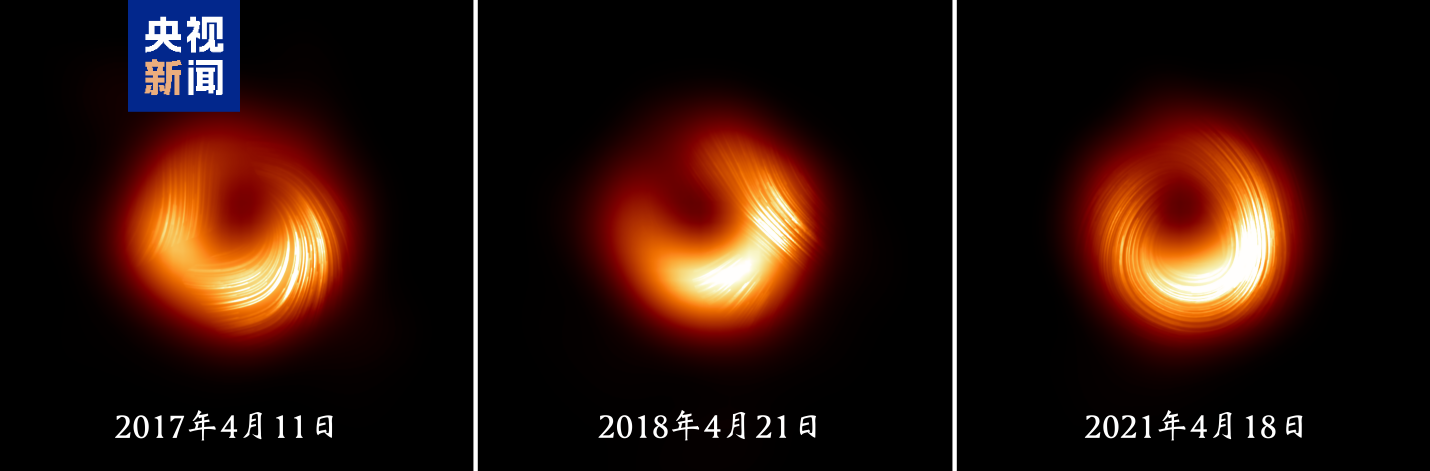
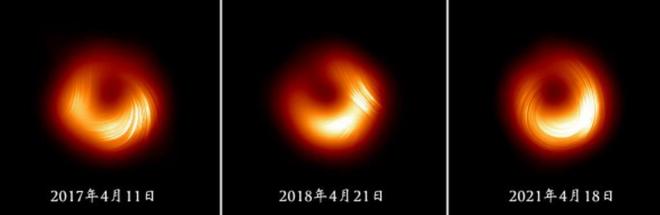
Core Insights - The Event Horizon Telescope (EHT) collaboration, involving the Shanghai Astronomical Observatory, has released new images of the supermassive black hole at the center of the M87 galaxy, revealing the evolution of polarized radiation over time [1][3]. Group 1: Research Findings - Scientists have discovered extended radiation connecting the black hole's ring structure to the base of its jets for the first time in EHT data [3]. - The M87 black hole is located 55 million light-years from Earth and has a mass approximately 6.5 billion times that of the Sun [3]. - The polarization direction of the black hole changed significantly from 2017 to 2021, indicating a reversal in 2021 after being stable in 2018 [3]. Group 2: Implications of Findings - The evolution of polarization reflects the turbulent environment around the black hole, with magnetic fields playing a crucial role in how matter falls into the black hole and how energy is released [3]. - Powerful jets like those from M87 influence star formation and energy distribution on a large scale, contributing to galaxy evolution [3]. - The latest findings provide important insights into the mechanisms behind extreme cosmic phenomena, acting as a unique "laboratory" for research [3]. Group 3: Technological Advancements - The EHT has enhanced its observational capabilities, improving sensitivity and imaging clarity with the addition of new telescopes in 2021 [4]. - Upgrades to existing telescopes, including those in Greenland and the James Clerk Maxwell Telescope, have further improved data quality [4].

M87星系黑洞新图像发布 揭示黑洞附近偏振辐射随时间的演化
Yang Shi Xin Wen· 2025-09-16 08:06
Core Insights - The Event Horizon Telescope (EHT) collaboration has released new images of the supermassive black hole at the center of the M87 galaxy, revealing the evolution of polarized radiation over time [1][2] - This research provides new perspectives on the physical processes in the extreme environment surrounding black holes, with significant findings published in the journal "Astronomy and Astrophysics" [1] Group 1 - The M87 galaxy is approximately 55 million light-years away from Earth, with its central black hole having a mass over 6 billion times that of the Sun [1] - The EHT is a global network of radio telescopes that effectively functions as a telescope the size of Earth, with the first black hole image released in 2019 based on data from 2017 [1][2] - The study compared observational data from 2017, 2018, and 2021, leading to important advancements in understanding the variability of the black hole's magnetic field [1][2] Group 2 - Between 2017 and 2021, the polarization direction of the black hole's magnetic field underwent a significant reversal, indicating a dynamic environment influenced by both internal magnetic structures and external effects [2] - The upgraded observational capabilities of the EHT, including the addition of the U.S. Kitt Peak Telescope and the French NOEMA array, have enhanced sensitivity and allowed for the first successful constraints on the radiation direction at the base of the relativistic jets [2] - The high-energy jets from supermassive black holes like M87 are crucial for galaxy evolution, regulating star formation and distributing cosmic energy, thus serving as a "natural laboratory" for studying extreme physics [2]