
儿童骨龄评价

Search documents
中国儿童骨龄评价新体系“中国25”正式发布 树立行业标准化新标杆
Bei Jing Wan Bao· 2025-08-12 01:55
Core Viewpoint - The launch of the "China 25" bone age evaluation system marks a significant advancement in the precise and standardized assessment of children's bone age in China, addressing the inadequacies of existing standards [1][3][6]. Group 1: Importance of Bone Age Evaluation - Bone age is a critical indicator for assessing children's growth and development, influencing height predictions and the diagnosis of endocrine diseases [3]. - Existing international standards like TW3 and G-P are not suitable for Chinese children due to ethnic and regional developmental differences [3]. Group 2: Development of "China 25" - The "China 25" system was developed over several years by a collaboration led by Beijing Jishuitan Hospital, involving multiple institutions, and is based on a large dataset of 20,166 X-ray images of normal children aged 3 to 18 from 28 locations across China [4][6]. - The new system incorporates a dual-blind annotation process and a data model tailored to contemporary Chinese children's developmental characteristics, highlighting the necessity for this new standard due to over a year of discrepancy with existing standards [4][6]. Group 3: Launch and Reception - The launch event featured prominent figures in the medical field, emphasizing the system's role in providing a "Chinese standard" for children's health management and supporting national health strategies [5][6]. - The large sample size of the data is considered a core advantage of the new standard, laying a solid foundation for future research in children's growth and development [5]. Group 4: Future Implications - The "China 25" has been published as a group standard and is set to play a crucial role in monitoring children's growth and diagnosing diseases, reflecting the country's commitment to children's health [6].

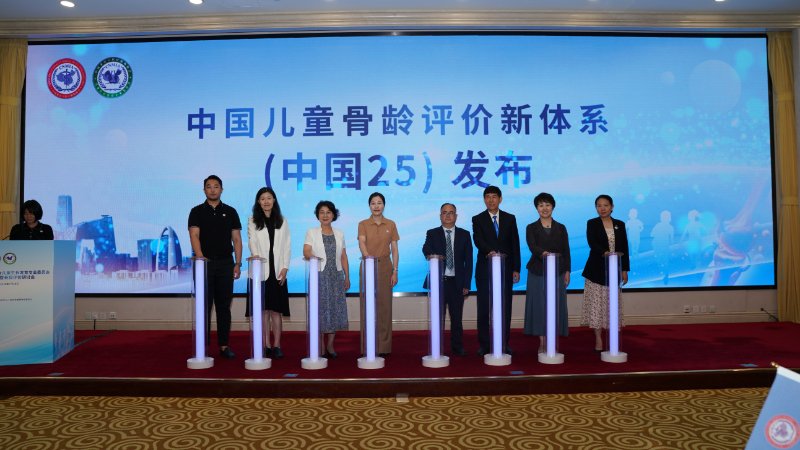
从经验化迈向标准化,中国儿童骨龄评价新体系发布
Bei Ke Cai Jing· 2025-07-19 07:42
Core Viewpoint - The launch of the "China Children's Bone Age Evaluation New System" (China 25) marks a significant advancement in the precision and standardization of bone age assessment for children in China, addressing the limitations of traditional methods and adapting to contemporary growth patterns [1][2][3]. Group 1: Importance of Bone Age Evaluation - Bone age evaluation is crucial for assessing children's growth and development, providing essential references for clinical diagnosis, treatment, and research [1]. - The traditional bone age evaluation systems are inadequate due to rapid advancements in medical technology and increased public concern for children's growth [1][2]. Group 2: Development of the New System - The China 25 system was developed through collaboration among several institutions, including the Capital Medical University and the National Health Commission, utilizing a large dataset of 20,166 X-ray images from children aged 3-18 across 28 locations in China [2]. - The new system incorporates a dual-blind annotation process and a predictive data model tailored to the growth characteristics of contemporary Chinese children, highlighting the necessity of this new standard due to significant discrepancies with existing standards [3]. Group 3: Expected Impact - The introduction of the China 25 system is expected to transition bone age evaluation from an experience-based approach to a standardized one, benefiting the health of more children [3].