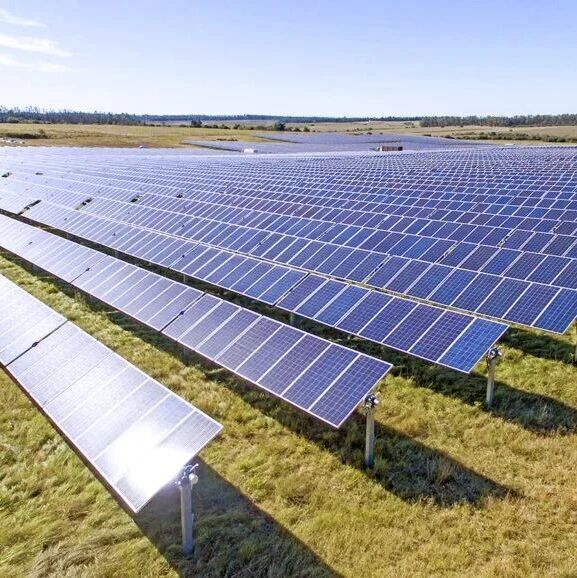
光伏度电成本下降

Search documents
全球光伏度电成本十年内有望再降三成
中国能源报· 2026-03-04 13:23
Core Viewpoint - The photovoltaic industry will transition from a phase focused solely on manufacturing scale expansion to a new stage that emphasizes system optimization, hybrid collaboration, and financial structure improvement over the next decade [1][10]. Cost Trends and Projections - Bloomberg New Energy Finance reports that the levelized cost of electricity (LCOE) for typical utility-scale photovoltaic projects will increase by 6% year-on-year to $39 per megawatt-hour (MWh) by 2025, breaking a long-standing downward trend. However, the long-term downward trend in global photovoltaic generation costs remains intact, with an expected 30% decrease by 2035 [3][5]. - Despite the projected increase in LCOE for 2025, photovoltaic remains competitive compared to other green energy types, with onshore wind at $40/MWh and offshore wind at $100/MWh [5]. Regional Market Dynamics - The Middle East and Africa are expected to see the lowest LCOE for single-axis tracking photovoltaic systems at $37/MWh by 2025, a 10% decrease year-on-year. By 2060, this region's photovoltaic LCOE could drop to around $17/MWh [5]. - China leads globally with the lowest LCOE at $27/MWh, supported by manufacturing scale advantages, supply chain integrity, and continuous technological iteration [5]. Hybrid Projects and Cost Reduction - The integration of photovoltaic and energy storage technologies is seen as a key pathway for cost reduction in the next decade. Bloomberg forecasts that the LCOE for four-hour battery storage projects will drop by 27% to $78/MWh by 2025, marking the lowest level since tracking began in 2009 [7]. - The average LCOE for global "photovoltaic + storage" projects was $57/MWh last year, indicating improved economic viability due to declining storage costs [7]. System Optimization and Capital Expenditure - Research indicates that strategic adjustments in capital expenditure can lead to a potential 20% reduction in LCOE for utility-scale photovoltaic systems. Key areas for cost reduction include tracking optimization, system voltage upgrades, and advanced balance system design [10]. - The focus is shifting from incremental component innovations to system-level optimization and overall architecture upgrades, which will significantly impact financing conditions and cost structures [10][11]. Future Research Directions - Future research should move beyond standard efficiency metrics to analyze risks associated with energy generation, performance variability, and lifecycle uncertainties. Advanced monitoring and new clean technologies could enhance project financing environments [11].