
光子计数CT

Search documents
获批FDA!GE医疗光子计数CT落地
思宇MedTech· 2026-03-25 08:33
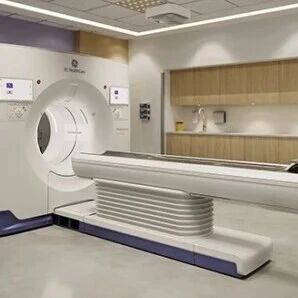
Core Viewpoint - GE HealthCare's Photonova Spectra photon-counting CT system has received FDA 510(k) approval, marking a shift in the industry from a few manufacturers driving the technology to a multi-path competitive landscape [2]. Group 1: Significance of PCCT - Photon-counting CT (PCCT) represents a generational upgrade in CT technology, moving beyond traditional imaging to include material identification capabilities [5][6]. - The traditional CT systems compress energy information during signal conversion, resulting in primarily grayscale images, whereas PCCT counts individual X-ray photons and records their energy information [3][4]. Group 2: GE's Technological Path - The core of Photonova Spectra is GE's Deep Silicon detector technology, which differs from mainstream PCCT systems that use high atomic number semiconductor materials [9]. - This choice aims to balance performance, cost, and scalability, leveraging the maturity of silicon-based technology for better supply chain stability [10]. - Photonova Spectra emphasizes platform capabilities rather than just single-point performance, integrating photon counting into standard scanning processes [11]. Group 3: Clinical Applications of PCCT - The current generation of PCCT products directly addresses clinical needs, focusing on obtaining more decision-useful information in a single scan [15][16]. - GE emphasizes that the system not only improves imaging but also reduces diagnostic complexity and supports clinical decision-making [17]. Group 4: Industry Implications - GE's entry into the PCCT market signifies a broader shift from concept validation to diversified pathways, expanding the competitive landscape beyond a few players [19]. - This evolution indicates a new imaging logic forming around information, computational power, and clinical decision-making capabilities [20].


Varex Imaging(VREX) - 2025 Q4 - Earnings Call Transcript
2025-11-18 23:02
Financial Data and Key Metrics Changes - The company reported fourth quarter revenue of $229 million, an increase of 11% year-over-year, and at the high end of guidance [5][6] - Non-GAAP gross margin for the fourth quarter was 34%, up 130 basis points from the same quarter last year [6][14] - Non-GAAP earnings per share in the fourth quarter was $0.37, up $0.21 compared to last year [6] - For the full fiscal year, total revenue was $845 million, a 4% increase compared to fiscal 2024 [6] - Non-GAAP EBITDA for the year was $122 million, up $33 million from $89 million last year [6] Business Line Data and Key Metrics Changes - Medical segment revenue increased by 5% year-over-year to $152 million in the fourth quarter, while Industrial segment revenue surged by 25% to $77 million [11][12] - For the full year, Medical revenue was $593 million, a 2% increase, and Industrial revenue was $252 million, a 10% increase [6][11] - The Industrial segment achieved its highest revenue quarter ever at $77 million, driven by strong demand for security inspection systems [5][7] Market Data and Key Metrics Changes - Revenue from the Americas grew by 9%, EMEA rose by 16%, and APAC increased by 8% year-over-year [13] - Sales volume to China remained steady, contributing 14% of total revenues, reflecting resilience in the healthcare market despite tariff challenges [13][21] Company Strategy and Development Direction - The company plans to focus on innovation and cost-effectiveness in the value tier and mid-tier segments, particularly in emerging markets like India, South Asia, and Latin America [22][23] - Investments in supply chain and manufacturing regionalization are aimed at strengthening geopolitical resiliency [21][22] - The company is advancing its Photon Counting CT project and expanding production capabilities in India [23][25] Management's Comments on Operating Environment and Future Outlook - Management noted a challenging start to fiscal 2025 due to global tariff situations, but customer ordering patterns have normalized [21] - Expectations for stronger orders and sales in China for 2026 compared to previous years were expressed [21] - The company anticipates gradual growth throughout fiscal 2026, with Medical business expected to grow and Industrial business also projected to increase [41][42] Other Important Information - The company ended the year with $155 million in cash, down from $213 million the previous year, primarily due to debt reduction efforts [6][18] - The company reported a non-cash goodwill impairment charge of $94 million taken in Q3, impacting operating income [14] Q&A Session Summary Question: Can you split the top 10 customers' contribution between Medical and Industrial? - Management indicated that the top 10 customers generally contribute 50%-55% of sales, primarily from the Medical segment, but did not provide a specific breakdown for commercial reasons [30][31] Question: Is there a structural shift in Medical and Industrial segments? - Management noted that Industrial sales are growing and approaching 30% of overall sales, while Medical segment volatility is influenced by geopolitical factors [32][33] Question: Any implications from GE or Siemens Healthineers divesting their China business? - Management stated that the majority of business in China comes from Chinese OEMs, and they do not anticipate significant impacts from these potential divestitures [36][37] Question: Can you provide a high-level outlook for the full year? - Management expects solid demand and growth in both Medical and Industrial segments, with China modeled to be stable [40][41] Question: What is the impact of tariffs on gross margin? - Management indicated that tariffs are impacting gross margin by 100 to 150 basis points, but efforts to reroute supply chains and increase production in India may help mitigate this [81][82]

先导科技集团:首发量子流PCCT全产业链技术
Zhong Zheng Wang· 2025-08-17 07:44
Core Viewpoint - The launch of VITA Genesis, the first fully independently developed quantum photon counting CT system in China by XianDao Technology Group, marks the beginning of the "quantum flow" perception era in medical imaging technology [1] Group 1: Technology Advancement - The traditional energy-integrating detectors (EID) used in CT technology have been in use for over 50 years, revealing significant limitations in their physical capabilities [1] - Traditional CT has reached the boundary of "morphological imaging," while precision medicine urgently requires tools for "functional analysis" [1] - Photon counting CT significantly enhances image spatial resolution, reduces radiation dose, and allows for direct acquisition of energy images, providing more comprehensive and rich information for clinical diagnosis [1]