
全域文博旅融合

Search documents
景陵下周一开放!明十三陵开放陵寝+1
Xin Lang Cai Jing· 2025-12-21 01:09
Core Viewpoint - The Ming Tombs will open a new tomb, Jingling, for public reservation on December 22, enhancing the number of accessible main tombs to over half of the total at the site [1][9]. Group 1: Historical Significance - Jingling, built in 1435, serves as an important testament to the Ming Dynasty's "Renxuan Prosperity" and is the joint burial site of Emperor Zhu Zhanji and Empress Sun [3]. - The tomb covers approximately 25,000 square meters and includes significant historical relics such as the stele pavilion and the remains of the Hall of Grace and Blessing [3]. Group 2: Architectural Features - Although Jingling is not as grand as other tombs like Changling and Dingling, it showcases intricate craftsmanship from the Ming Dynasty, with a unique architectural layout [5]. - The tomb features a 1.5-kilometer sacred path leading to it, adorned with a single-arch stone bridge, and its design reflects the royal tomb's grandeur [5]. Group 3: Preservation and Future Plans - From 2024 to 2025, a preservation and restoration project will be implemented at Jingling, adhering to the principle of minimal intervention to protect and display valuable cultural relics [7]. - The restoration aims to enhance visitor experience by showcasing the exquisite details of the architecture, such as the dragon motifs on the ceremonial path [7]. Group 4: Cultural Integration and Accessibility - The opening of Jingling is a significant step in promoting cultural tourism in Changping and connecting the Ming Tombs' heritage [9]. - Currently, visitors can only make reservations online through the official Douyin account and WeChat mini-program, with guided tours required for entry [11].

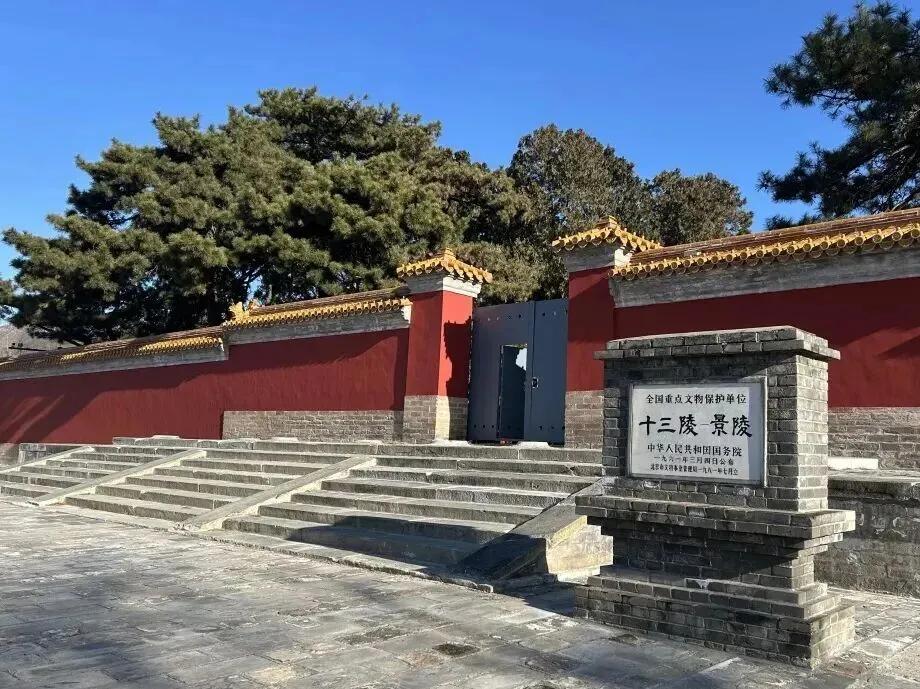
明十三陵景陵明起对公众开放
Xin Lang Cai Jing· 2025-12-20 23:09
Core Viewpoint - The Ming Dynasty's Jingling Tomb will reopen on December 22, allowing more than half of the main tombs in the Ming Tombs area to be accessible to visitors, enhancing cultural tourism in the Changping District [1][2] Group 1: Tomb Details - The Jingling Tomb, built in 1435, is the joint burial site of Emperor Zhu Zhanji and Empress Sun, covering an area of approximately 25,000 square meters, featuring historical relics such as the Stele Pavilion and the Hall of Grace [1] - The architectural layout of Jingling, while not as grand as other tombs, showcases intricate craftsmanship from the Ming Dynasty, with a unique design that harmonizes with the surrounding landscape [1] Group 2: Preservation and Cultural Significance - From 2024 to 2025, a preservation and restoration project will be implemented at Jingling, adhering to the principle of minimal intervention to protect and display valuable cultural relics [2] - The reopening of Jingling serves as a vital link in promoting cultural tourism in Changping, with the Ming Tombs now including several tombs open to the public, and plans to expand the World Heritage display area by 2030 [2]
明景陵后天起开放预约参观
Xin Lang Cai Jing· 2025-12-20 07:48
Core Viewpoint - The Ming Tombs, specifically the Jingling tomb, is set to open for public reservations, enhancing the cultural tourism experience in Changping District and promoting the historical significance of the Ming Dynasty [1][2]. Group 1: Cultural and Historical Significance - The Jingling tomb, built in 1435, is the joint burial site of Emperor Zhu Zhanji and Empress Sun, covering approximately 25,000 square meters and featuring well-preserved historical structures [1][2]. - The tomb reflects the "Renxuan Prosperity" era, showcasing the architectural ingenuity of the Ming Dynasty through its unique design and layout [1][2]. Group 2: Tourism and Accessibility - Visitors can now book visits to the Jingling tomb starting December 22, with reservations available through the "Changping Cultural Tourism Group" WeChat mini-program and Douyin [1][2]. - The opening of Jingling tomb adds to the existing accessible tombs, including Changling, Dingling, Zhaoling, Kangling, Yongling, and Siling, with plans to expand public access to all main tombs by 2030 [2].