仁宣之治

Search documents
经国枢机:古代奏议决策与治国智慧
Xin Lang Cai Jing· 2026-02-08 21:40
Core Viewpoint - The article discusses the significance of "Zouyi" (official memorials) in ancient governance, highlighting their role as crucial decision-making documents that reflect political strategies, social changes, and cultural heritage across different dynasties [1][5][11]. Group 1: Importance of Zouyi - Zouyi serves as an essential decision-making basis for ancient dynasties, reflecting the political landscape and societal issues of the time [2][5]. - The generation of Zouyi is facilitated by open communication channels within the court, allowing officials to express their views and report public sentiment [2][6]. - Zouyi encompasses both public matters related to governance and private matters, providing a comprehensive source of information for political decision-making [3][7]. Group 2: Process of Zouyi Submission - The submission of Zouyi involves several steps, including presentation, review, and decision-making, typically managed by designated officials or institutions [4]. - The emperor's review of Zouyi can vary from direct approval to further deliberation, influencing the final decision-making process [4][5]. - Despite potential interruptions in the submission process, the overall structure ensures the effectiveness and value of Zouyi in governance [4][5]. Group 3: Reflection of Governance Philosophy - Zouyi reflects the interaction between the emperor and officials, showcasing the principles of governance and the responsibilities of both parties [6][7]. - The content of Zouyi often addresses critical national issues, demonstrating the officials' commitment to public welfare and governance strategies [7][10]. - Historical examples illustrate how effective governance is linked to the quality of Zouyi and the willingness of rulers to heed advice from their ministers [6][10]. Group 4: Intellectual and Cultural Significance - Zouyi serves as a repository of historical thought and political philosophy, combining official duties with cultural insights [8][9]. - The discussions within Zouyi are characterized by a blend of historical reflection and practical governance, emphasizing the importance of context in political discourse [9][10]. - The dual identity of officials as both bureaucrats and scholars enriches the content of Zouyi, making it a vital source for understanding ancient governance [8][11].
景陵迎客 明十三陵可参观陵寝过半
Xin Lang Cai Jing· 2025-12-21 18:36
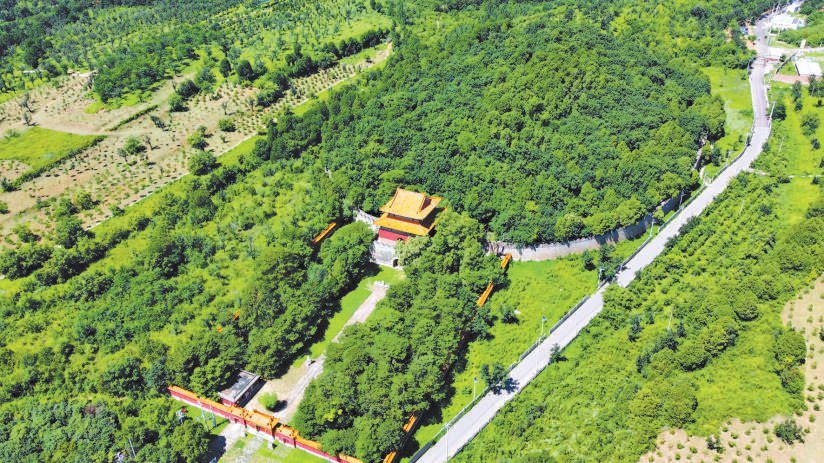
Core Viewpoint - The Ming Thirteen Tombs, specifically the Jingling Tomb, will open to the public starting December 22, with significant interest as reservations for December are nearly full. This marks a milestone in the accessibility of the Ming Thirteen Tombs, with over half of the main tombs now open for visitation [1][9]. Group 1: Historical Significance - Jingling Tomb is the third tomb built in the Ming Thirteen Tombs, covering an area of approximately 25,000 square meters and serving as the burial site for Emperor Zhu Zhanji and Empress Sun [3][4]. - The tomb reflects the "Jianxuan" era of governance, characterized by political clarity and stability, which was established by Emperor Zhu Zhanji and his father, Emperor Zhu Gaochi [3][4]. - The tomb's smaller size is attributed to the established tradition of simplicity and the limited space available at the chosen site, as well as the young age of Emperor Zhu Zhanji at his death [3][4]. Group 2: Architectural Features - Despite its smaller scale compared to other tombs, Jingling Tomb exemplifies the essence of Ming dynasty burial architecture, showcasing a unique design that integrates natural landscapes [4][5]. - The layout of the tomb follows a symmetrical structure, with a square front representing the emperor's governance and a circular back for burial, adhering to the ancient concept of "Heaven is round and Earth is square" [5]. - Key architectural elements include the Shigong Shengde Stele, which was ordered by Emperor Jiajing, and the remaining foundations of the Praying Hall, which highlight the grandeur of the original structure [7][8]. Group 3: Cultural Context - The tomb is associated with the cultural narrative of the "Cicada Emperor," reflecting Emperor Zhu Zhanji's passion for cricket fighting, which is also referenced in the famous literary work "Strange Stories from a Chinese Studio" [4]. - Empress Sun, the other tomb occupant, played a crucial role in stabilizing the dynasty during political turmoil, further enhancing the historical significance of Jingling Tomb [4]. Group 4: Visitor Engagement - The Ming Thirteen Tombs management has implemented a reservation system for visitors, with December appointments nearly fully booked, indicating strong public interest [1][10]. - Starting in 2024, a comprehensive restoration project will be undertaken to preserve the historical integrity of the tomb and its associated structures [9].

明景陵后天起开放预约参观
Xin Lang Cai Jing· 2025-12-20 07:48
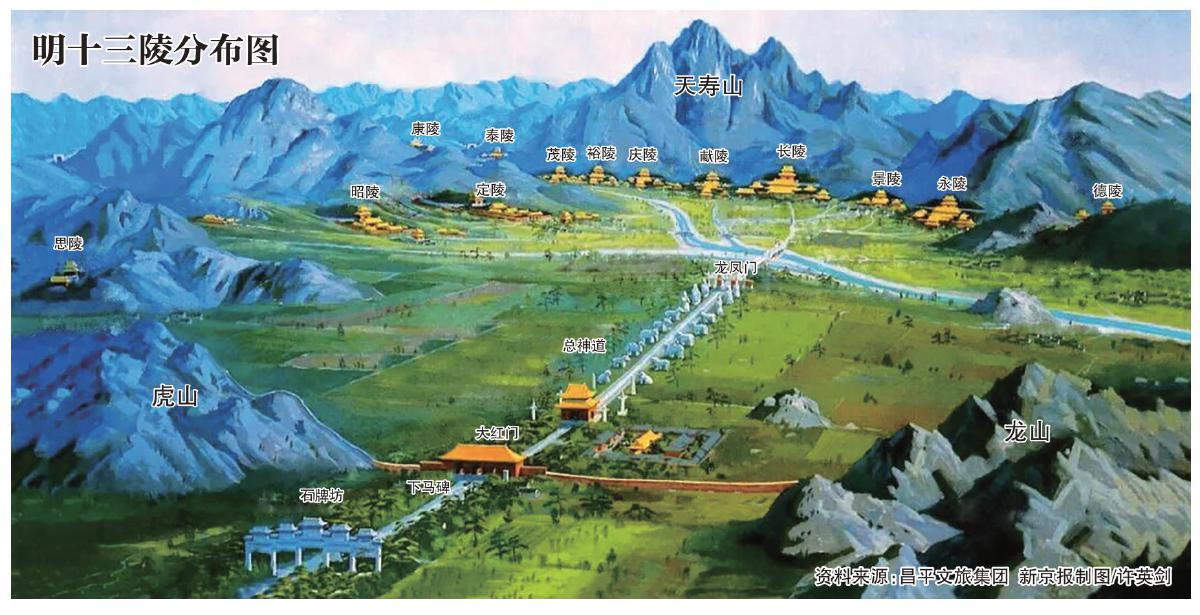
Core Viewpoint - The Ming Tombs, specifically the Jingling tomb, is set to open for public reservations, enhancing the cultural tourism experience in Changping District and promoting the historical significance of the Ming Dynasty [1][2]. Group 1: Cultural and Historical Significance - The Jingling tomb, built in 1435, is the joint burial site of Emperor Zhu Zhanji and Empress Sun, covering approximately 25,000 square meters and featuring well-preserved historical structures [1][2]. - The tomb reflects the "Renxuan Prosperity" era, showcasing the architectural ingenuity of the Ming Dynasty through its unique design and layout [1][2]. Group 2: Tourism and Accessibility - Visitors can now book visits to the Jingling tomb starting December 22, with reservations available through the "Changping Cultural Tourism Group" WeChat mini-program and Douyin [1][2]. - The opening of Jingling tomb adds to the existing accessible tombs, including Changling, Dingling, Zhaoling, Kangling, Yongling, and Siling, with plans to expand public access to all main tombs by 2030 [2].
明献陵为何最简朴
Bei Jing Wan Bao· 2025-10-08 06:51
Core Viewpoint - The article discusses the historical context and architectural features of the Ming Dynasty's Xianling, the tomb of Emperor Zhu Gaochi, emphasizing its simplicity and the circumstances surrounding the emperor's death [1][5][13]. Summary by Sections Historical Context - Zhu Gaochi, who reigned for less than nine months, died unexpectedly at the age of less than fifty, leading to various rumors about his death, including poisoning and humiliation by officials [1][2][3]. - The emperor's death is linked to his health issues, including obesity and physical ailments, which may have contributed to his sudden demise [3][5]. Architectural Features - Xianling was constructed rapidly, taking only three months, and was characterized by its frugality, as indicated by Zhu Gaochi's will, which called for a simple burial [5][6]. - The layout of Xianling influenced subsequent tombs, establishing a tradition of simplicity that persisted until the construction of Yongling [5][10]. Design Elements - The main structures of Xianling, such as the Qionghua Hall, were less grand compared to other tombs, with fewer rooms and simpler designs [6][8][9]. - The architectural features, including the absence of elaborate stone carvings and reduced scale of the entrance gates, reflect a shift towards a more modest approach in imperial tomb construction [8][9][11]. Legacy - Zhu Gaochi is remembered as a benevolent ruler, with his policies focused on the welfare of the people, which earned him a positive historical reputation despite his short reign [13][15]. - His legacy continued through his son, Emperor Zhu Zhanji, who upheld similar values of governance, contributing to the "Renxuan Era" known for its focus on public welfare [15].