全球秩序调整

Search documents
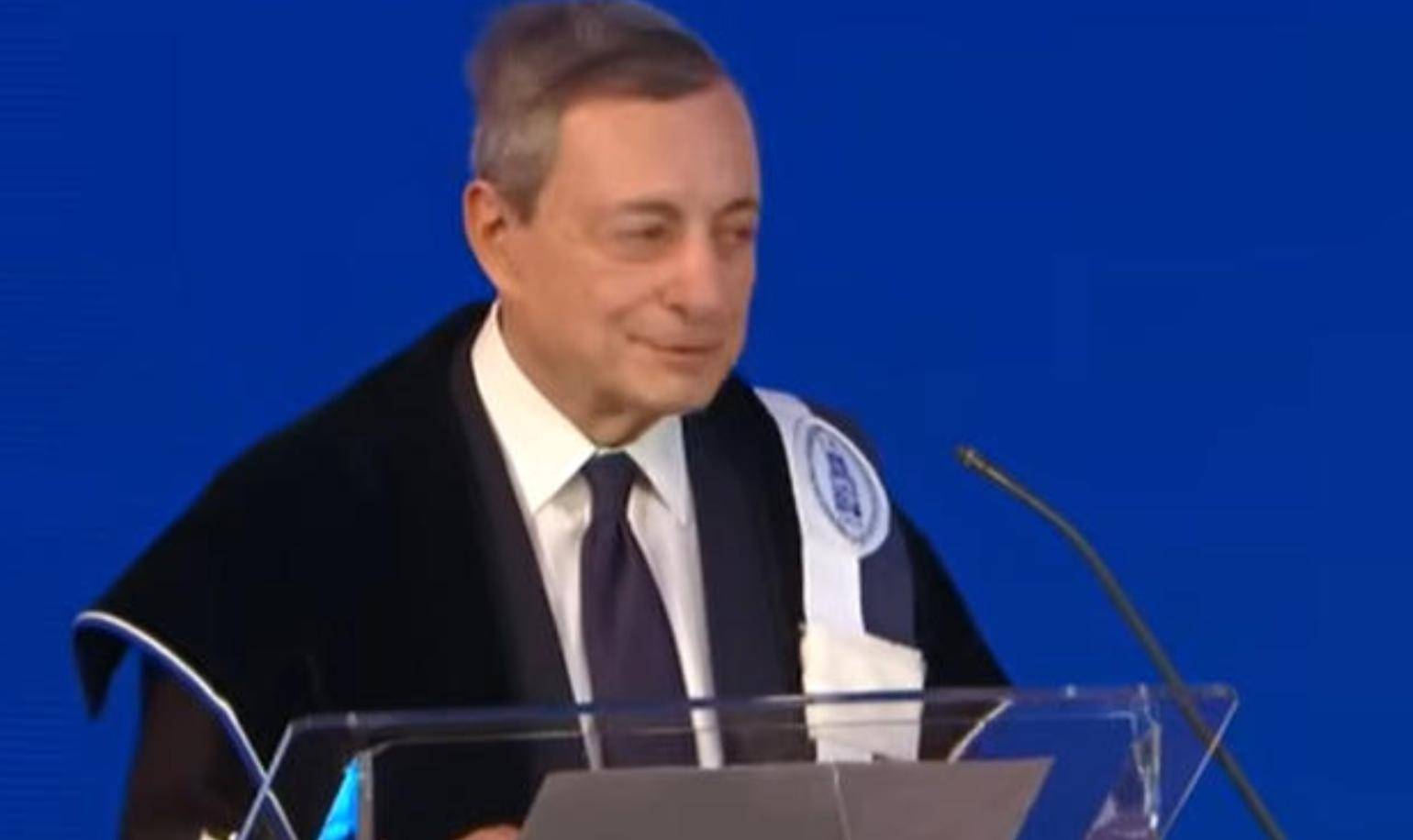
欧洲衰落,全都要怪中国?78岁德拉吉语出惊人:世界秩序名存实亡
Sou Hu Cai Jing· 2026-02-04 04:56
Core Viewpoint - The former Italian Prime Minister and ECB President Mario Draghi attributes Europe's economic decline to China, claiming that the collapse of the global order is closely linked to trade with China, and calls for accelerated European integration and diversification of trade policies [1]. Economic and Trade Relations - The economic cooperation between China and Europe has been mutually beneficial, characterized by a win-win relationship rather than being the root cause of Europe's decline. Since China's accession to the WTO, deep industrial and supply chain complementarities have developed, with the EU benefiting from exports in sectors like automotive, machinery, chemicals, and luxury goods [3]. - China's provision of high-quality, cost-effective intermediate and consumer goods has helped European companies reduce production costs and improved the welfare of European citizens, contradicting the notion that China is responsible for Europe's economic slowdown [3]. - The slowdown in European economic growth is more closely related to internal structural issues and external geopolitical factors, such as aging populations, rigid welfare systems, and lagging innovation in the digital economy and emerging industries, which are not directly linked to China [3]. Global Order and Responsibility - The adjustment of the global order is fundamentally a result of changes in international power dynamics and unilateralism, with China acting as a maintainer and reformer of the international order rather than a disruptor. In contrast, the U.S. is seen as the primary source of current global order imbalances due to its protectionist policies and trade sanctions [5]. - Draghi's focus on blaming China for the changes in global order reflects a misunderstanding of the historical trend towards multipolarity and the complexities of international relations [5]. Political Dynamics in Europe - Draghi's statements illustrate a tendency among Western politicians to externalize internal conflicts amid strategic anxieties, as Europe faces pressures from both U.S. hegemony and concerns about being marginalized in global supply chain restructuring [7]. - By portraying China as a controlling force in supply chains, Draghi attempts to shift the blame for Europe's internal issues, such as slow integration and ineffective policy execution, onto China, using external threats to foster internal consensus for EU transformation [7]. EU Integration Challenges - Draghi's call for a true federal transformation of the EU highlights deep-seated challenges in EU integration, including internal interest divergences, sovereignty issues, and ineffective collective decision-making processes [9]. - The strategy of amplifying external threats, particularly from China, to compel internal cohesion may exacerbate Euroscepticism and division within the EU rather than resolve fundamental issues [9]. - Draghi's rhetoric risks politicizing EU-China trade relations, elevating economic cooperation to a level of ideological conflict, which could lead to more aggressive protectionist measures from the EU, ultimately harming the interests of both European and Chinese businesses and citizens [9]. Recommendations for China - China should maintain a fact-based approach, using objective data and cooperative examples to counter the narrative of blame and clarify the mutually beneficial nature of China-EU trade [9]. - Promoting high-level economic dialogues with the EU can help mitigate the impact of negative rhetoric through pragmatic cooperation outcomes [9]. - Advocating for multilateralism and reforms in global governance, alongside like-minded powers, can help resist unilateralism and confrontational stances, steering the international order towards a more equitable and reasonable direction [9].