公众科学参与

Search documents
小学生“敲”出侏罗纪两栖动物化石
Xin Lang Cai Jing· 2026-02-01 18:19
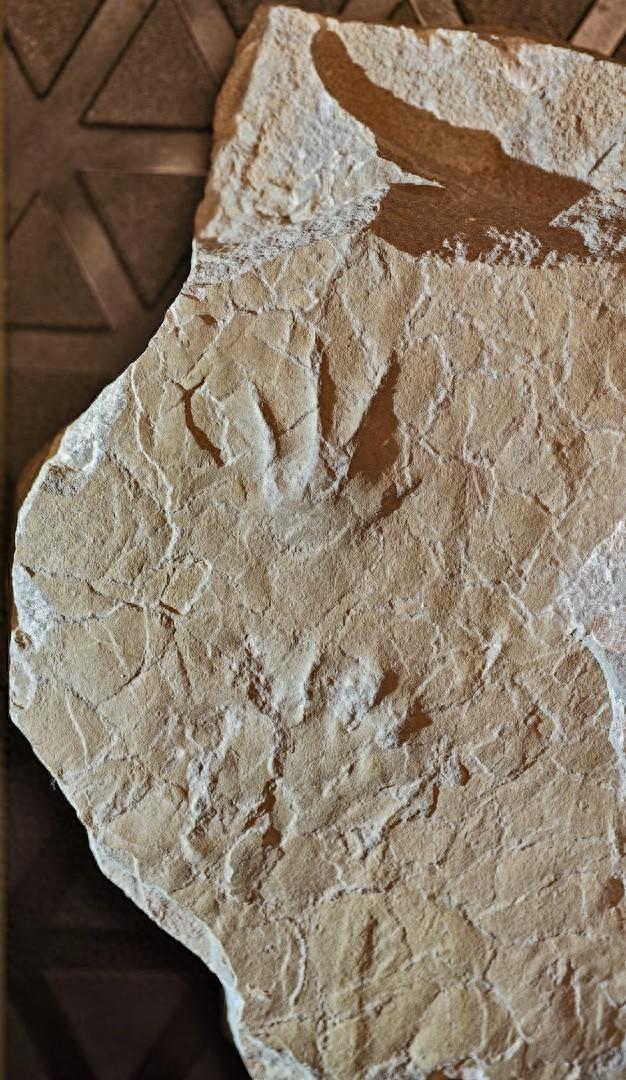
近日,一项由中国古生物学者主导的研究成果在国际植物和动物痕迹专业期刊《遗迹学》(Ichnos)上 正式发表,宣布在北京门头沟区侏罗纪中期地层中发现了亚洲范围内首次记录的两栖动物足迹化石。这 一发现不仅填补了我国乃至亚洲地区侏罗纪两栖动物遗迹化石研究的空白,更为深入理解约1.6亿年前 中侏罗世时期华北地区的古地理环境、古生态系统与生物多样性提供了珍贵的直接证据。 化石的最初发现者是当时年仅12岁的小学生倪景辰,彼时他就读于北京市第二实验小学德胜校区,现就 读于北京市三帆中学裕中校区。 化石足迹最可能由早期蝾螈类两栖动物留下 化石上的两枚足迹构成了一组关联的前-后足迹组合。其中,编号为JL-T1的印痕保存较为完好,被识别 为一只动物的左前足迹。它呈现清晰的四趾形态,整体呈扇形。掌印全长仅1.5厘米,宽1.3厘米,足见 造迹动物体形之小巧。另一枚编号为JL-T2的印痕则保存较差,被解释为同一只动物的左后足迹。它与 前足迹相距约6.7毫米。这枚足印显示出五趾的迹象,但印记宽短且模糊。 (来源:千龙网) 小学生门头沟"寻宝"收获意外发现 倪景辰说,5岁时,父母送给他一枚三叶虫化石,精美的化石让他对古生物产生了浓厚兴趣。 ...
北京小学生发现!亚洲首例侏罗纪中期两栖动物足迹化石现身
Xin Lang Cai Jing· 2026-01-31 08:13
Core Insights - The discovery of the first Jurassic amphibian footprint fossils in Asia fills a significant gap in the research of Jurassic amphibian traces in China and Asia, providing valuable evidence for understanding the paleogeography, paleoecology, and biodiversity of North China approximately 160 million years ago [1][7]. Group 1: Discovery and Significance - The fossil was discovered in the Mentougou District of Beijing, which has unique geological conditions that preserve rich fossil records [3]. - The initial discovery was made by a primary school student, Ni Jingchen, who found a rock slab with distinct footprints while exploring with his parents [3][5]. - This finding is significant as it marks the first scientific description of amphibian footprints in the Jurassic strata of Asia, previously dominated by records of dinosaur and turtle footprints [7]. Group 2: Fossil Characteristics - The fossil consists of two footprints preserved on the same rock slab, with one clear footprint measuring 1.5 cm in length and 1.3 cm in width, indicating a small-sized animal [5][6]. - The second footprint is less distinct, showing signs of five toes, measuring approximately 1.1 cm in length and 1.4 cm in width, with a broad heel area [5][6]. Group 3: Research Methodology - The research team utilized photogrammetry and 3D modeling techniques to create high-precision digital models of the fossils, allowing for detailed morphological analysis [5][6]. - The footprints are believed to belong to the same animal, likely an early salamander-like amphibian, based on their relative size, spacing, and alignment [6]. Group 4: Ecological Context - The rock layer containing the fossils is part of the important coal-bearing strata known as the Yaopo Formation, which also contains plant fossils such as fronds [7]. - The discovery indicates that during the Middle Jurassic period, small amphibians adapted to terrestrial life existed in the lake-swamp environments of Beijing, coexisting with a diverse array of ferns, ginkgos, and cycads [7].