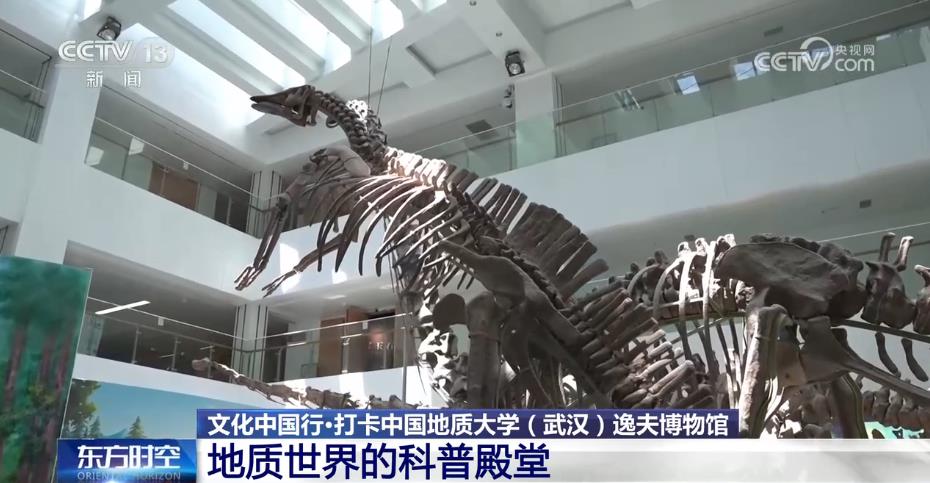
古生物学

Search documents
“亚洲首例”,北京小学生意外发现!
Xin Lang Cai Jing· 2026-01-31 11:12
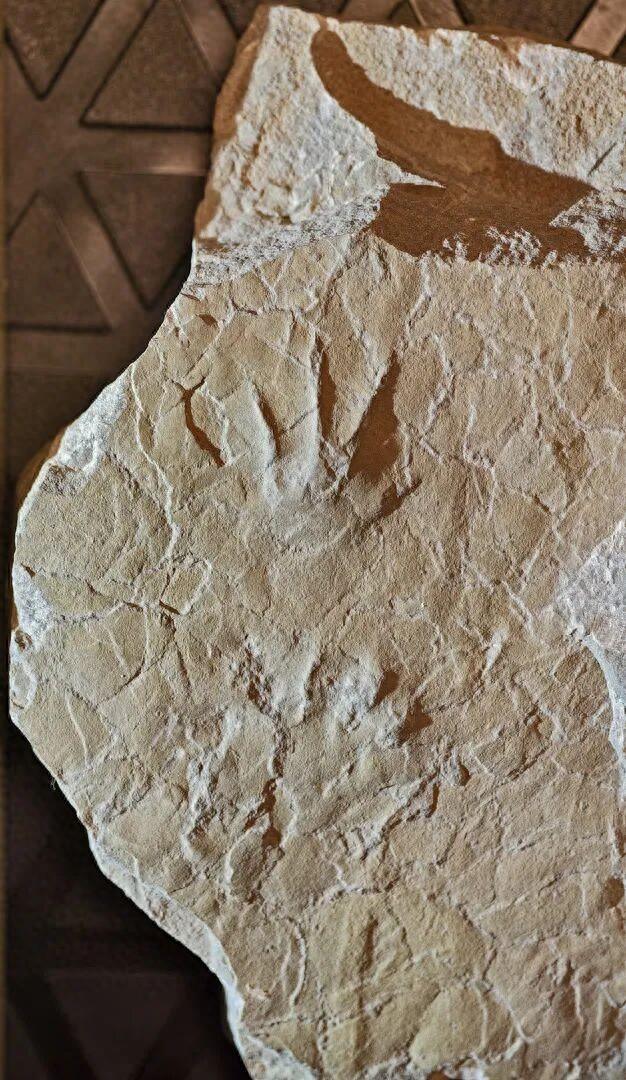
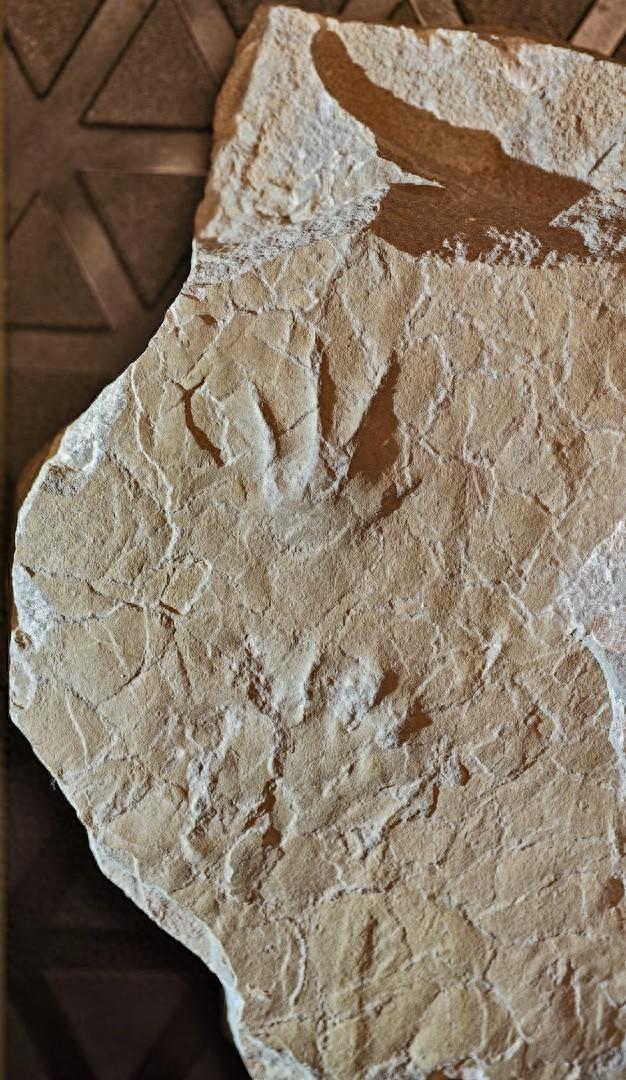
Core Insights - The discovery of the first Jurassic amphibian footprint fossil in Asia fills a significant gap in the study of Jurassic amphibian trace fossils in China and Asia, providing valuable evidence for understanding the paleogeography, paleoecology, and biodiversity of North China approximately 160 million years ago [1][7] Group 1: Discovery and Significance - The fossil was discovered in the Mentougou District of Beijing, which has unique geological conditions that preserve rich fossil records [3] - The initial discovery was made by a primary school student, Ni Jingchen, who found a rock slab with distinct footprints while exploring with his parents [3][5] - The findings were published in the international journal "Ichnology," highlighting the importance of public participation in scientific discovery [7] Group 2: Fossil Characteristics - The fossil consists of two footprints preserved on the same rock slab, with one clear footprint measuring 1.5 cm in length and 1.3 cm in width, indicating a small-sized animal [5][6] - The second footprint is less clear, showing signs of five toes, measuring approximately 1.1 cm in length and 1.4 cm in width [5] Group 3: Research Methodology - The research team utilized photogrammetry and 3D modeling techniques to create high-precision digital models of the fossil, allowing for detailed morphological analysis [6] - The footprints are believed to belong to the same animal, likely an early salamander-like amphibian, based on their relative size, spacing, and alignment [6] Group 4: Ecological Context - This discovery marks the first scientific description of amphibian footprints in Jurassic strata in Asia, contrasting with previous records that primarily documented dinosaur and turtle footprints [7] - The fossil layer is part of the important coal-bearing strata in the Mentougou area, indicating that small amphibians existed in a lake-swamp environment alongside diverse plant life during the Middle Jurassic period [7]

北京小学生发现!亚洲首例侏罗纪中期两栖动物足迹化石现身
Xin Lang Cai Jing· 2026-01-31 08:13
Core Insights - The discovery of the first Jurassic amphibian footprint fossils in Asia fills a significant gap in the research of Jurassic amphibian traces in China and Asia, providing valuable evidence for understanding the paleogeography, paleoecology, and biodiversity of North China approximately 160 million years ago [1][7]. Group 1: Discovery and Significance - The fossil was discovered in the Mentougou District of Beijing, which has unique geological conditions that preserve rich fossil records [3]. - The initial discovery was made by a primary school student, Ni Jingchen, who found a rock slab with distinct footprints while exploring with his parents [3][5]. - This finding is significant as it marks the first scientific description of amphibian footprints in the Jurassic strata of Asia, previously dominated by records of dinosaur and turtle footprints [7]. Group 2: Fossil Characteristics - The fossil consists of two footprints preserved on the same rock slab, with one clear footprint measuring 1.5 cm in length and 1.3 cm in width, indicating a small-sized animal [5][6]. - The second footprint is less distinct, showing signs of five toes, measuring approximately 1.1 cm in length and 1.4 cm in width, with a broad heel area [5][6]. Group 3: Research Methodology - The research team utilized photogrammetry and 3D modeling techniques to create high-precision digital models of the fossils, allowing for detailed morphological analysis [5][6]. - The footprints are believed to belong to the same animal, likely an early salamander-like amphibian, based on their relative size, spacing, and alignment [6]. Group 4: Ecological Context - The rock layer containing the fossils is part of the important coal-bearing strata known as the Yaopo Formation, which also contains plant fossils such as fronds [7]. - The discovery indicates that during the Middle Jurassic period, small amphibians adapted to terrestrial life existed in the lake-swamp environments of Beijing, coexisting with a diverse array of ferns, ginkgos, and cycads [7].
瞭望·瞭望访谈 | 让中国古生物学在国际拥有更高话语权——专访中国科学院院士徐星
Xin Hua She· 2025-11-18 03:06
Core Insights - China's paleontology has gained significant international influence and aims to increase its presence in global scientific discourse through more contributions and recognition in textbooks [1][8]. Group 1: Achievements and Contributions - The 2025 Future Science Prize awarded to scientists for fossil evidence linking birds to dinosaurs highlights China's advancements in paleontology [2]. - Xu Xing, a prominent figure in the field, has published over 300 papers and named more than 80 new dinosaur species, elevating China's status in dinosaur research [2][3]. Group 2: Research Methodologies - The discovery of the earliest known flying dinosaur, the "Qiyulong," challenges traditional views on the evolution of flight, showcasing the importance of advanced imaging techniques like CT scans [3][4]. - The integration of artificial intelligence in paleontological research is becoming more prevalent, aiding in the processing of complex data [5]. Group 3: Future Directions - The future of paleontology is expected to involve a fusion of geological and biological data, enhancing the understanding of evolutionary processes [7][12]. - China's unique fossil resources from the Mesozoic era provide a significant opportunity for impactful research, particularly in reconstructing ancient ecosystems [9]. Group 4: Educational and Institutional Challenges - The field of paleontology faces challenges in talent cultivation due to its niche status and limited job prospects, although public interest is growing [10][11]. - Continuous investment in basic scientific research is essential for the long-term development of paleontology in China [11]. Group 5: Climate Change Insights - Paleontological studies offer critical insights into historical climate changes and their impacts on biodiversity, which can inform current ecological challenges [15][16]. - Understanding past mass extinction events can provide valuable lessons for addressing contemporary environmental crises [15][16].

“恐龙院士”徐星:在朝阳,孩子们可以近距离与化石对话
Xin Hua She· 2025-10-12 10:41
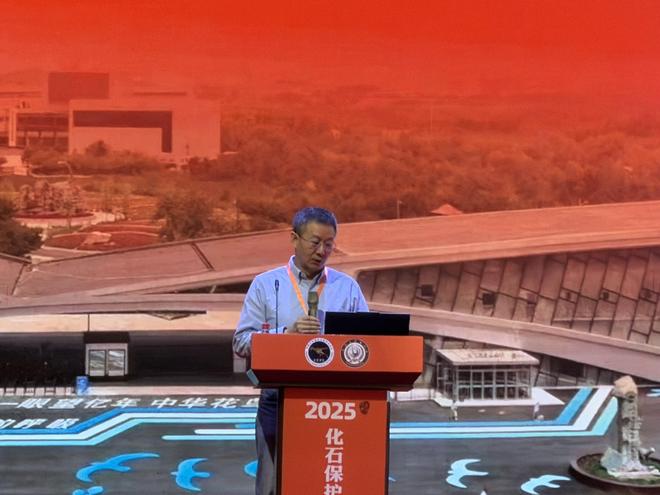
Core Viewpoint - The importance of fossil education and its role in promoting interest in natural sciences among children is emphasized by Xu Xing, a prominent Chinese paleontologist, during the "2025 Fossil Protection Seminar" held in Chaoyang, Liaoning [1]. Group 1: Fossil Resources and Research - Chaoyang, Liaoning, is highlighted for its rich fossil resources, including significant discoveries like "Chinese Dragon Bird" and "Liaoning Ancient Fruit," marking it as a pivotal location in the history of avian and floral evolution [1]. - The city has identified 45 categories, 343 genera, and 628 species of fossils, covering nearly all key components of the Late Mesozoic terrestrial ecosystem [1]. Group 2: Science Communication and Education - Xu Xing has dedicated over 20 years to science popularization, aiming to foster a societal appreciation for science rather than solely promoting careers in paleontology [1]. - A notable achievement includes a dinosaur science article written by Xu that was included in elementary school textbooks, significantly sparking children's interest in dinosaurs [1][2]. - Xu emphasizes the dual importance of scientific research and science communication, arguing that both are equally vital for societal advancement [3].
文化中国行 | 探寻地质奥秘,开启科学之门,你准备好了吗?
Yang Shi Wang· 2025-07-29 16:51
Core Points - The China University of Geosciences (Wuhan) Yifu Museum is recognized as the first national 4A-level tourist attraction among university museums, specializing in geological sciences with over 40,000 geological specimens and nearly 3,000 paleontological fossils on display [1][3] - The museum serves as both a learning environment for students and a platform for public education on geosciences, attracting youth from across the country during the summer [1][9] Collection Highlights - The museum houses a diverse collection of fossils, including the "Liang's Guanling Ichthyosaur," which is notable for its length and preservation, providing insights into evolutionary history [10][12] - Significant specimens include a 50-kilogram iron meteorite and various samples collected from Mount Everest, showcasing the museum's commitment to geological research and education [5][8] Research Contributions - The museum has played a crucial role in scientific research, with teams led by Professor Xiao Long participating in the Chang'e 5 lunar mission, creating over 100 tons of simulated lunar soil for research purposes [8][9] - The discovery of the Guiyang Biota by Song Haijun's team has provided new evidence for understanding the ecological recovery following the largest mass extinction event approximately 250 million years ago, with findings published in the journal Science [12][14] Educational Impact - The museum employs simulation technology to recreate ancient biological environments, enhancing visitor engagement and understanding of geological sciences [10][19] - It serves as a practical classroom for students, inspiring them to explore geology and paleontology through hands-on experiences and fieldwork [19][21] Visitor Information - The museum is open to the public from July 9 to August 28, 2025, with daily hours from 9:00 AM to 5:00 PM, allowing visitors to purchase tickets on-site without prior reservation [22]