
共享养老

Search documents
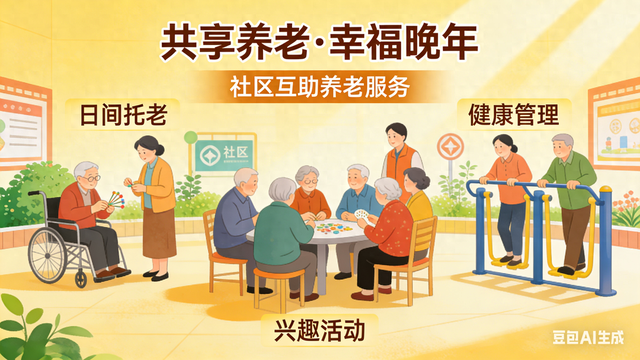
大任观银龄/共享养老:一个需要“信任底座”的创新试验
Xin Lang Cai Jing· 2026-02-01 11:06
Core Perspective - The concept of "shared elderly care" is gaining attention, aiming to integrate idle housing, personnel, and services to match elderly care needs, envisioning a scenario of "no resource waste and demand met" [1] Group 1: Advantages and Innovations - The model potentially responds to "diversification" and "flexibility," revitalizing social resources to offer personalized options for the elderly, such as travel-based health care or specialized companionship services [3] - It reflects innovative thinking in addressing aging society challenges, but its success hinges on establishing a solid "trust foundation" [1][3] Group 2: Challenges and Requirements - The essence of elderly care is safety and trust, and the shared model faces significant challenges in ensuring that scattered service providers maintain ongoing professional qualifications [3] - There is a need for unified service standards, process supervision, and dispute resolution mechanisms to mitigate risks associated with personalized services [3] - Healthy development of this model requires a shift from mere "platform matching" to "quality co-construction," necessitating stringent entry, training, insurance, and credit systems, along with deep integration with community and medical institutions [3] Group 3: Practical Implications - For Jiangsu, the value of any elderly care innovation lies not in its novelty but in its ability to pragmatically establish safety and trust as foundational elements [3] - Only through such practical approaches can innovation genuinely serve the goal of ensuring a dignified and secure life for the elderly [3]

“认干亲养老”,情感互助还是利益交换?
Nan Fang Du Shi Bao· 2025-05-16 11:27
Core Viewpoint - The phenomenon of "recognizing dry kin for elderly care" has gained popularity on social media, reflecting a unique social mutual aid model amidst the challenges of high housing prices and emotional needs of both empty-nest elderly and struggling young people [1][2] Group 1: Nature and Legal Status - "Recognizing dry kin for elderly care" is a contractual pseudo-kinship relationship, differing from traditional family ties and pure employment relationships, existing in a gray legal area [1][2] - This arrangement involves resource exchange where elderly individuals provide housing and financial support, while young people offer companionship and care, fulfilling mutual needs [1][2] Group 2: Social Background and Risks - The rise of this phenomenon is rooted in significant demographic changes, with over 50% of elderly individuals in China being empty-nesters, and more than 100 million elderly facing solitary lives [2] - Traditional family functions are weakening due to factors like children working away from home, increased burdens on only children, and the rise of "DINK" families, limiting family-based elderly care [2] - There are notable risks associated with this model, including a 27% annual increase in property disputes related to "dry kin" arrangements and instances of financial fraud [2] - Emotional risks are prevalent, with young participants sometimes facing demands for extensive companionship hours, leading to feelings of being exploited [2] - Data indicates that 60% of these pseudo-kin relationships terminate within a year, often due to trust issues or conflicts of interest [2] Group 3: Alternative Models and Solutions - The popularity of "recognizing dry kin for elderly care" highlights the weakening of traditional family support and the lack of public social services, revealing a societal desire for emotional connections [3] - Various alternative elderly care models, such as "time banks" and neighborly mutual aid, have been successfully implemented, promoting community-based support systems [3][4] - These models emphasize the importance of structured design and risk management to ensure safety and trust in mutual aid relationships [4] - The key to addressing elderly care challenges lies in rebuilding trust and creating supportive networks, transforming "recognizing dry kin" into genuine emotional connections [4]