关税杠杆

Search documents
遭美最高法院“狙击”后,特朗普“关税杠杆”何去何从?
Xin Lang Cai Jing· 2026-02-22 00:25
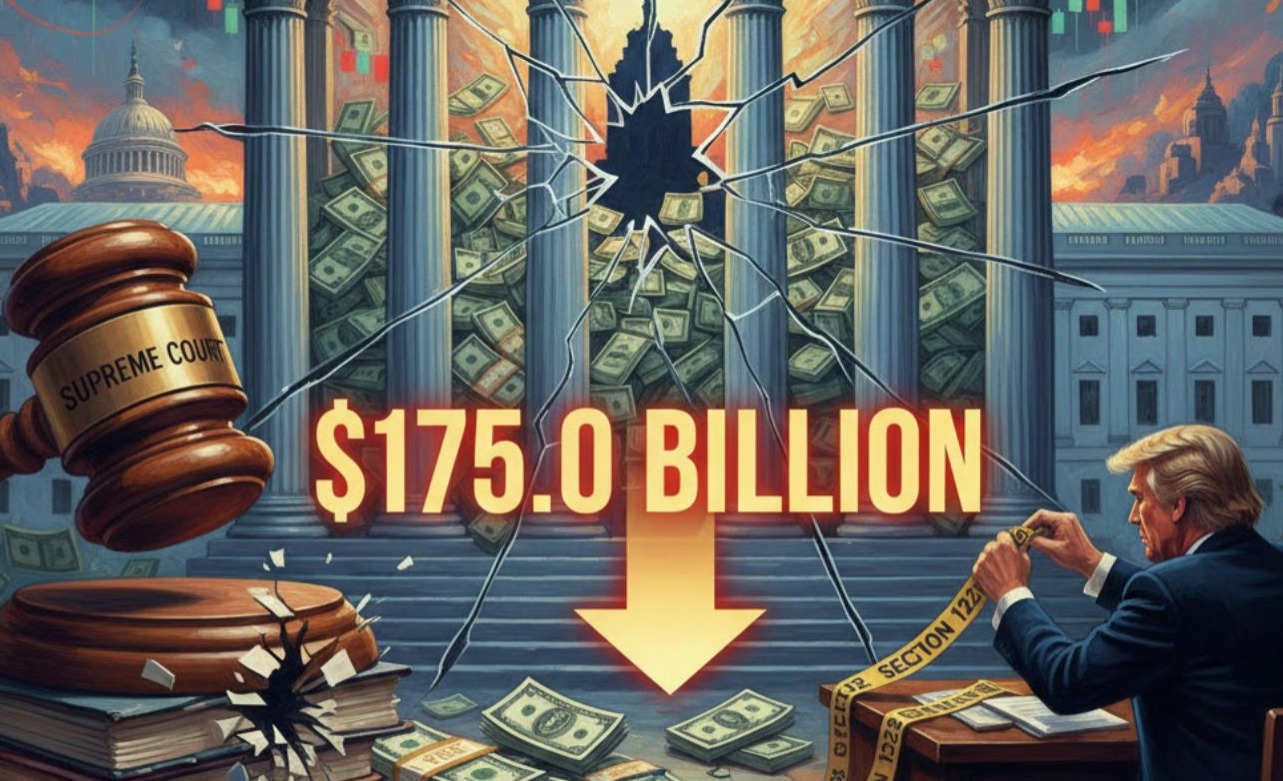
Core Viewpoint - The U.S. Supreme Court ruled against the Trump administration's use of the International Emergency Economic Powers Act (IEEPA) to impose large-scale tariffs, potentially leading to refunds of up to $175 billion for previously collected tariffs [2][8]. Group 1: Supreme Court Ruling - The Supreme Court's decision, with a 6-3 vote, determined that the IEEPA does not grant the president the authority to impose significant tariffs without congressional approval [2][5]. - The ruling was based on the interpretation that the power to levy taxes, including tariffs, is exclusively granted to Congress by the Constitution [5][6]. - The decision is seen as a significant judicial event, with implications for the future of U.S. trade policy and presidential powers [5][8]. Group 2: Trump's Response - Within three hours of the ruling, Trump announced three measures: a 10% temporary tariff on global imports, the continuation of existing tariffs under Section 232 and Section 301, and the initiation of new investigations [3][4]. - The new 10% tariff will exempt certain categories, including energy and pharmaceuticals, similar to previous exemptions under IEEPA [4][8]. - Trump's quick response indicates a strategic pivot to maintain tariff leverage despite the court's ruling [3][7]. Group 3: Economic Implications - Economic analysts estimate that potential refunds from the ruling could reach $175 billion, with households potentially saving hundreds of dollars on imported goods if no new tariffs are imposed [8][9]. - The stock market reacted positively to the ruling, with the Dow Jones and S&P 500 seeing gains, particularly in import-heavy sectors [9]. - However, the introduction of new tariffs and investigations suggests that uncertainty in the supply chain and trade environment remains [9].