内乱罪

Search documents
不服无期判决,尹锡悦提起上诉
Huan Qiu Shi Bao· 2026-02-24 22:59
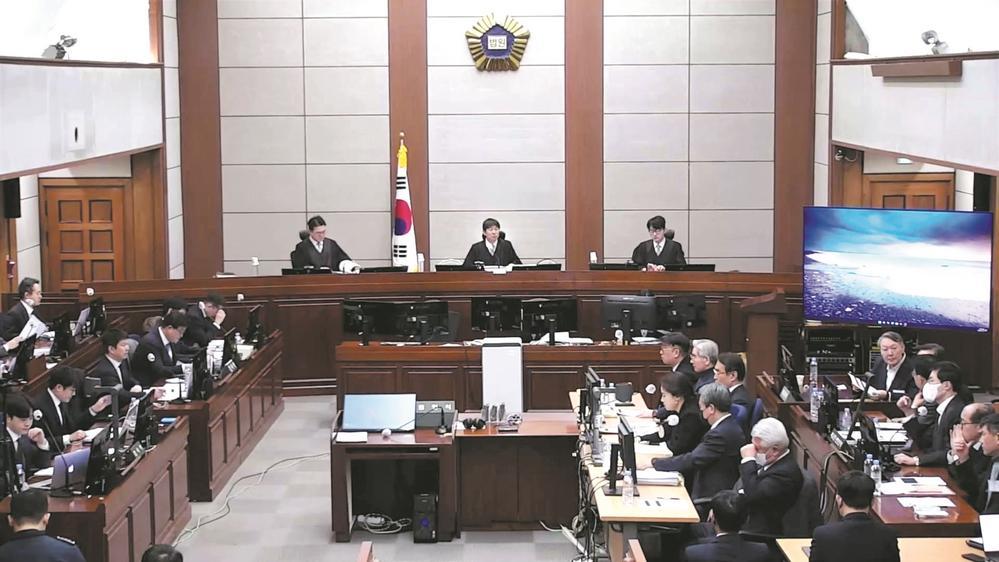
Core Viewpoint - The former South Korean President Yoon Suk-yeol has appealed against the first-instance ruling that found him guilty of insurrection, which resulted in a life sentence due to actions deemed as an attempt to disrupt constitutional order and incite violence [1][3]. Group 1 - On December 3, 2024, Yoon issued an emergency martial law order under the pretext of eliminating "North Korean forces," which was followed by the National Assembly's resolution to lift the martial law the next day [3]. - The Seoul Central District Court ruled on February 19, 2026, that Yoon's actions met the criteria for insurrection, indicating an intent to paralyze the National Assembly through military intervention and violence [3]. - The court did not impose the death penalty as requested by the special prosecution team, citing that Yoon's actions did not appear to be meticulously planned and showed some restraint in the use of force [3]. Group 2 - Yoon's legal team has expressed that the ruling is "unacceptable," arguing that the court failed to eliminate political bias and that the logic behind the insurrection charge is difficult to comprehend [3]. - The independent investigation team responsible for the case has also decided to appeal, believing that the first-instance ruling had discrepancies in sentencing and legal application, aiming for a harsher penalty in the second trial [4]. - Ongoing controversies surrounding the first-instance ruling include the court's omission of the role of "citizen resistance" in preventing the escalation of martial law, which has sparked debate regarding the factors considered in sentencing [4].

尹锡悦辩护团队谴责法院无期徒刑判决 检方暗示将抗诉
Xin Lang Cai Jing· 2026-02-20 03:08
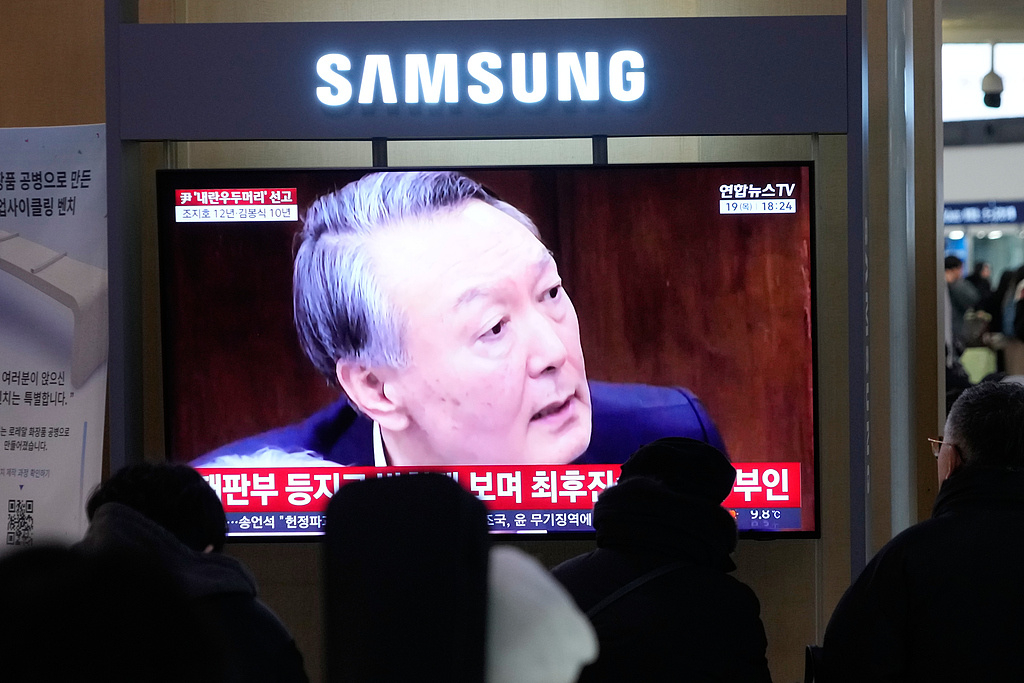
Core Viewpoint - The Seoul Central District Court sentenced former President Yoon Suk-yeol to life imprisonment for his involvement in a rebellion case, with his defense team vowing to fight the ruling and the prosecution indicating plans to appeal [1][3]. Group 1: Court Ruling and Implications - The court ruled that while declaring a state of emergency does not directly constitute rebellion, if the intent is to paralyze constitutional functions, it can be classified as such [3]. - The court emphasized that Yoon Suk-yeol directly orchestrated the crime and involved multiple participants, leading to significant social costs without showing remorse [3]. - The special investigation team expressed that the ruling was meaningful but regrettable in terms of fact-finding and sentencing, hinting at an appeal [3]. Group 2: Political Reactions - The ruling party's leader criticized the life sentence as undermining judicial justice, suggesting that a death sentence would have been more appropriate for someone accused of undermining the state [4]. - The largest opposition party, the People Power Party, did not officially comment on the ruling, but a member publicly distanced the party from Yoon Suk-yeol [4].
尹锡悦为何被判无期?他能否得到特赦?
Xin Lang Cai Jing· 2026-02-19 11:41
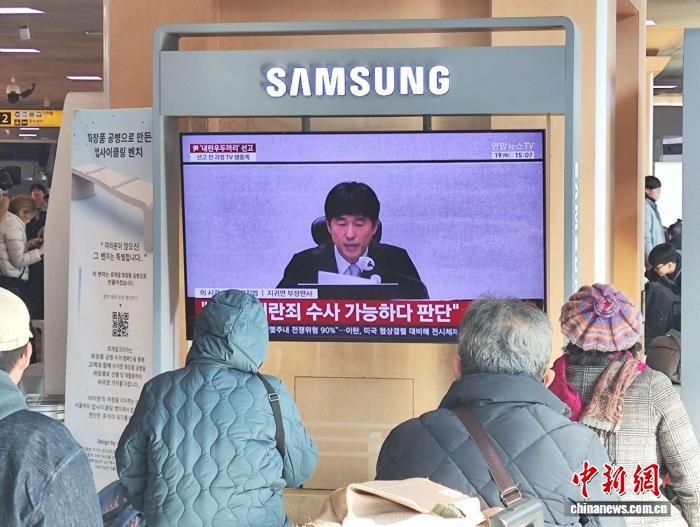
Core Viewpoint - The Seoul Central District Court sentenced South Korean President Yoon Suk-yeol to life imprisonment for committing treason by declaring a state of emergency and dispatching military forces to the National Assembly, which was deemed an act to paralyze the legislative function [1]. Group 1: Court Ruling and Charges - The court found that Yoon's actions, including sending military police to the National Assembly, were intended to disrupt its functions and constituted a rebellion against the constitution [1]. - The court ruled that the conflict between military police and citizens during the blockade of the National Assembly was a violent act that disrupted regional peace, thus fulfilling the criteria for treason [1]. - According to South Korean law, the only penalties for treason are death, life imprisonment, or indefinite detention, leading to the court's decision for life imprisonment instead of the death penalty [1]. Group 2: Sentencing Considerations - The judge noted that Yoon has no prior criminal record and is 65 years old, which contributed to a lighter sentence of life imprisonment rather than the maximum penalty of death [2]. - South Korea has not executed anyone since December 30, 1997, and has not sentenced anyone to death in nearly a decade [2]. Group 3: Potential for Presidential Pardon - There is speculation about whether Yoon could receive a special pardon, similar to former President Chun Doo-hwan, who was sentenced to death for treason but was pardoned in 1998 [3]. - The context of the 1997 pardon was during a financial crisis, aimed at promoting national unity [4]. - Political figures, including Lee Jae-myung, have expressed that if Yoon is sentenced to life imprisonment, he should not be eligible for a pardon, arguing that previous pardons have emboldened leaders to commit treason [7].
内乱头目罪罪名成立!刚刚,尹锡悦被判无期徒刑!反对者与支持者在场外高声叫骂,警方部署上千警力维持秩序
Mei Ri Jing Ji Xin Wen· 2026-02-19 07:32
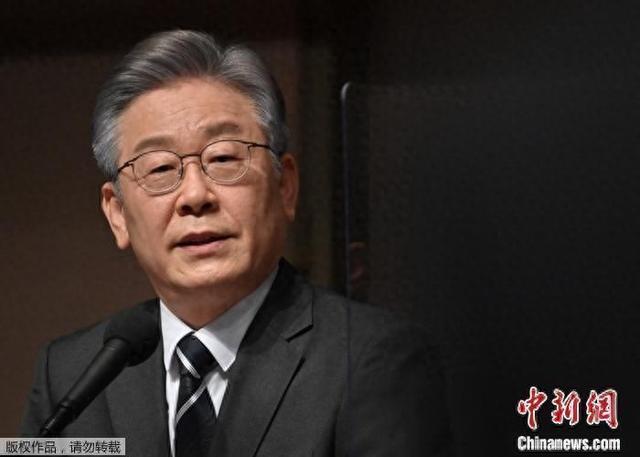
Group 1 - The South Korean court sentenced former President Yoon Suk-yeol to life imprisonment for leading a coup, marking him as the first former president in nearly 30 years to face such charges [1][3][9] - Yoon Suk-yeol is the second former president after Chun Doo-hwan to face a death penalty request from prosecutors, highlighting the severity of the charges against him [3][9] - The prosecution argued that Yoon abused his presidential powers to organize criminal activities, aiming for political monopoly and long-term rule, which they classified as anti-state behavior under the National Security Law [9][10] Group 2 - Supporters of Yoon gathered near the court, with approximately 4,300 participants urging for his acquittal, while opposing groups organized a rally with around 5,000 participants demanding a guilty verdict [4][6] - The police deployed over 1,000 officers to maintain order during the protests, which included heated exchanges but were prevented from escalating into physical confrontations [6] - Civil groups, including "Candlelight Action," called for the most severe legal penalties for Yoon, citing the tragic Itaewon crowd crush incident that resulted in 159 deaths [7]
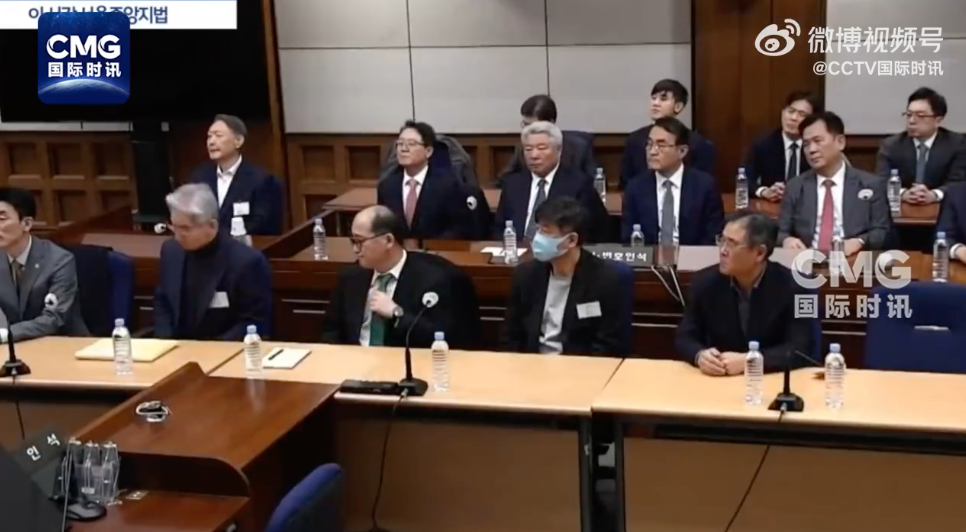
尹锡悦今天或被判死刑
Xin Lang Cai Jing· 2026-02-19 04:33
Core Viewpoint - The South Korean court is set to deliver a first-instance verdict today on former President Yoon Suk-yeol regarding charges of insurrection, with prosecutors seeking the death penalty based on allegations of abuse of power and attempts to establish a dictatorship [1] Group 1: Legal Proceedings - The special prosecution team investigating the emergency martial law incident has accused Yoon Suk-yeol of leading an insurrection, requesting the court to impose the death penalty [1] - Prosecutors claim that Yoon misused his presidential authority to organize criminal activities, aiming to eliminate political opposition and consolidate power for personal gain [1] - Under South Korean law, leaders of insurrection can face the death penalty or life imprisonment, despite the international perception of South Korea as a country that has effectively abolished the death penalty [1] Group 2: Nature of Allegations - The prosecution describes Yoon's actions as extremely malicious, utilizing military and police resources, which are meant to serve national and collective interests, for personal power ambitions [1] - The nature of Yoon's actions is characterized as anti-state behavior as defined by the National Security Law, based on the objectives, means, and methods employed [1]
“司法定性”意义重大,舆论质疑判罚“太轻”,尹锡悦首案宣判5年徒刑
Huan Qiu Shi Bao· 2026-01-16 22:37
Core Viewpoint - Former South Korean President Yoon Suk-yeol was sentenced to five years in prison for obstructing special public duties and abusing power, marking a significant judicial decision regarding his actions during a state of emergency [1][4][8] Group 1: Legal Proceedings - The Seoul Central District Court found Yoon guilty of instructing security personnel to obstruct his arrest and of manipulating the emergency declaration process, which violated constitutional procedures [4][8] - The court's ruling is seen as a landmark decision, as it is the first time a judicial body has recognized the unconstitutional nature of the emergency decree issued on December 3 [1][8] - Yoon's defense team plans to appeal the verdict, indicating ongoing legal battles ahead [1][6] Group 2: Political Reactions - Supporters of Yoon gathered outside the court, expressing their discontent with the ruling, while opposition parties criticized the sentence as too lenient [6][7] - The ruling has sparked debates within the political landscape, with various parties calling for stricter penalties for actions deemed as undermining constitutional order [6][10] Group 3: Implications for Future Cases - The ruling may have significant implications for Yoon's other ongoing criminal cases, particularly the most critical one related to allegations of leading a coup, which is set for trial in February [8][9] - Analysts suggest that the court's decision could influence the outcomes of related cases involving other officials accused of complicity in the emergency measures [8][9]
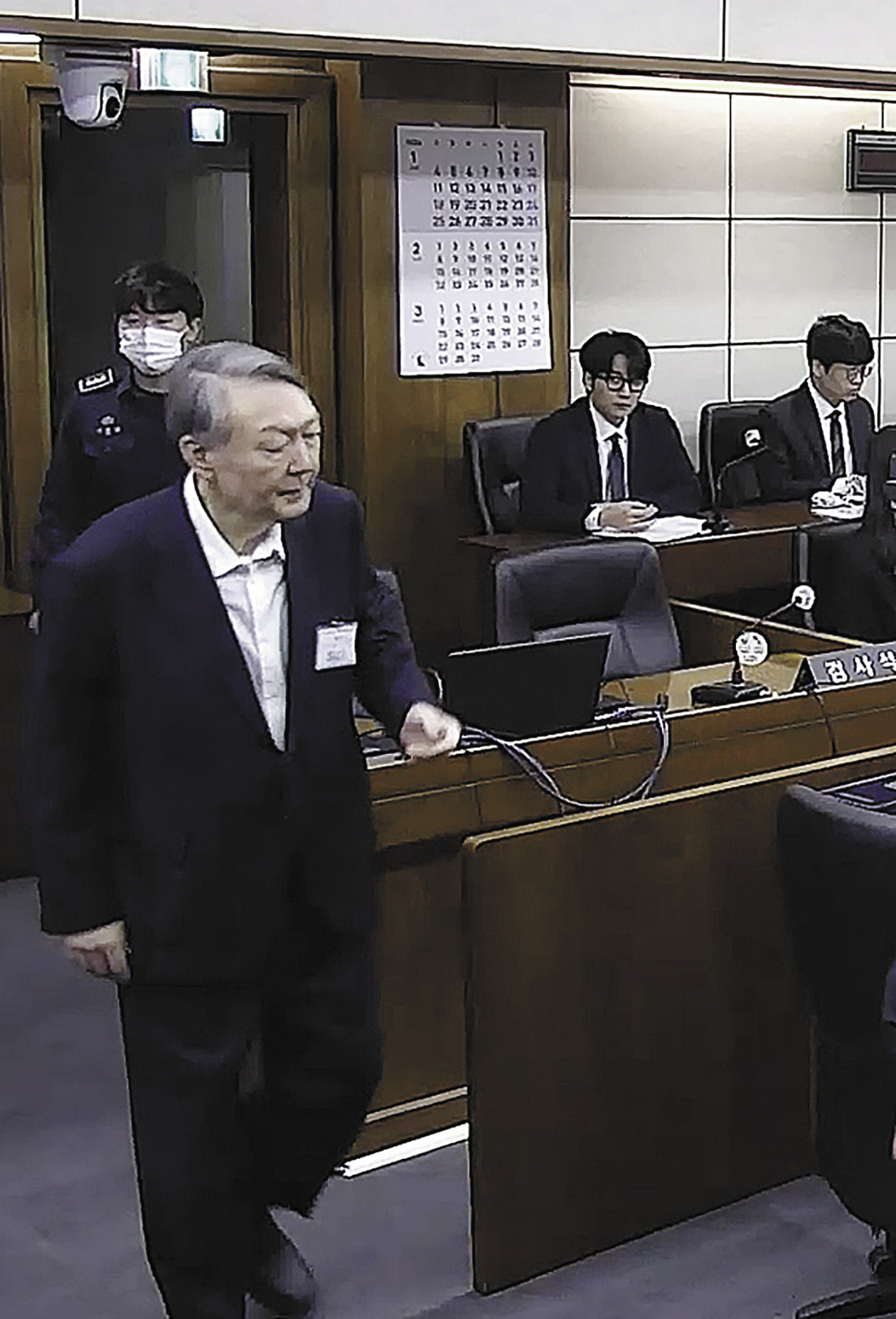
尹锡悦首案宣判,获刑5年
券商中国· 2026-01-16 06:26
Group 1 - The South Korean court sentenced former President Yoon Suk-yeol to five years in prison for obstructing official duties related to the emergency martial law he declared [1] - The court's ruling is expected to influence other cases related to the emergency martial law and may serve as a precedent for future judgments [1] - The prosecution requested the death penalty for Yoon Suk-yeol in a separate case involving charges of treason, marking the first time in nearly 30 years that a former South Korean leader faces such a severe penalty [1] Group 2 - On December 3, 2024, Yoon Suk-yeol announced the emergency martial law in response to opposition parties leveraging their majority in the National Assembly, which led to his impeachment [2] - The Constitutional Court ruled in April 2025 that the emergency martial law violated the South Korean Constitution and laws, resulting in Yoon Suk-yeol's removal from office [2]
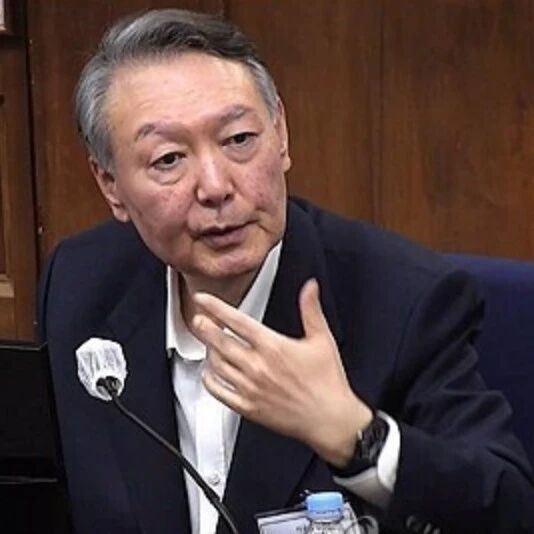
“坐在被告席上的尹锡悦冷笑了一下”
Huan Qiu Wang· 2026-01-14 23:48
Core Viewpoint - The South Korean former president Yoon Seok-youl is facing a death penalty request from prosecutors for allegedly leading a coup during a state of emergency that was not warranted, marking a significant moment in South Korea's political history as it is the first time since 1996 that a former president is being prosecuted for treason [1][2]. Group 1: Legal Proceedings - The special prosecution team has characterized the December 3 emergency declaration as a major constitutional order violation led by anti-state forces, requesting the death penalty for Yoon Seok-youl [2]. - The trial lasted for nearly 17 hours, with Yoon Seok-youl denying all charges and asserting that his actions were constitutional [2][3]. - Other high-ranking officials involved in the case are also facing severe penalties, with requests for life imprisonment for the former defense minister and prison terms ranging from 10 to 30 years for others [3]. Group 2: Political Reactions - There is a strong call from various political figures in South Korea for severe punishment, emphasizing the need to prevent a recurrence of such actions in the future [4]. - The possibility of a death sentence for Yoon Seok-youl is met with skepticism in the legal community, as South Korea has not executed a death sentence in nearly 30 years, suggesting a trend towards de facto abolition [4]. - Analysts suggest that the death penalty request may serve more as a symbolic gesture rather than an expectation of actual execution, aiming to reinforce the rule of law and accountability for high-ranking officials [5]. Group 3: Historical Context - The current situation evokes memories of past political turmoil, particularly the cases of former presidents Chun Doo-hwan and Roh Tae-woo, who were also prosecuted for similar charges but ultimately received reduced sentences [7]. - The societal impact of Yoon Seok-youl's actions has led to significant political division and unrest, with ongoing protests and political gatherings following the emergency declaration [7]. - The upcoming trial verdict in February 2024 could reshape the political landscape in South Korea, potentially affecting the ruling party and its internal dynamics [7].

社会关注量刑标准,舆论反思“国家悲剧”,尹锡悦或被判死刑搅动韩国
Huan Qiu Shi Bao· 2026-01-14 22:58
Core Viewpoint - The former South Korean President Yoon Suk-yeol has been indicted for leading an internal rebellion, with prosecutors seeking the death penalty, marking the first such case since 1996 [1][3]. Group 1: Legal Proceedings - The special prosecution team has classified the December 3 emergency martial law incident as a significant constitutional order violation led by anti-state forces, requesting the death penalty for Yoon Suk-yeol [3][4]. - The court session lasted nearly 17 hours, with Yoon denying all charges and asserting that his actions were constitutional [3][4]. - Other high-ranking officials involved in the case are also facing severe penalties, with requests for life imprisonment for the "second-in-command" and prison terms ranging from 10 to 30 years for others [4]. Group 2: Political Reactions - Many political figures in South Korea are calling for strict judicial action against Yoon, emphasizing that acts of internal rebellion must not be tolerated [5]. - The possibility of a death sentence for Yoon is met with skepticism in the legal community, as South Korea has not executed a death sentence in nearly 30 years, and the severity of Yoon's actions is considered less impactful compared to past cases [5][6]. Group 3: Societal Impact - The emergency declaration by Yoon has caused significant social trauma, leading to increased political division and public protests in South Korea [7]. - The upcoming court ruling in February could reshape the political landscape, potentially impacting the ruling party and its internal dynamics [8].
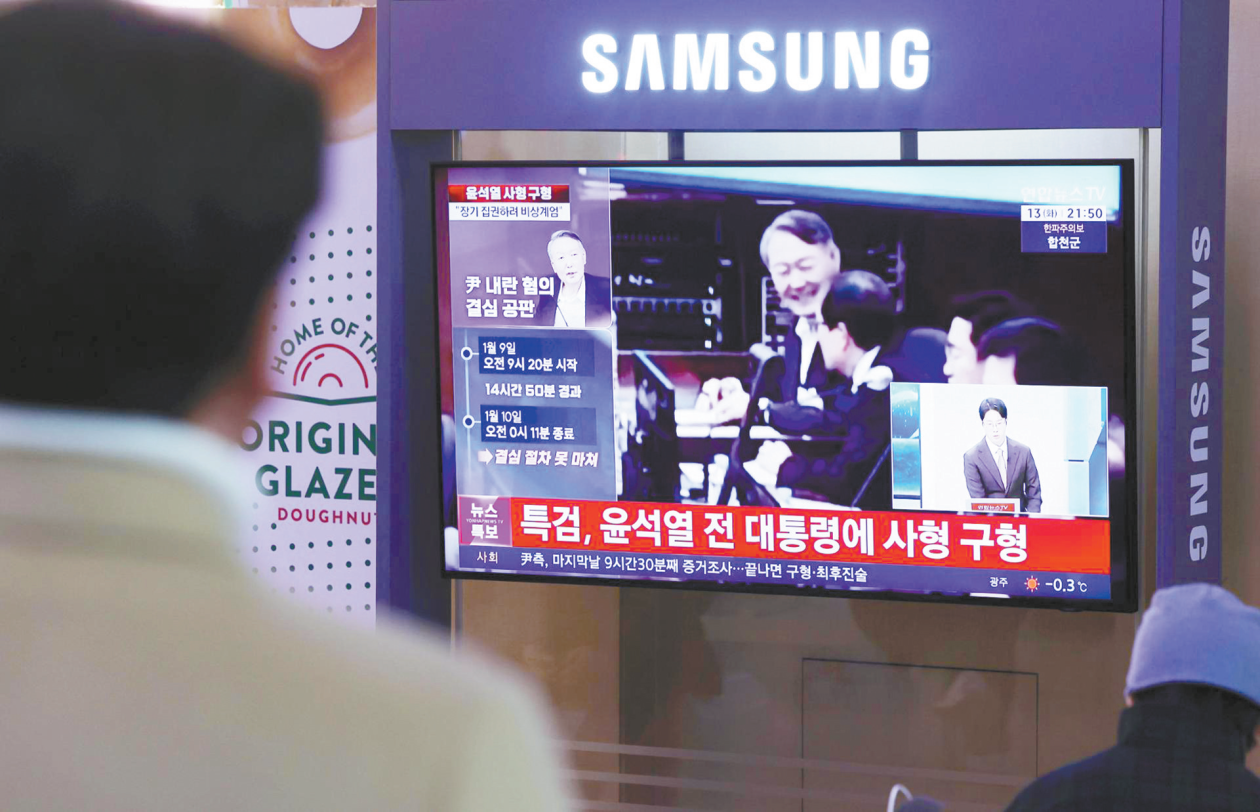
尹锡悦当庭激辩89分钟
Xin Lang Cai Jing· 2026-01-14 18:39
Core Viewpoint - The South Korean prosecution has requested the death penalty for former President Yoon Seok-youl, accusing him of leading a coup and attempting to monopolize power through a state of emergency declared in December 2024 [3][6]. Group 1: Court Proceedings - The trial for Yoon Seok-youl and eight others accused of insurrection continued on January 13, with the court set to announce its verdict on February 19 [3][4]. - Yoon is the first former president in nearly 30 years to face insurrection charges, following previous presidents Chun Doo-hwan and Roh Tae-woo [4]. - The prosecution's request for the death penalty was met with a lengthy rebuttal from Yoon, who argued against the charges during an 89-minute statement [4][6]. Group 2: Allegations and Defense - The special investigation team concluded that Yoon had planned the emergency declaration for over a year to eliminate political opponents and consolidate power, contrary to earlier romanticized narratives [5]. - Yoon's defense included claims that he did not order the arrest of lawmakers and that his actions were a response to perceived threats from the opposition party [4][5]. Group 3: Prosecution's Position - The prosecution characterized Yoon's actions as severe abuses of presidential power aimed at establishing a dictatorship, warranting a harsh sentence due to the nature of the crimes [6]. - They emphasized the historical context of similar cases involving past presidents, arguing for a serious consideration of the potential for reoffending when determining the sentence [6][7]. - The prosecution also sought prison sentences ranging from 10 to 30 years for six other defendants involved in the case [7].