
内生人工智能

Search documents
国务院参事张平:通信范式变革,将从“数据搬迁”到“智力搬迁”
2 1 Shi Ji Jing Ji Bao Dao· 2025-11-21 13:20
Core Viewpoint - The forum highlighted the transformative shift in communication paradigms, moving from data transmission to intelligence perception and generation, marking the beginning of a new era of interconnected intelligence [1]. Group 1: 5G and 6G Development - 5G represents a peak in human communication, while 6G aims for interconnectivity among all things, emphasizing a fundamental difference between mere connectivity and intelligent connectivity [2][3]. - As of September 2025, China has established 4.705 million 5G base stations and has 1.167 billion 5G mobile users, with over 300 cities deploying 5G-A networks [2]. - The development of 6G is closely tied to artificial intelligence, requiring a new technological framework that integrates intelligence into communication networks [5]. Group 2: Research and Innovation - The "14th Five-Year Plan" has initiated 6G research, with over 100 domestic and international entities collaborating on innovation, resulting in more than 300 key technology reserves [3]. - The integration of AI with mobile communication has led to the emergence of new scenarios and models, such as "intelligent native," "5G-A×AI," and "AI+" [3]. Group 3: Future Directions - The concept of "endogenous artificial intelligence" is proposed, where intelligence is inherently integrated into communication networks, allowing machines to possess decision-making and learning capabilities [5]. - The future focus will be on enabling machines to think and act autonomously, shifting from data relocation to the movement of intelligence [5].

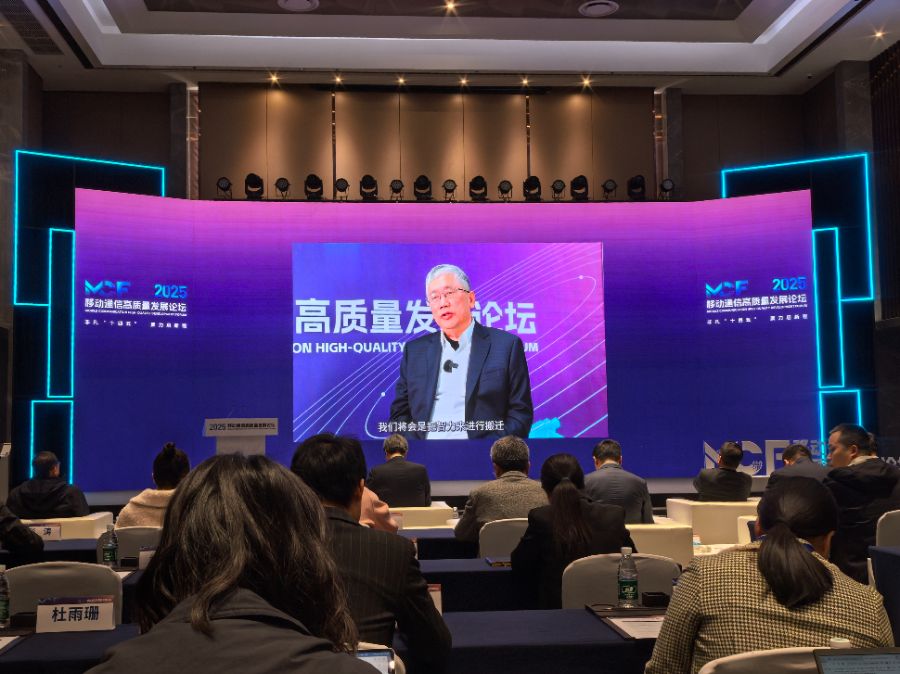
北京邮电大学教授张平:6G的目标是“万物智联”
Zhong Zheng Wang· 2025-11-21 11:38
Core Insights - A fundamental transformation in communication paradigms is underway, shifting from mere data transmission to the perception, circulation, and generation of intelligence, marking the beginning of a new era of interconnected intelligence [1][2] - The focus of mobile communication development is expected to strategically shift from 5G, which aims for "Internet of Everything," to 6G, which targets "Intelligence of Everything" [1] Group 1 - The distinction between "interconnection" and "intelligence connection" is highlighted, where interconnection addresses connectivity issues, while intelligence connection requires communication objects to possess human-like perception, awareness, and decision-making capabilities [1] - The integration of communication technology with artificial intelligence is essential, necessitating a new technological framework that allows intelligence to be inherently embedded within communication networks, which is a core challenge for 6G [2] Group 2 - The deep integration of artificial intelligence and communication is an unstoppable trend, expected to yield exponential economic and social benefits, with 6G projected to create a massive industry worth trillions of yuan [2] - This market impact will extend beyond communication itself, influencing various sectors of the digital economy, including digital agriculture and intelligent manufacturing, thereby driving high-quality development across numerous industries [2]