农村供水县域统管

Search documents
农村供水工程如何长效运行?贵州以县域统管打造“良性循环”
Xin Lang Cai Jing· 2026-02-03 03:18
Core Viewpoint - The Ministry of Water Resources will implement a county-level unified management model for rural water supply in March 2024, aiming to enhance the management and maintenance of rural water supply projects, ensuring sustainable and stable access to safe drinking water for residents [1]. Group 1: Unified Management Model - The county-level unified management model emphasizes "government supervision, enterprise operation, professional management, and social services," establishing or introducing specialized water supply companies to manage, operate, and maintain rural water supply systems [1]. - This model aims to ensure that professional entities handle water supply management, leading to improved service quality and sustainability of water supply projects [1]. Group 2: Implementation Strategies - The implementation will be tailored to local conditions, with urban water supply companies managing integrated urban-rural water supply in areas with high integration, while specialized rural water companies will be established in regions with scattered and low-scale projects [2]. - In sparsely populated areas, third-party technical service organizations may be commissioned to achieve county-level management [2]. Group 3: Professional Management and Maintenance - Specialized management and operation teams will be established to conduct regular inspections, maintain equipment, and ensure water quality from source to tap [2]. - Standardized management systems and emergency response plans will be developed to ensure quick responses to any incidents, thereby securing stable water supply for residents [2]. Group 4: Financial Sustainability - A pricing strategy will be implemented based on principles of cost coverage, reasonable profit, water conservation, and equitable burden sharing, with adjustments made according to the financial capacity of rural residents [2]. - The promotion of metered billing and convenient payment methods aims to create a self-sustaining financial model for water supply projects, ensuring funds are reinvested into maintenance and service improvements [2].
北京55处城乡供水提升工程完成,近10万村民喝上安心好水
Xin Lang Cai Jing· 2025-12-27 00:10
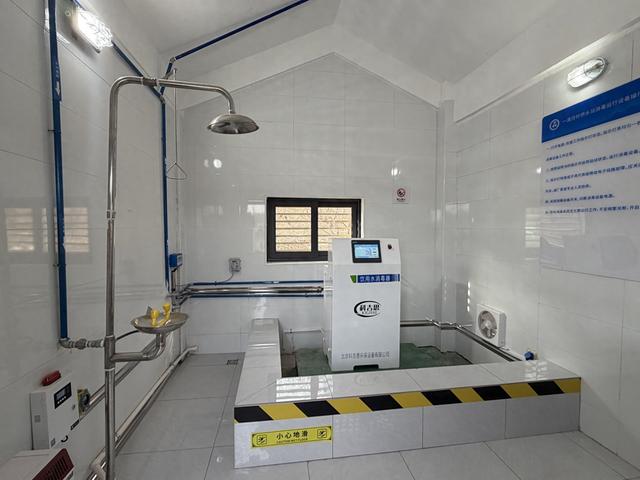
Core Viewpoint - The article highlights the significant improvements in water supply quality and infrastructure in rural areas of Beijing, particularly in the village of Beigou, due to recent upgrades and standardization of water supply stations, benefiting over 200,000 residents [1][10]. Group 1: Water Supply Improvements - The upgraded water supply stations have enhanced water quality and flow stability, with a reported 99.9% coverage of tap water in rural areas of Beijing [1][10]. - The new water supply station in Yuduhe Village has a daily supply capacity of 200 cubic meters and features advanced disinfection equipment that automatically adjusts chemical dosing based on water flow [3][5]. - The upgrades have resolved issues such as water quality fluctuations and pressure instability, significantly improving the daily lives of residents [5][6]. Group 2: Technological Advancements - The new disinfection system includes an electromagnetic flow meter that allows for precise control of disinfectant dosing, improving water safety and taste [3][5]. - The upgraded facilities now include monitoring systems that enable remote oversight of equipment performance, enhancing operational efficiency [10]. - Collaboration with professional maintenance companies has improved the response time for addressing equipment failures, ensuring continuous water supply [8][10]. Group 3: Government Initiatives - The Beijing municipal government has exceeded its targets for rural water supply projects, completing 50 urban-rural supply enhancement projects and installing 400,000 smart water meters [10]. - The ongoing "14th Five-Year Plan" aims to integrate more rural areas into the urban public water supply system, benefiting an additional 650,000 rural residents [10].