农药创制

Search documents
创制农药行业专题:中国创制农药有望迎来“Me too”到“Me better”跨越
2025-12-17 15:50
Summary of the Agricultural Pesticide Industry Research Industry Overview - The global pesticide market is valued at approximately $77.2 billion, with a compound annual growth rate (CAGR) of 2.35% [1][5] - Non-patented drugs account for 93% of the market, while patented drugs only represent 7%, indicating significant profit potential for innovative products [1][5] Key Insights - China has become the largest pesticide innovator globally, contributing over 50% to global pesticide innovation in the past five years and holding 70% of global pesticide production capacity [1][4][12] - The majority of China's production is focused on non-patented expired raw materials, making it vulnerable to cyclical fluctuations, necessitating the development of innovative products to enhance risk resistance [1][4][7] - Successful innovative pesticide products can significantly improve a company's operational quality, as demonstrated by FMC's insecticide, which notably increased revenue, profit, gross margin, net margin, and market value from 2017 to 2022 [1][8] Development Trends - The number of Chinese companies in the global top 20 agrochemical firms has risen from 0 in 2009 to 12 by 2024, reflecting the strengthening of Chinese agricultural enterprises [1][12] - From 2020 to 2024, over 50% of new pesticide innovations globally are expected to originate from China, showcasing its growing R&D capabilities [1][12] Challenges and Opportunities - Developing new pesticide products is increasingly challenging, requiring over $300 million and more than 12 years, with the need to screen over 160,000 compounds [2][9] - The transition from "me too" to "me better" in product development indicates a potential for more innovative and superior products to emerge from China [9] Role of Technology - AI technology is playing a crucial role in enhancing agricultural innovation efficiency, with companies like Limin Co. adopting AI-assisted development [3][14] - The License Out model, which involves granting commercial development rights to foreign companies, is being explored in agriculture, as seen in collaborations between Jiangshan Co. and Syngenta, and Taihe Co. with UPL [3][15] Competitive Landscape - China holds a dominant position in the global pesticide market, supplying 70% of production capacity and accounting for 50% of the market share [10][11] - Despite the rise of India's pesticide industry, its underdeveloped basic chemical industry means it will not pose a significant challenge to China's market position in the near future [11] Key Players in Innovation - Notable companies driving innovation in China include Qingyuan Longguan, Yangzhou Chemical, Lier Chemical, Limin Co., and Jiangshan Co. [3][16] - These companies are actively investing in new product development and leveraging partnerships to enhance their R&D capabilities [3][16][17] Conclusion - The Chinese pesticide industry is on a trajectory of significant growth and innovation, with the potential to lead in global agricultural advancements through enhanced R&D, strategic collaborations, and the integration of advanced technologies like AI.
全球最大烯草酮玩家先达股份:新老产品交替,前三季业绩暴增28倍!
市值风云· 2025-10-21 10:07
Core Viewpoint - The key to breaking the deadlock lies in the rhythm and realization of pesticide production volume [1] Group 1: Company Performance - XianDa Co., Ltd. (603086.SH) expects a net profit attributable to shareholders of 180 million to 205 million yuan for the first three quarters of 2025, representing a year-on-year growth of 2,807.87% to 3,211.74%, the highest growth rate among companies that have disclosed their third-quarter performance [4] - The significant profit increase in 2025 is attributed to three main factors: a low base from previous losses, a substantial rise in the market price of its main product, Acetochlor, and the sales of its newly developed product, Pyrazolyl Quinclorac [6][8][12] Group 2: Market Dynamics - The domestic pesticide industry stabilized in the first half of 2025, with the pesticide price index stopping its decline and showing slight recovery [11] - The price of Acetochlor rose dramatically from 68,000 yuan/ton at the beginning of 2024 to 160,000 yuan/ton by July 2025, an increase of over 135% [11] Group 3: Product Development - XianDa has developed a product matrix centered around Quinclorac, Pyrazolyl Quinclorac, and Benzoyl Acetochlor, targeting specific climatic and agricultural conditions in China [14][21] - Quinclorac is the first innovative product, launched in December 2020, designed for selective weed control in sorghum fields, with a sales target of 5 million acres and an estimated annual revenue of around 40 to 50 million yuan [15][16] - Pyrazolyl Quinclorac, approved for registration in September 2024, is expected to generate annual sales of approximately 1 billion yuan over three years, although current performance indicates a significant gap from this target [18][19] - Benzoyl Acetochlor is currently under review and aims to effectively control resistant weeds in Southeast Asia [20] Group 4: Future Outlook and Challenges - Despite the impressive growth, XianDa's performance heavily relies on Acetochlor prices, and the future revenue expectations from the three innovative products are not high, making it difficult to escape this dependency in the short term [22] - The potential for significant fluctuations in performance exists if Acetochlor prices decline or if competitors resume production, which could impact profitability [23][25]



传统产品与创制产品双轮驱动 先达股份上半年净利润增25.6倍
Shang Hai Zheng Quan Bao· 2025-08-19 19:25
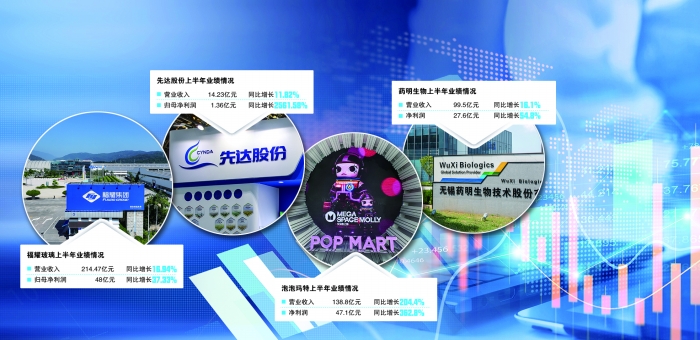
Core Viewpoint - The company has demonstrated significant growth in revenue and net profit in the first half of 2025, driven by product optimization and market demand for its innovative agricultural solutions [1][2]. Group 1: Financial Performance - In the first half of 2025, the company achieved operating revenue of 1.423 billion yuan, representing a year-on-year increase of 11.82% [1]. - The net profit attributable to shareholders reached 136 million yuan, marking a substantial year-on-year growth of 2561.58% [1]. - The adjusted net profit after excluding non-recurring items was 131 million yuan, compared to a loss of 82,370 yuan in the same period last year [1]. Group 2: Product Development and Market Strategy - The company focuses on the research, production, and sales of environmentally friendly agricultural chemicals, with key products including herbicides and fungicides [2]. - The main product, Acetochlor, saw a significant price increase due to market supply and demand dynamics, leading to a substantial rise in gross profit margin [2]. - The newly launched product, Pyrazosulfuron-ethyl, has quickly gained market recognition as a herbicide for rice fields, contributing to the company's growth [2]. - The company is enhancing its competitive edge by optimizing traditional products and developing differentiated solutions for the wheat field herbicide market [2][3]. Group 3: Market Trends and Opportunities - The domestic agricultural chemical industry is showing signs of stabilization, with improvements in supply and demand dynamics [6]. - The price indices for herbicides, insecticides, and fungicides have shown moderate recovery, alleviating previous market imbalances [6]. - In the overseas market, the demand for agricultural chemicals is recovering, with significant year-on-year growth in export values for insecticides, fungicides, and herbicides [6]. - The company plans to leverage its innovative capabilities to enhance existing products and create a comprehensive industry layout to improve market competitiveness [6]. Group 4: Research and Development - The company has a robust pipeline of research projects, focusing on various crops and biotechnologies, aiming to commercialize a new compound every two years [7].
吡唑喹草酯、烯草酮强劲驱动,先达股份净利润暴增超24倍
Zheng Quan Shi Bao· 2025-07-11 02:28
Core Viewpoint - Shandong Xianda Agricultural Chemical Co., Ltd. (referred to as "Xianda") expects significant growth in its half-year performance for 2025, with net profit projected to increase by approximately 2,443.43% to 2,834.73% compared to the same period last year [2] Financial Performance - Xianda anticipates a net profit attributable to shareholders of 130 million to 150 million yuan for the first half of 2025, an increase of 124.89 million to 144.89 million yuan year-on-year [2] - The company expects a net profit excluding non-recurring gains and losses to be between 124.7 million and 144.7 million yuan, representing a year-on-year increase of 15,239.01% to 17,667.08% [2] - In the first half of 2024, Xianda reported a total profit of 13.19 million yuan and a net profit of 5.11 million yuan [2] Growth Drivers - The significant growth in Xianda's performance is attributed to several factors: 1. The market price increase of its main product, Acetochlor, which has boosted the company's gross profit margin [3] 2. The launch of the new product, Pyrazosulfuron, which has contributed to gross profit [3] 3. Enhanced cost control measures and improved operational efficiency [3] Market Trends - Acetochlor prices have been rising, with raw material prices reaching approximately 120,000 to 160,000 yuan per ton as of June 2025, and some orders exceeding 160,000 yuan per ton [3] - Xianda's monthly production capacity for Acetochlor is around 1,000 tons, primarily serving overseas markets [3] - In 2024, the export volume of Acetochlor formulations increased by 88% due to the recovery of overseas market inventories and adjustments in sales strategies [3] Product Development - Xianda is focusing on innovation and has stopped expanding homogeneous products, instead developing a matrix of innovative products including Quinclorac, Pyrazosulfuron, and Benzobicyclon [4] - The innovative product matrix addresses significant safety issues related to traditional HPPD herbicides for indica rice, filling an international gap [4] - The company aims to achieve a sales target of 5 million acres by 2025, which is expected to yield substantial profits [4] - Xianda's third innovative herbicide, Benzobicyclon, is currently under review by the Ministry of Agriculture and Rural Affairs [4]