动手能力培养

Search documents
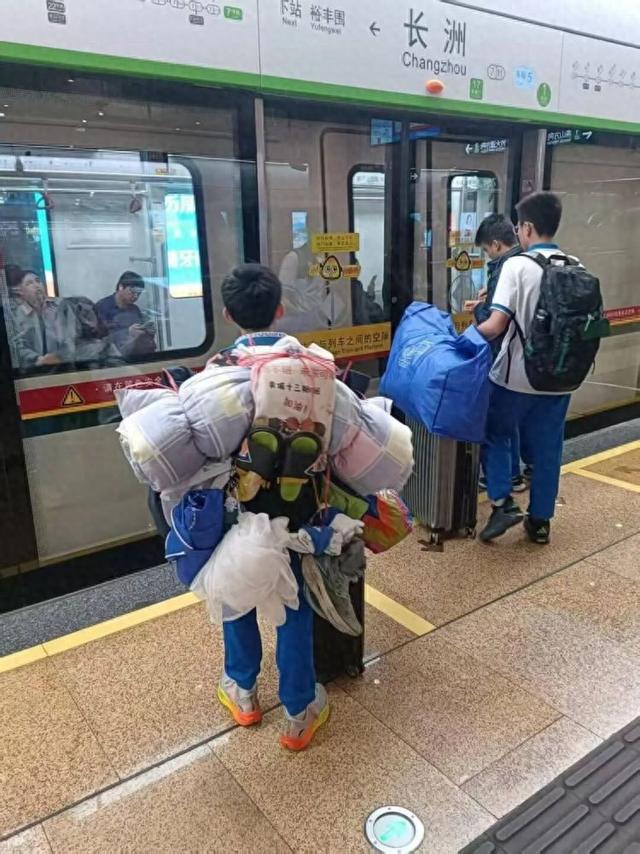
广州一初中生的背影火了!网友:我一个成年人都做不到
Xin Lang Cai Jing· 2026-02-01 05:52
Core Viewpoint - A middle school student from Guangzhou, He Zhirui, gained attention online for his impressive packing skills, showcasing independence and creativity in managing his belongings for school departure [1][3]. Group 1: Student's Skills and Independence - He Zhirui demonstrated exceptional packing skills by using ropes to secure his belongings, which impressed many parents and netizens [1]. - The student practiced packing in advance at home, showing a proactive approach to managing his school departure [1][3]. - He has a history of independently handling his belongings, as he previously transported items like bamboo mats and books home in a similar manner [3]. Group 2: Parental Influence and Education - His mother emphasized the importance of self-reliance, allowing him to manage his own tasks from a young age, including doing his own laundry [4]. - The family encourages independence and problem-solving, with the mother often seeking his help for various tasks, fostering a sense of responsibility [4]. - The school promotes self-management and critical thinking through activities that require students to solve problems independently, enhancing their life skills [7]. Group 3: Teacher's Observations - He Zhirui's math teacher noted his strong practical skills and creativity, attributing these traits to his willingness to observe and engage in hands-on problem-solving [7]. - The school encourages students to participate in household chores and responsibilities, reinforcing the development of self-sufficiency [7]. Group 4: Public Reaction - The online community has praised He Zhirui's abilities, highlighting the strength and resourcefulness of young individuals [8].

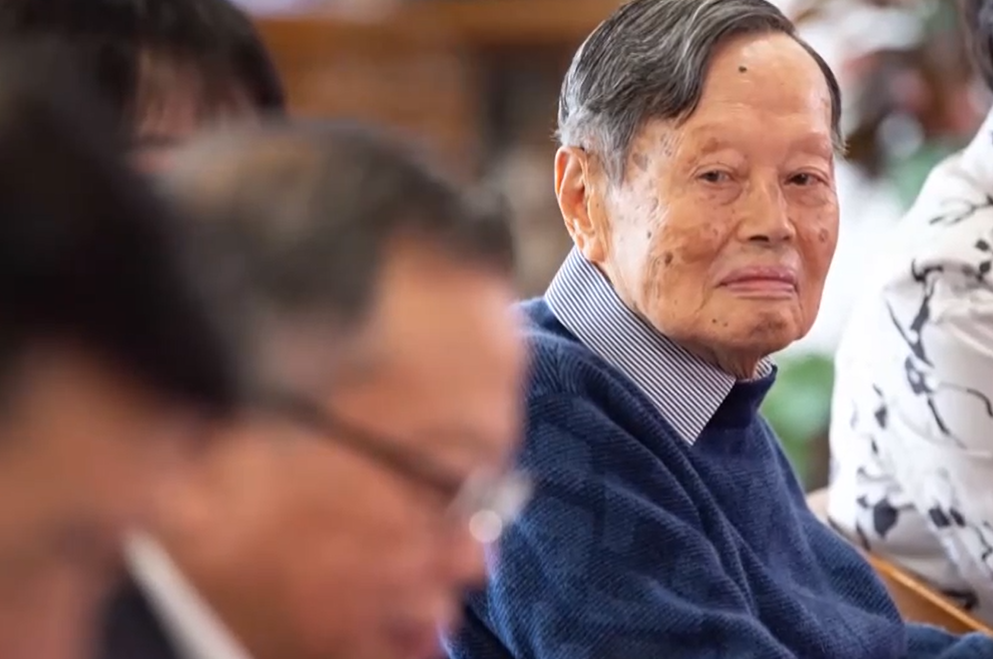
百年求索,赤子之心 ——致敬科学巨擘杨振宁
Mei Ri Jing Ji Xin Wen· 2025-10-18 04:49
Core Viewpoint - The article commemorates the life and contributions of Yang Zhenning, a renowned physicist and Nobel laureate, who passed away at the age of 103, highlighting his significant impact on physics and his deep connection to his homeland [1]. Group 1: Early Life and Education - Yang Zhenning was born in 1922 in Hefei, Anhui, and was influenced by his father, a scholar in modern number theory and algebra [2]. - He spent his childhood in Tsinghua Garden, where he developed an early interest in science, inspired by a book on the latest discoveries in physics [4]. - Yang Zhenning's education continued at Southwest Associated University during the war, where he excelled academically, ranking second among over 20,000 candidates [4]. Group 2: Academic Achievements - Yang Zhenning made groundbreaking contributions to physics, including the Yang-Mills theory and the theory of parity non-conservation in weak interactions, for which he received the Nobel Prize in Physics in 1957 [11][12]. - His work in statistical mechanics led to the development of the Yang-Baxter equation, earning him the Onsager Prize, a prestigious award in physics [12]. Group 3: Contributions to China’s Scientific Development - Yang Zhenning played a crucial role in bridging international scientific communities and introducing modern scientific concepts to China after returning in 1971 [15]. - He advocated for the importance of "developmental research" in China, influencing the country's "863 Program" aimed at advancing high-tech research [18]. - Yang Zhenning established the Tsinghua University Institute for Advanced Study, contributing significantly to the development of theoretical physics and mathematics in China [19]. Group 4: Educational Philosophy and Talent Development - He promoted ideas such as "generalist education" and hands-on training, recommending over 1,200 scholars for overseas training to enhance academic exchange [21]. - Yang Zhenning emphasized the need for strategic allocation of research funding, advising against investments in large particle colliders in favor of more pressing scientific fields [21]. Group 5: Legacy - Yang Zhenning's contributions extend beyond physics; he provided a strategic framework for respecting scientific principles and efficiently allocating technological resources, impacting future generations [23].