
北约第五条

Search documents
80%领土换和平,乌克兰接受现实停火,普京的豪赌为何让欧洲比俄罗斯更焦虑
Sou Hu Cai Jing· 2026-02-20 12:29
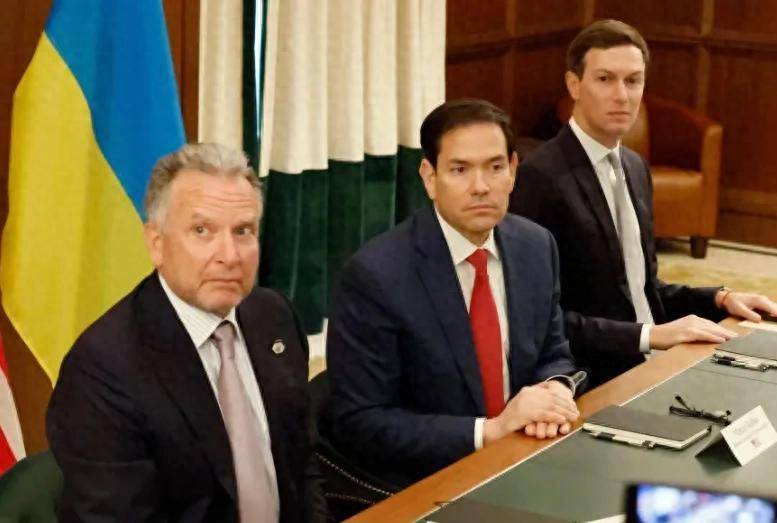
Core Viewpoint - The ongoing negotiations between Ukraine, Russia, and the U.S. are shifting dynamics, with Ukraine proposing a ceasefire based on the current situation, while Russia is showing unexpected rigidity in territorial claims, particularly in Donetsk [1][3]. Group 1: Negotiation Dynamics - Since February, the U.S., Russia, and Ukraine have been meeting frequently, entering a sensitive phase regarding territorial divisions [3]. - Ukrainian President Zelensky revealed that the White House has set June as a deadline for reaching an agreement, influenced by political calculations surrounding the upcoming midterm elections [3]. - Russia has shown greater flexibility in negotiations than anticipated, no longer opposing Ukraine's EU membership, with a proposed timeline for accession by 2027 or 2028 [3][4]. Group 2: EU's Role and Russian Concessions - The EU has emerged as a significant obstacle to Ukraine's EU membership, with leaders from Slovakia and Hungary leveraging the EU's veto power [4]. - Russia's concessions include allowing Ukraine to maintain a peacetime military force of 600,000 to 800,000 troops, which would be the largest standing army in Europe [4]. - Russia is also willing to indefinitely freeze the front lines in Zaporizhzhia and Kherson, relinquishing claims to remaining territories in these regions [4]. Group 3: NATO Expansion and Security Guarantees - The potential for Ukraine to join NATO has diminished, with the U.S. blocking previous efforts for immediate membership [6]. - Ukraine is now seeking security guarantees outside of NATO, which would not carry the same binding force as NATO's Article 5 but would aim to maintain the level of support received from the West [6]. Group 4: Key Points of Disagreement - Current negotiations are focused on two main issues: the remaining 20% of Ukrainian-controlled territory in Donetsk and the management of the Zaporizhzhia nuclear power plant [7]. - A compromise may involve joint management of the nuclear facility by the U.S., Russia, and Ukraine, while the Donetsk region may be demilitarized but not ceded to Russia [7]. Group 5: Potential Agreement Outline - A possible agreement may grant Ukraine significant rights, including arms supplies and training, while permanently prohibiting NATO membership and military deployments [9]. - Most Western sanctions against Russia could be lifted with a clause for rapid reinstatement if hostilities resume, reflecting a pragmatic approach to the geopolitical landscape [9]. - The long-term sustainability of such an agreement remains uncertain, particularly regarding Russia's future territorial ambitions and Europe's ability to ensure its own security [9].

多国派兵格陵兰岛影响不了特朗普
Xin Lang Cai Jing· 2026-01-16 06:41
Core Viewpoint - The meeting between the U.S., Denmark, and Greenland was productive, and discussions will continue, despite European military presence in Greenland not affecting U.S. decisions regarding the territory [1] Group 1: Military Presence and Actions - French President Macron announced that the first French soldiers have arrived in Greenland, with more expected in the coming days [1] - Several European countries, including Germany, France, Sweden, and the UK, have expressed participation in a "joint military reconnaissance operation" in Greenland [1] - The deployment of a small number of troops by European nations to Greenland is seen as more symbolic, given the superior military capabilities of the U.S. Navy in the region [1] Group 2: NATO and U.S. Relations - The military actions by multiple European countries outside of NATO frameworks indicate a significant rift within the alliance, particularly regarding U.S. territorial ambitions [1] - Concerns are raised that if U.S. forces were to seize Greenland, it would undermine the credibility of NATO's collective defense principle, potentially leading to adversarial relations between the U.S. and Europe [1]
无人机事件持续发酵,大规模对峙引发担忧,法国向波兰派出“阵风”战机
Huan Qiu Shi Bao· 2025-09-12 22:49
Core Points - France has announced the deployment of three "Rafale" fighter jets to support Poland's air defense alongside NATO allies, amid rising tensions following drone incursions into Polish airspace, which Poland claims originated from Russia [1][2][3] - NATO allies, including the UK, Germany, and the Netherlands, are also planning to send military support to Poland, including aircraft, artillery, and air defense systems, in response to the perceived threat from Russia [2][3] - The situation has escalated concerns about the potential spillover of the Russia-Ukraine conflict into broader European security, with Poland deploying 40,000 troops to its eastern border and conducting large-scale military exercises with NATO [1][3][4] Military Support and Exercises - Poland's Defense Minister has confirmed that multiple NATO countries are providing military support, including the Netherlands sending two "Patriot" air defense systems and 300 soldiers, and the Czech Republic sending helicopters and troops [3] - The ongoing "Steel Defender-25" exercise involves over 30,000 troops from Poland and NATO allies, aimed at countering the Russian-Belarusian "West-2025" military exercises [3][4] NATO Article 4 Activation - Poland invoked NATO's Article 4, which allows for consultations among member states when a country feels its territorial integrity is threatened, following the drone incidents [5][6] - The activation of Article 4 does not automatically trigger Article 5, which commits NATO members to collective defense, highlighting the nuanced nature of NATO's response options [6] Diverging Perspectives - Russia has denied involvement in the drone incidents, suggesting that Poland's claims are unfounded and offering to discuss the matter with Polish defense officials [7] - Contrasting views emerged from U.S. President Trump, who suggested the drone incident might be a "mistake," while Polish officials and Ukrainian President Zelensky emphasized the deliberate nature of the incursions [8][9] NATO's Preparedness - Concerns have been raised regarding NATO's readiness to respond effectively to such incursions, with reports indicating that not all drones were intercepted, leading to questions about the alliance's capability to handle larger-scale attacks [9]