
卫星定位系统

Search documents
日本确认:发射失败,卫星未进入预定轨道!火箭发动机提前“结束燃烧”,抛物线坠下云端
Xin Lang Cai Jing· 2025-12-22 06:08
Core Viewpoint - The H3 rocket's eighth launch attempt on December 22, 2023, failed, resulting in the satellite not reaching its intended orbit due to an early shutdown of the second-stage engine [1][4]. Group 1: Launch Details - The H3 rocket was launched from the Tanegashima Space Center in Kagoshima Prefecture at approximately 10:51 AM local time [1][4]. - The mission was initially scheduled for December 7 but was delayed due to an anomaly in the inertial measurement unit of the second stage [6]. - A subsequent attempt on December 17 was aborted due to an issue with the cooling water injection system just before ignition [6]. Group 2: Satellite Information - The rocket was carrying the "Linchpin 5" satellite, part of Japan's Quasi-Zenith Satellite System, which is designed to enhance positioning accuracy for devices like smartphones and provide emergency earthquake alerts in areas without signal coverage [3][6]. - The Japanese government aims to establish a seven-satellite system that does not rely on foreign satellites for location information [6].

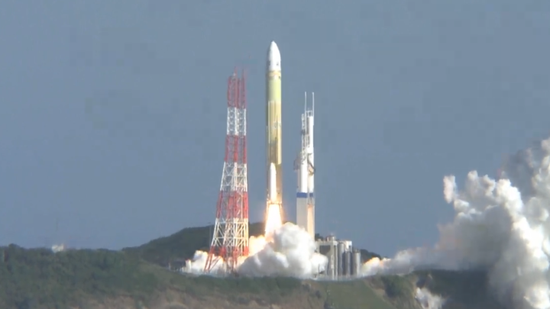
日本H3火箭发射出现异常
Xin Lang Cai Jing· 2025-12-22 03:15
Core Viewpoint - Japan's Aerospace Exploration Agency (JAXA) launched an H3 rocket on December 22, 2023, but the second-stage engine burned out prematurely during flight, and the situation is currently under investigation [1][4]. Group 1: Launch Details - The H3 rocket 8 was launched from the Tanegashima Space Center in Kagoshima Prefecture at 10:51 AM local time [1][4]. - The rocket was carrying the "Quasi-Zenith Satellite System" (QZSS) "Michibiki" No. 5 satellite, which is part of Japan's satellite positioning system [2][5]. Group 2: Mission Background - The launch was initially scheduled for December 7 but was postponed due to an anomaly with the inertial measurement unit on the second stage of the rocket [1][4]. - On December 17, the launch was again halted due to an issue with the cooling water injection equipment just before ignition [1][4]. Group 3: Future Plans - The Japanese government aims to establish a self-sufficient positioning service system, targeting a total of seven satellites in orbit, with the fifth satellite being the sixth in the series [2][6]. - The plan includes expanding the system to eleven satellites to enhance coverage in Asia and Oceania, ensuring service continuity even if some satellites fail [2][6].