卫星频率轨道资源

Search documents
商业航天ETF,集体涨停
Di Yi Cai Jing Zi Xun· 2026-01-12 04:26
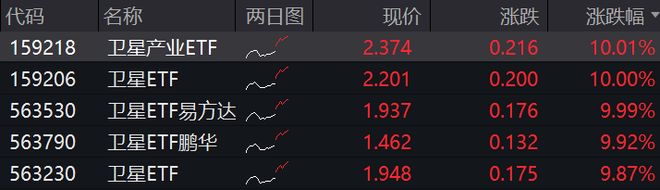
Group 1 - The commercial aerospace-related ETFs experienced a collective surge, with several satellite industry ETFs reaching their daily limit up [1] - The satellite industry ETF (159218) rose by 10.01% to a price of 2.374, while other ETFs also showed significant increases, with the P-star ETF (159206) up by 10.00% to 2.201 [2] - Multiple domestic satellite operating units have submitted satellite network data to the International Telecommunication Union (ITU), which has garnered public attention [2][3] Group 2 - The submission of satellite network data to the ITU is a routine procedure that marks the first step for satellite operating units in deploying satellite systems [3] - The deployment of satellite systems typically requires a series of processes including application, coordination, registration, and maintenance, which can take 2 to 7 years before satellite launches [3] - Various countries have submitted satellite network data for over 100,000 satellites, indicating a growing global interest in satellite deployment [3]

专家认为应理性看待中国新申报卫星网络资料
21世纪经济报道· 2026-01-11 14:55
Core Viewpoint - Recent applications by domestic satellite operators to the International Telecommunication Union (ITU) for satellite network data have garnered public attention, but these submissions are routine operations that should be viewed rationally [1]. Group 1: Satellite Network Applications - Multiple domestic units have submitted satellite network data to the ITU, which is a standard procedure for deploying satellite systems [1]. - The submission process typically requires 2 to 7 years of preparation, including application, coordination, registration, and maintenance before launching satellites [1]. - Several countries have reported satellite networks exceeding 100,000 satellites based on their specific circumstances [1]. Group 2: China's Satellite Technology - China, being a vast country with significant satellite technology applications, has adhered to ITU radio regulations and aims to promote fair and efficient use of satellite frequency and orbital resources [1]. - The recent submissions include multiple satellite network data, with two applications exceeding 90,000 satellites each, reflecting the country's future development needs [1]. Group 3: Industry Dynamics - The process from international application to satellite launch and service provision typically requires a considerable amount of time [2]. - Factors such as international coordination of frequency resources, system construction, and market demand changes may lead to dynamic optimization and adjustments in the actual deployment of satellites [2]. - Stakeholders are encouraged not to overinterpret these developments and to continue supporting the growth of China's aerospace industry [2].

专家:应理性看待中国新申报卫星网络资料
财联社· 2026-01-11 12:11
Core Viewpoint - Recent submissions of satellite network data by multiple domestic satellite operators to the International Telecommunication Union (ITU) have sparked public interest, but these actions are routine procedures that should be viewed rationally [1]. Group 1 - The submission of satellite network data to the ITU is the first step for satellite operators in deploying satellite systems, which typically requires a series of actions including application, coordination, registration, and maintenance over a period of 2 to 7 years before launching satellites [1]. - Several countries have submitted satellite network data for over 100,000 satellites based on their specific circumstances, indicating a growing trend in global satellite deployment [1]. - China, as a major satellite technology application country, has adhered to ITU radio regulations and aims to promote the fair, reasonable, economical, and efficient use of satellite frequency and orbital resources [1]. Group 2 - The process from international submission of satellite network data to satellite launch and service provision generally takes a long time, influenced by factors such as international coordination of frequency resources, system construction, and market demand changes [2]. - Companies may dynamically optimize and adjust the scale and technical parameters of satellites during the actual deployment phase, reflecting the need for flexibility in response to evolving conditions [2].