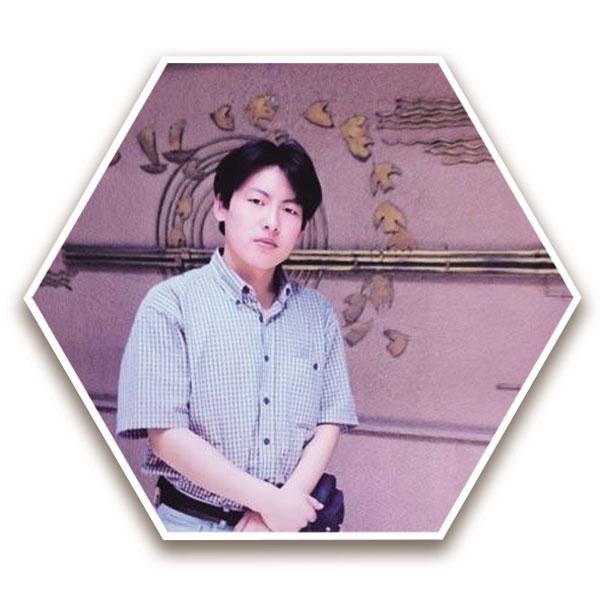
历史题材创作

Search documents
余耕:试图走进彼时彼刻 是极具诱惑力的事
Xin Lang Cai Jing· 2025-12-27 17:39
Core Viewpoint - The novel "Asking for the Tripod in 1939" by Yu Geng is inspired by the historical event of the discovery of the He Mu Wu Fang Ding, a significant bronze artifact, and the subsequent struggle to protect it from Japanese forces during a tumultuous period in Chinese history [5][6][14]. Group 1: Historical Context - The story is set in 1939, a critical year during the Second Sino-Japanese War, reflecting the dire circumstances faced by the Chinese people and the extremes of human nature in the face of adversity [14]. - The He Mu Wu Fang Ding was discovered by a villager in Anyang, who, to protect it from Japanese looters, buried it in his yard, thus becoming an unintentional guardian of a national treasure [5][6]. Group 2: Character Development - The narrative features the Yu brothers, who are depicted as unlikely heroes; the elder brother, Yu Baoju, is a former street thug, while the younger brother, Yu Liangju, is a skilled craftsman [6][13]. - The characters are designed to showcase the complexities of human nature, with their actions driven by personal beliefs and the dire circumstances of their time [23]. Group 3: Creative Process - The author, Yu Geng, spent over a decade refining the story, initially inspired by a documentary about the He Mu Wu Fang Ding, which led to the creation of a detailed narrative that blends historical facts with fictional elements [8][9]. - The seventh draft of the novel, completed in 2023, included significant revisions to enhance character depth and historical accuracy, reflecting the author's commitment to storytelling [10][11]. Group 4: Themes and Symbolism - The title "Asking for the Tripod" symbolizes the quest for cultural heritage and the struggle against oppression, resonating with the historical context of the narrative [14]. - The novel aims to evoke reflections on the impact of war on individuals and the importance of preserving cultural identity amidst chaos [14][24]. Group 5: Adaptation Potential - The novel has been recognized for its cinematic qualities, making it suitable for adaptation into a television series, with multiple companies expressing interest in the film rights [21][22].

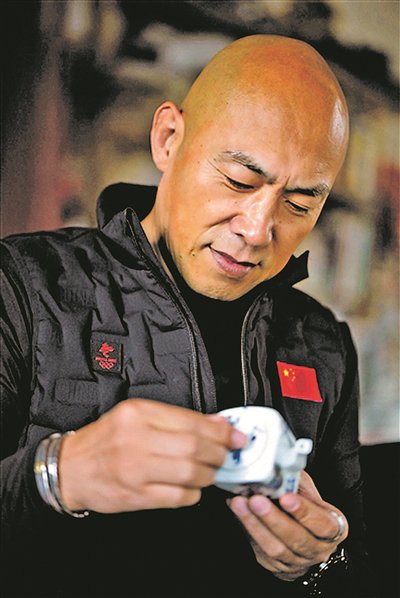
常青田:以文字还原历史的厚重
Zhong Guo Qing Nian Bao· 2025-12-18 04:26
Core Viewpoint - The article discusses the adaptation of the novel "Silent Glory" from the original TV series, highlighting the challenges and differences in narrative style and content between the two formats [2][3][4]. Group 1: Adaptation Process - The adaptation of "Silent Glory" involved a tight timeline, with the author having only three to four months to convert a 500,000-word script into a novel, ultimately completing a 330,000-word draft in two months [2][4]. - The novel aims to provide a more in-depth exploration of characters and historical context, which the TV series could not fully present due to time constraints [4][5]. Group 2: Narrative and Stylistic Differences - The adaptation faced challenges in converting the visual and auditory elements of the TV series into a linear narrative form suitable for a novel, requiring a balance between literary quality and the original's immersive experience [4][5]. - The author emphasized the need for a change in narrative style, opting for concise and direct language to align with the dialogue's spoken nature, thus creating a unified literary style [5][6]. Group 3: Historical Accuracy and Artistic Interpretation - The novel is based on over 90% historical events and characters, which necessitated a careful selection of which historical details to include while maintaining artistic integrity [6][7]. - The author highlighted the principle of "big events not being fictionalized, while small details can be flexible," which guided both the TV series and the novel's creation [6][7].