
双星伴月

Search documents
今晚,记得抬头看!
证券时报· 2025-11-10 11:48
Group 1 - The article discusses a celestial event occurring on November 10, where Jupiter, the brightest star in the Gemini constellation (Betelgeuse), and a waning gibbous moon will align to form a "smiley face" in the sky [1][2] - Jupiter will rise in the eastern sky around 9 PM, while the best viewing time will be later in the night when its altitude is more favorable for observation [1] - The brightness of Jupiter is approximately -2.4 magnitude, while Betelgeuse has a brightness of about 1.14 magnitude, making Jupiter significantly brighter [2] Group 2 - The waning gibbous moon will be positioned near the head of the Gemini constellation, creating a visual representation of a "smiley face" with Jupiter as the "right eye," Betelgeuse as the "left eye," and the moon as the "mouth" [2] - Observers can easily capture this formation by using their hands to create a circle in the sky or by taking photographs and marking the alignment [2]

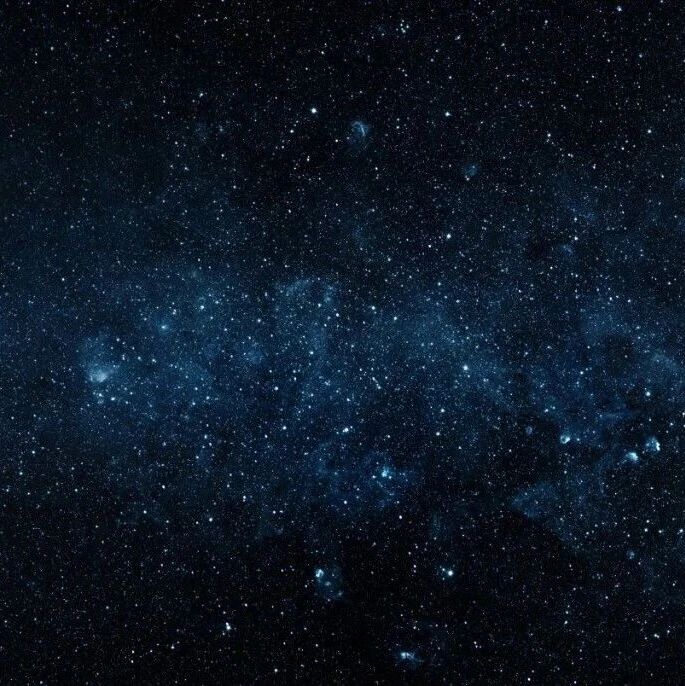
“双星伴月”10日晚天宇现“笑脸”
Xin Hua She· 2025-11-08 06:49
Group 1 - The event on November 10 will feature Jupiter, the brightest star in Gemini (Betelgeuse), and a waning gibbous moon, creating a "smiling face" appearance in the sky [1][2] - Jupiter will rise in the east around 9 PM, while the best viewing time will be later in the night when its altitude is more favorable [1] - Betelgeuse, known for its vibrant orange color, is the brightest star in Gemini, with a brightness of approximately 1.14 magnitude, while Jupiter has a brightness of about -2.4 magnitude [2] Group 2 - The moon will be positioned near the head of Gemini, forming a "smiling face" with Jupiter as the "right eye" and Betelgeuse as the "left eye" [2] - Observers can easily capture this formation by using their hands to create a circle in the sky or by photographing the scene and marking it [2]
19、20日凌晨,上演“双星伴月”
Xin Hua She· 2025-09-17 07:12
Core Points - The article discusses the upcoming celestial event where Venus will closely approach the star Xuanyuan 14 on the nights of September 19 and 20, with the closest distance occurring on the morning of the 20th [1][2] - The event will also feature a crescent moon appearing near these two celestial bodies, creating a "double star and moon" phenomenon for public viewing [1][2] Summary by Sections - **Celestial Event Details** - Venus will be visible as the brightest star in the sky, except for the sun and moon, throughout the year until the end of December [1] - On September 19 and 20, Venus will be seen moving from the constellation Cancer to Leo, with the closest angular distance to Xuanyuan 14 being 0.5 degrees, equivalent to the width of a full moon [1] - **Viewing Recommendations** - Public is encouraged to find locations with minimal light pollution, such as rural areas or mountain tops, to observe the event after 4 AM [2] - Venus has a brightness of -3.9 magnitude, making it easily visible, while Xuanyuan 14 has a brightness of 1.4 magnitude [2] - The crescent moon will appear above the stars on the 19th and below them on the 20th, with the moon being more challenging to spot due to its smaller size and lower elevation on the 20th [2]