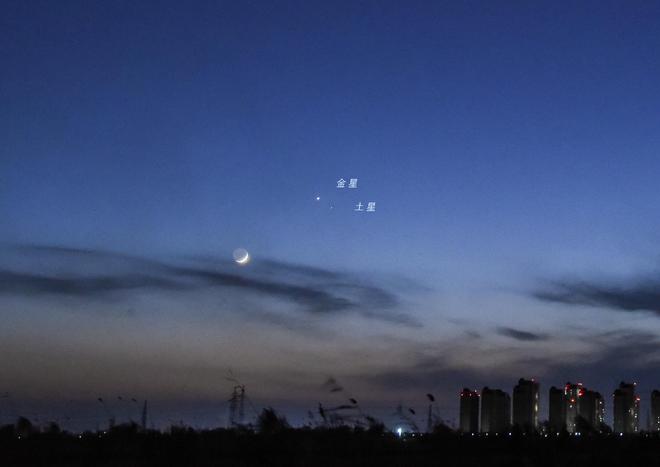
双星拱月

Search documents
水星、火星、月球23日空中“相遇”,上演“双星拱月”
Qi Lu Wan Bao· 2025-10-21 09:35
Core Points - A rare astronomical event called "double star and crescent moon" will occur on October 23, featuring Mercury, Mars, and the crescent moon in close proximity in the southwestern sky [1][7] - Mercury will reach its eastern elongation on October 30, marking the last opportunity for observation this year, although conditions will be poor due to its low altitude [2] - Mars, known for its reddish appearance due to iron oxide, will also be visible in the southwestern sky shortly after sunset, but the observation window will be brief [5][7] Summary by Sections - **Astronomical Event**: The conjunction of Mercury, Mars, and the crescent moon will take place on October 23, creating a visually striking formation [1][7] - **Observation Conditions**: Mercury's eastern elongation on October 30 will provide a final chance for observation this year, but it will be challenging due to its low elevation of less than 10 degrees [2] - **Mars Visibility**: Mars will be positioned in the southwestern sky at sunset, but the viewing time will be limited [5][7] - **Viewing Recommendations**: Observers are encouraged to find a flat, unobstructed area for the best chance to view the event, although binoculars may be necessary due to the low altitude of the celestial bodies [7]

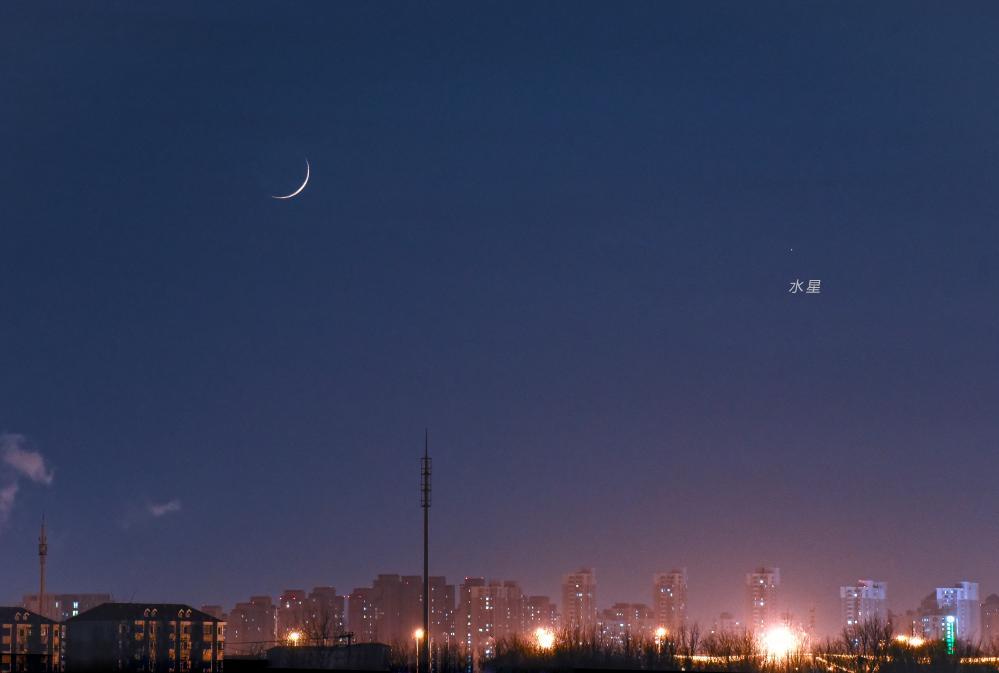
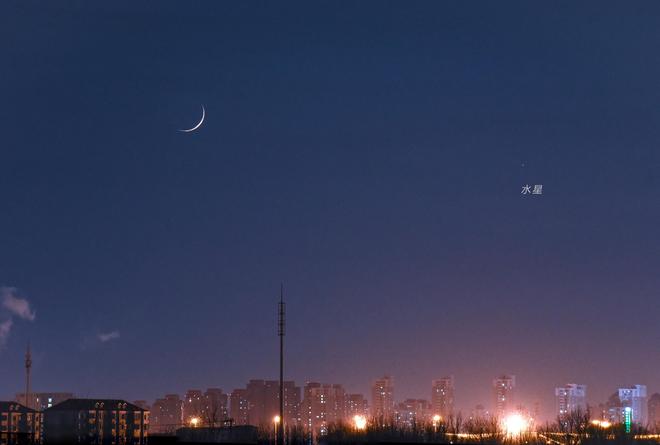
水星、火星、月球23日空中“相遇”上演“双星拱月”
Xin Hua She· 2025-10-21 03:45
Group 1 - The article discusses a rare astronomical event where Mercury, Mars, and the crescent moon will closely "gather" in the southwestern sky at sunset on October 23, described as a "double star and crescent moon" phenomenon [1][6] - Mercury and Mars are well-known planets, with Mercury being the closest planet to the Sun, often hidden in its glare, making it difficult to observe except during its greatest elongation [1][2] - The event will occur shortly before Mercury's eastern elongation on October 30, which is noted to be the last opportunity for observing Mercury this year, although conditions will be poor due to its low altitude of less than 10 degrees above the horizon [2] Group 2 - Mars will be positioned highest in the sky during the event, followed by Mercury, with the crescent moon being the lowest [6] - Observers are encouraged to find a flat, unobstructed area for viewing, as the low altitude of the celestial bodies and their proximity to the horizon will make them challenging to see without binoculars [6] - The visibility of this event is limited due to the short observation window and the influence of sunlight, making successful observation a rewarding challenge [6]
4月25日拂晓金星和土星将上演“双星拱月”
Xin Hua She· 2025-04-23 03:20
Core Points - The astronomical event of "double stars surrounding the moon" featuring Venus and Saturn will occur on April 25, providing a unique viewing opportunity for the public if the weather is clear [1][5][6] - Venus, known as "Tai Bai" in ancient China, will transition between the roles of "Evening Star" and "Morning Star" from late 2024 to the end of 2025 [2] Summary by Sections - **Astronomical Event Details** - On April 25, Venus and Saturn will appear close together in the eastern sky before sunrise, accompanied by a thin crescent moon, forming a triangular arrangement [5] - The visibility of Saturn may be challenging in urban areas due to light pollution, but Venus and the crescent moon are easier to observe [5][6] - The optimal viewing location is suggested to be areas with less light pollution, such as the countryside [5] - **Viewing Recommendations** - The viewing window for this event is limited to about half an hour before sunrise, making it essential for interested observers to be prepared [6] - If the event is missed on April 25, there will be an opportunity to observe a "triple star" event on April 26, where the moon will be positioned closer to Mercury, making it easier to spot [7]