
反对战争

Search documents
“到底是谁被蒙蔽,请面对真相吧,日本人!”(第一现场)
Ren Min Ri Bao· 2026-01-06 23:36
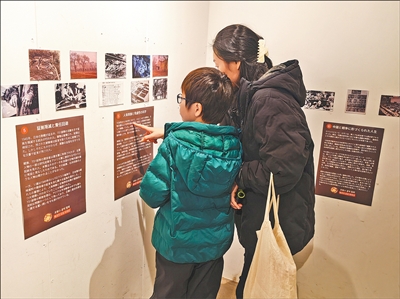
Core Viewpoint - The exhibition in Tokyo aims to reveal the historical atrocities committed by the Japanese military during its invasion of China, countering the narratives propagated by right-wing factions in Japan and emphasizing the importance of acknowledging historical truths [4][5]. Group 1: Exhibition Details - The exhibition features over a hundred historical photographs collected by a French individual named Lawrence, showcasing the dark history of Japanese militarism in China, including events like the Jinan Incident and the Nanjing Massacre [5][6]. - The organizers, including Marcus (Lawrence's grandson), aim to hold 100 exhibitions globally to ensure that the historical truths are widely recognized and not forgotten [5][6]. Group 2: Audience Reactions - Many attendees, including Japanese students and elderly individuals, expressed shock and emotional responses to the images, highlighting a lack of awareness about Japan's wartime actions in their education [7][8]. - A Japanese high school student noted that the exhibition provided a more impactful understanding of history compared to traditional classroom teachings, realizing the misconceptions about Japan being solely a victim in World War II [7]. Group 3: Historical Context and Responsibility - The exhibition also addresses contemporary issues, such as Japan's political stance on Taiwan, with attendees condemning remarks made by Japanese officials as interference in China's internal affairs [9]. - Participants emphasized the need for Japanese citizens to remember and confront their historical actions to prevent the recurrence of militarism and war, viewing the exhibition as a crucial reminder of the past [9].

日本民众在首相官邸前集会 要求高市早苗撤回涉台错误言论
Yang Guang Wang· 2025-12-05 04:10
Core Viewpoint - Hundreds of Japanese citizens protested in front of the Prime Minister's residence, demanding the retraction of controversial remarks made by Prime Minister Sanna Takashi regarding Taiwan [1] Group 1: Public Sentiment - Protesters expressed concerns that Takashi's statements could lead Japan towards war, questioning her understanding of diplomatic responsibilities as a member of the National Diet [1] - Demonstrators held signs demanding Takashi retract her statements and refrain from inciting war, with chants calling for her resignation [1] Group 2: Historical Context - Participants referenced Japan's past actions during the Asia-Pacific War, emphasizing the importance of Japan's constitution, particularly Article 9, which renounces war and prohibits maintaining military forces [1] - The protest highlighted a collective memory of the harm caused by Japan in the past, reinforcing the sentiment that provocative statements towards China are unacceptable [1]
用戏剧方式参与纪念重要时刻
Bei Jing Qing Nian Bao· 2025-08-12 23:59
Core Viewpoint - The Beijing People's Art Theatre is staging the play "The Butcher" to commemorate the 80th anniversary of the victory in the Chinese People's Anti-Japanese War and the World Anti-Fascist War, aiming to reflect on history and convey strength through drama [2]. Group 1: Historical Context and Significance - This year's performance of "The Butcher" is part of a series of events organized by the Central Propaganda Department and the Ministry of Culture and Tourism to honor the 80th anniversary of the victory in the wars [2]. - The play, set against the backdrop of the German Empire's rule in Austria during World War II, explores the impact of war on ordinary lives, highlighting the cruelty and destructiveness of conflict [2][3]. Group 2: Artistic Direction and Challenges - The director He Bing aims to instill a sense of mission in young actors, encouraging them to focus on their craft and embrace the creative process [2]. - The production faces three main challenges: honoring the legacy of past artists, the inherent difficulties of the creative process, and winning audience acceptance [3]. Group 3: Cast and Performance Dynamics - The cast includes over 20 young actors, many of whom have previously collaborated in "The Zhao Family's Orphans," showcasing their youthful energy in a larger theater setting [3]. - The production emphasizes the need for confidence among actors, with extensive script work undertaken to ensure they can perform freely and confidently on stage [3]. Group 4: Production Innovations - A significant change in this version of "The Butcher" is the shift from indoor to outdoor settings, featuring a train as a key stage element, symbolizing the passage of time [4]. - The Beijing People's Art Theatre plans to offer public welfare tickets for the performances, ensuring accessibility for a wider audience [4].