叠铸铜钱

Search documents
这件出土文物为你揭秘
Xin Lang Cai Jing· 2026-01-25 17:15
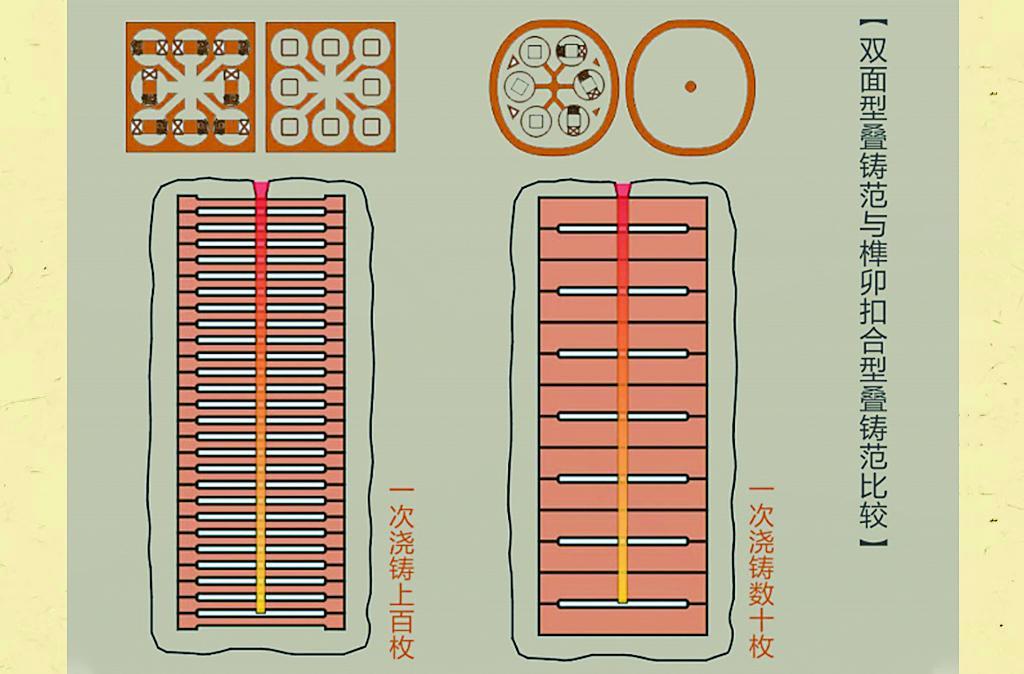
Core Viewpoint - The article presents a new perspective on a recently discovered ancient artifact from the Han Dynasty, suggesting it is a rare example of "stacked casting copper coins" rather than a mold or decorative object, highlighting the advanced coin minting techniques of ancient China [9][12]. Group 1: Discovery and Description - The artifact, extracted from a Han tomb in the Fuling region, consists of a central copper pillar surrounded by layers of copper coins, resembling a tree with over 40 layers of coins [8][11]. - Initially misidentified as a "copper coin mold" or "money tree," experts concluded it is an unfinished piece of "stacked casting copper coins," representing a unique moment in the coin minting process [9][12]. Group 2: Historical Significance of Stacked Casting - Stacked casting technology, developed in the early Western Han Dynasty, marked a significant advancement in the coin minting process, allowing for mass production and efficiency compared to previous methods [13][19]. - The process involved creating a complex mold structure that enabled multiple coins to be cast simultaneously, representing a leap in industrial capabilities of the time [14][15]. Group 3: Economic and Political Implications - The distribution of ancient coin molds illustrates the transition from decentralized coin minting in the pre-Qin era to a centralized system during the Qin and Han dynasties, reflecting the consolidation of state power [17][18]. - The article emphasizes that the stacked casting technique aligns with the central government's efforts to standardize currency, enhancing control over the economy and ensuring uniformity in coin production [19].